

Note (September 2026): This article has been corrected. The original version said crypto “will always help you make good money” and recommended a trading website that no longer loads; crypto can lose value, and no platform can guarantee returns.
Crypto trading means buying and selling cryptocurrencies such as bitcoin on an exchange to profit from price changes. Before you start, check that the platform is registered with your financial regulator, invest only money you can afford to lose, secure your account and wallet, understand the tax rules, and ignore anyone promising guaranteed returns. Crypto fraud cost Americans more than $11.3 billion in 2025, according to the FBI.
Key Takeaways
- Crypto prices are volatile: bitcoin crashed in 2018 and 2022, and the TerraUSD stablecoin collapsed in 2022.
- The FBI’s IC3 recorded 181,565 cryptocurrency-related complaints and $11.366 billion in losses in 2025, up 22% on 2024.
- Choose an exchange that is registered or licensed where you live; in the EU, crypto firms have needed a MiCA authorisation since the transition period ended on 1 July 2026.
- Even large exchanges can fail: FTX filed for bankruptcy on 11 November 2022.
- Crypto gains are taxable in most countries; India taxes income from virtual digital assets at a flat 30%.
The world is constantly shifting toward the new generation of the digital world. Millions of people now buy and trade digital currencies, but crypto trading remains high-risk: prices swing sharply, and according to the FBI’s Internet Crime Complaint Center (IC3), Americans reported more than $11.3 billion in losses to cryptocurrency-related fraud in 2025. Currently, bitcoin is the oldest and best-known cryptocurrency; its network launched on 3 January 2009. Many other coins also trade, but a low price per coin does not make a coin a bargain, because a coin’s value depends on how many coins exist and whether the project has real use.
Bitcoin is the name most people know because it was the first cryptocurrency and has received the most attention. If you check a few years back, these coins were not this highly demanded; people were not ready to invest in places where no one knew each other.
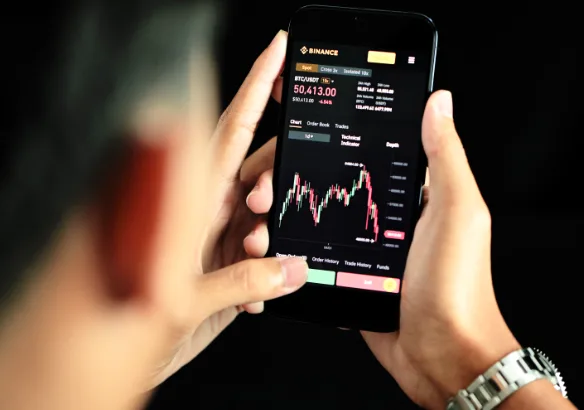
Awareness has grown since then, and crypto has moved closer to the mainstream: in January 2024 the first 11 US spot bitcoin exchange-traded funds (ETFs) began trading. Some people have made money from crypto, but many have lost money, and no return is guaranteed.
An earlier version of this article sent readers who wanted coins other than bitcoin to the trading website at https://cryptogroupsoftware.com/ (as of September 2026 that domain no longer loads because its address does not resolve, and its operator and regulatory status could not be verified, so it is not a recommendation). Use only exchanges that are registered or licensed with the financial regulator where you live.
Why is a good trading platform necessary for crypto?
Although the digital currencies are garnering much attention, there is certain apprehension surrounding the same when it comes to investing in them. People’s fear these days before investing in bitcoins is the increasing number of scam websites.
The number of bitcoin investors is constantly getting more extensive, and due to this, several scam websites are also getting made. So due to this, it becomes essential for the person to choose the platform after checking every detail of them accurately. Ignoring this step can let the person stuck in the wrong place face several losses.
Which are other coins apart from bitcoin?
When crypto was new, bitcoin was almost the only coin people talked about. Early buyers who held on saw large gains, but the price also crashed repeatedly, for example in February 2018 and again in May and June 2022.
Over time, many crypto exchanges opened and many new coins were listed on them. Today one can find several other coins traded in the market apart from the high demanding bitcoin.
Well-known coins other than bitcoin include USD Coin (USDC), a stablecoin designed to stay at one US dollar rather than rise in value, XRP, which runs on the XRP Ledger launched in 2012, and Solana (SOL), whose blockchain went live in March 2020.
Research matters, but it cannot guarantee a profit: smaller coins can collapse entirely, as the TerraUSD stablecoin did in 2022.
Online reviews alone are not a reliable check, because anyone can write them and scam platforms show fake profits to build trust. A better check is whether the exchange appears on the official register of the financial regulator in your country.
Benefits of crypto investments
Crypto has some genuine benefits, but it is a speculative asset, not a source of steady income. The UK Financial Conduct Authority (FCA) warns that people who buy crypto should be prepared to lose all the money they invest. Any website that promises constant or guaranteed earnings is a red flag.
Possible benefits, and their limits:
- Liquidity: major coins trade around the clock on exchanges, so they can usually be sold at any time, but the price on the day you need the money may be lower than what you paid.
- It can let the person gain better knowledge of the market and help better understand how the market works and affect the things that react to crypto.
Is investing in cryptocurrency worth it?
Whether crypto is worth it depends on your goals, time horizon and ability to absorb losses; it is not automatically worth it. Market knowledge helps, but it does not remove the risk of large price falls or of losing funds to a failed or fraudulent platform.
Crypto is not an easy way to earn money. According to the FBI’s 2025 IC3 report, cryptocurrency investment fraud alone cost Americans about $7.2 billion that year, often through fake trading platforms that display fake profits.
Before investing, use only established, trustworthy exchanges, and verify them with the regulator yourself. Never use any websites that have no information available or are not familiar with. Investing in cryptocurrency from such platforms can result in making huge losses. So choose the platform carefully, and remember that even a legitimate platform cannot guarantee returns.
Final thoughts
Crypto trading can be rewarding, but it can also lead to heavy losses; it does not always make money. The safest approach is to use a regulated platform, invest only what you can afford to lose, keep records for tax, and treat any promise of guaranteed profit as a warning sign.
What Is Crypto Trading?
Crypto trading is the buying and selling of crypto assets, such as bitcoin (BTC), ether (ETH) or solana (SOL), with the aim of profiting from changes in their price. Most people trade on a centralized exchange, which holds customer money and matches buyers with sellers, much like a stock broker.
Crypto trading differs from long-term investing. A trader buys and sells frequently to catch short-term price moves, while a long-term holder buys and keeps coins for years. Frequent trading means more fees and more decisions made under pressure, and crypto markets never close. For the fundamentals, see our guide to cryptocurrency market basics.
Spot trading vs derivatives
Spot trading means buying the coin itself. Derivatives, such as futures, let traders bet on price moves, often with borrowed money (leverage). Leverage multiplies losses as well as gains, so derivatives are generally unsuitable for beginners.
Bitcoin vs Other Well-Known Coins
The coins named in this article work very differently. The table below summarises verified basics as of September 2026; it is not a recommendation to buy any of them.
| Coin | Launched | What it is | Key fact |
|---|---|---|---|
| Bitcoin (BTC) | 3 January 2009 (genesis block) | The first cryptocurrency | Supply capped at 21 million coins; about 20.06 million were in circulation as of June 2026 |
| USD Coin (USDC) | September 2018 | A stablecoin issued by Circle, pegged to the US dollar | Designed to hold its value, not to grow; useful for moving money, not for profit |
| XRP | June 2012 (XRP Ledger) | Native token of the XRP Ledger, closely linked to Ripple Labs | A US federal judge ruled on 13 July 2023 that XRP is not, by itself, an investment contract |
| Solana (SOL) | March 2020 | Proof-of-stake blockchain founded by Anatoly Yakovenko and Raj Gokal | Suffered a 17-hour network outage on 14 September 2021 and fell about 40% after the FTX collapse |
A stablecoin such as USDC is not a growth investment. Since the GENIUS Act was signed into US law on 18 July 2025, US payment stablecoins must be backed one-for-one by US dollars or other low-risk assets.
How to Choose a Safe Crypto Trading Platform
The choice of platform is the single most important safety decision in crypto trading. Follow these steps before you deposit any money:
- Check the regulator’s register. In the UK, search the FCA register; in the EU, check that the firm holds a MiCA authorisation, which every crypto-asset service provider serving EU clients has needed since 1 July 2026. Elsewhere, use your national financial regulator’s list.
- Type the address yourself. Never reach an exchange through a link sent by a stranger, a dating contact or a social media group. The FBI says crypto investment scammers typically make contact through texts, social media, adverts or dating apps and then move the chat to a messaging app.
- Look at who runs it. A legitimate exchange names its company, registered address and licences. The FCA says that crypto adverts without prominent risk warnings, or that offer free gifts or referral bonuses, may come from a firm that is breaking its rules or is a scam.
- Test a small withdrawal first. Fake platforms show growing balances but block withdrawals. The FBI reports that victims are then asked to pay “taxes” or “fees” to release their money before the scammers disappear.
- Secure the account. Use a unique password and two-factor authentication, and consider moving long-term holdings to your own wallet. Our guides explain how to pick a bitcoin wallet and how to secure a seed phrase.
Why even a big exchange is not risk-free
FTX, once one of the largest crypto exchanges, filed for bankruptcy in Delaware on 11 November 2022 with an estimated $8 billion shortfall in its accounts. Its founder, Sam Bankman-Fried, was convicted of fraud on 2 November 2023 and sentenced to 25 years in prison in March 2024. FTX’s new chief executive later estimated that customers would recover 118% to 142% of their claim values, but only through the bankruptcy process. In the UK, the FCA warns that crypto investors are highly unlikely to be covered by the Financial Services Compensation Scheme if a firm fails.
Crypto Scam Red Flags
According to the FBI’s 2025 IC3 Annual Report, cryptocurrency investment fraud was the highest source of financial losses to Americans in 2025. Key figures from the report:
- Complaints involving cryptocurrency reached 181,565, up 21% from 2024, with losses of $11.366 billion and an average loss of $62,604.
- Cryptocurrency investment fraud accounted for 61,559 complaints and $7.228 billion in losses; people aged 60 and over lost about $2.76 billion of that.
- Scams paid through crypto ATMs or kiosks produced 13,460 complaints and $389 million in losses, up 58%. Read how bitcoin ATMs work before using one.
- Recovery scams, in which fraudsters promise to get lost money back, produced 10,516 complaints and about $1.4 billion in reported losses.
Warning signs to watch for:
- Guaranteed or “risk-free” returns, or daily profits that never go down.
- A new online friend or “mentor” who offers trading tips or invites you to a private investment group.
- Pressure to act quickly, or to pay through a crypto ATM or a QR code.
- A request to pay fees or taxes before you can withdraw your own money.
- A platform with no verifiable company name, licence or regulator listing.
For practical protections, see our guide to legal safeguards for crypto investors.
Crypto Rules and Taxes to Know
Crypto regulation has changed quickly since this article was first published in 2022. Key developments, as of September 2026:
- United States: the first 11 spot bitcoin ETFs began trading in January 2024, offering direct exposure to bitcoin on American stock exchanges for the first time. The GENIUS Act, signed on 18 July 2025, created a federal framework for payment stablecoins.
- European Union: the Markets in Crypto-Assets Regulation (MiCA) was adopted on 20 April 2023, its stablecoin rules applied from 30 June 2024, it became fully applicable on 30 December 2024, and the transitional period for existing firms ended on 1 July 2026.
- United Kingdom: the FCA describes crypto as largely unregulated and high-risk, with no compensation scheme cover if things go wrong.
- India: since 1 April 2022, income from transferring virtual digital assets such as crypto and NFTs has been taxed at a flat 30% (plus 4% cess), with only the purchase cost deductible and no set-off of losses; a 1% TDS applies to transfers above set thresholds. These rules were introduced as sections 115BBH and 194S of the Income-tax Act, 1961, which was replaced by the Income-tax Act, 2025 from 1 April 2026, so check current section numbers and rates with the Income Tax Department before filing.
Tax rules differ by country and change often. Our guide to bitcoin taxation covers the basics; for your own situation, consult a qualified tax professional.
Common Mistakes New Crypto Traders Make
- Investing money needed for bills or savings. The FCA’s advice is to be prepared to lose everything you put in.
- Buying a coin because its price per coin is low. A $0.01 coin is not cheaper than bitcoin in any meaningful sense; total supply matters.
- Using leverage too early. Borrowed money can wipe out an account in one bad move.
- Leaving everything on one exchange. The FTX collapse showed that customer funds on an exchange are exposed if the firm fails.
- Skipping records. Crypto gains are taxable in many countries; India, for example, applies a 1% TDS to transfers above set thresholds and taxes gains at a flat 30%.
- Trusting a stranger’s platform. The FBI says crypto investment scammers typically make first contact through texts, social media, adverts or dating apps.
What to Do If You Lost Money to a Crypto Scam
- Stop sending money, including any “fee” to unlock a withdrawal.
- Save evidence: wallet addresses, transaction IDs, website addresses, messages and screenshots.
- Report the scam to the police and your national cybercrime or financial fraud portal; in the United States, that is the FBI’s Internet Crime Complaint Center (IC3) at ic3.gov.
- Tell the exchange or bank you sent money from, as it may be able to freeze funds.
- Ignore anyone offering to recover your crypto for a fee. The FBI warns that fraudsters also impersonate law firms and even the IC3 itself.
Frequently Asked Questions
Is crypto trading safe for beginners?
Crypto trading is high-risk for beginners because prices are volatile and scams are common. A beginner can reduce risk by using a regulated exchange, starting with a small amount, avoiding leverage and securing the account with two-factor authentication, but no method removes the risk of loss.
How can I tell if a crypto trading platform is legitimate?
A legitimate crypto platform appears on the register of the financial regulator in your country, names its operating company and lets you withdraw money without extra “release fees”. Be wary of any platform introduced by a stranger online or that promises guaranteed returns.
Can you make money trading crypto?
Some traders make money, but many lose it, and past gains say nothing about future ones. Bitcoin has crashed several times, including in 2018 and 2022, so only money you can afford to lose should be used.
Is USD Coin a good investment?
USD Coin (USDC) is a stablecoin issued by Circle and pegged to the US dollar, so it is designed to stay at about one dollar rather than grow. It is designed for holding and moving dollar value on blockchains such as Ethereum, Base and Polygon, not for investment returns.
How is crypto taxed in India?
India taxes income from transferring crypto and other virtual digital assets at a flat 30% plus cess, allows only the purchase cost as a deduction, bars setting off losses, and applies a 1% TDS on transfers above set limits. Check current rules with the Income Tax Department, as the Income-tax Act, 2025 took effect on 1 April 2026.
What should I do if a crypto platform will not let me withdraw?
A platform that blocks withdrawals or demands fees first matches the pattern the FBI describes in crypto investment scams. Stop paying, collect evidence and report it to the police and your national fraud portal, such as the IC3 in the United States.

Justwebworld has published guides since 2012. How we write and update articles Report an error
