

Note (September 2026): An earlier version of this guide called mining one of the most profitable ways to make money with bitcoin and described market and stop orders incorrectly. Mining now relies on specialized ASIC hardware and home mining is generally unprofitable; the order-type definitions have been corrected below.
A bitcoin exchange is a platform where people buy and sell bitcoin for fiat money, such as US dollars, or for other cryptocurrencies. Centralized exchanges match buyers and sellers and usually hold customers’ funds, while decentralized exchanges (DEXs) let users trade from their own wallets. Before choosing one, check its regulation, security record and fees.
Key Takeaways
- A bitcoin exchange converts fiat money or other crypto into bitcoin; centralized exchanges hold your funds, decentralized exchanges do not.
- Market orders fill immediately at the best available price; limit orders fill only at your price or better; stop orders trigger at a set stop price.
- Exchange failures are real: Mt. Gox (2014), FTX (November 2022) and the roughly $1.4-1.5 billion Bybit hack (February 2025).
- Regulation depends on where you live: MiCA licensing in the EU (transition ended 1 July 2026), FCA registration in the UK, state licenses such as New York’s BitLicense in the US.
- According to the FBI, cryptocurrency-related fraud losses reported for 2025 exceeded $11 billion, so verifying an exchange before depositing money matters.
Cryptocurrency exchanges provide a vital venue for purchasing and selling digital assets. Cryptocurrencies such as bitcoin run on decentralized networks, but most people buy them through centralized exchanges, which are regulated far less uniformly than a traditional stock market. Bitcoin is a digital currency whose network was launched on 3 January 2009 by the pseudonymous Satoshi Nakamoto. Its supply is capped at 21 million coins, and ownership is controlled by private keys rather than by a bank.
A bitcoin wallet stores the private keys that control coins, and it can live on a smartphone, a laptop or desktop, a dedicated hardware device, or paper. This guide explains how bitcoin exchanges work, which order types they offer, what they charge, how they are regulated and how to judge whether one is safe.
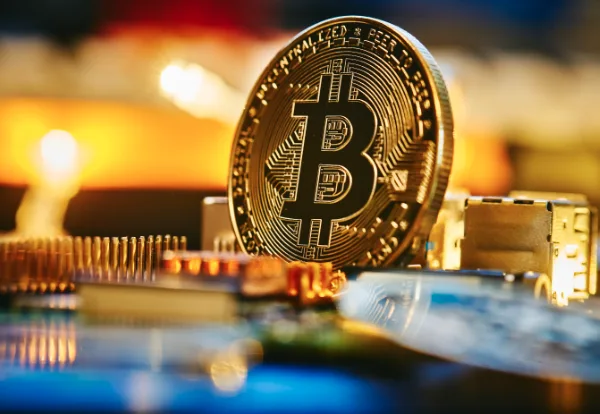
What exactly Is a bitcoin exchange?
A bitcoin exchange is a business or platform where users buy and sell bitcoin for fiat money, such as US dollars, or for other cryptocurrencies. A centralized exchange acts as a middleman that matches buyers and sellers and usually holds customers’ funds, while a decentralized exchange (DEX) lets users trade directly from their own wallets through smart contracts.
Investing in bitcoins, irrespective of how or where they are purchased, is risky owing to their volatile and risky nature. Irrespective of where you acquire bitcoin, it’s critical to remember that it is a highly volatile asset with a relatively short track record, since the network only dates back to 2009.
It’s vital to understand that keeping bitcoin in an exchanging wallet differs from keeping it in your wallet. Exchange wallets are exchange-provided custodial wallets.
Buyers and sellers are connected through bitcoin exchange sites. Traders can place a market order or a limit order, much as they would on a traditional stock exchange. A market order is executed immediately at the best price currently available, while a limit order buys at no more than, or sells at no less than, a price the trader sets, so it may not fill.
A stop order (also called a stop-loss order) tells the exchange to buy or sell once the price reaches a specified level, known as the stop price; traders often use it to limit losses. A stop-limit order turns into a limit order when the stop price is reached, which controls the price but does not guarantee execution.
Because exchange wallets are connected to the internet (so-called hot wallets), they offer a possible attack vector for hackers, but they are convenient for quick transactions and trading.
How Does a Bitcoin Exchange Work?
Most banks do not sell cryptocurrency directly, although since January 2024 investors in the United States can get bitcoin price exposure through spot bitcoin exchange-traded funds (ETFs) held in an ordinary brokerage account. After deciding to purchase bitcoin, ether or another cryptocurrency directly, you’ll need to open an account with a cryptocurrency exchange site to convert your US dollars (or other money) for digital assets.
To trade cryptocurrencies on a network, a consumer must first register with the exchange and go through identification verification procedures. The user’s account is created after the authentication procedure, and they must fund it before they purchase coins.
Mining is a separate activity from trading on an exchange. Mining is how new bitcoin is issued: miners use specialized ASIC hardware to add a new block roughly every 10 minutes, and the block reward is currently 3.125 BTC. Home mining is generally unprofitable because of hardware and electricity costs, which is why individual miners usually join mining pools. Cracking cryptographic riddles and contributing new entries to the Bitcoins Blockchain network can earn you money.
Mining income depends on the efficiency of the hardware, the price of electricity where the machines run, the network difficulty (recalibrated about every two weeks) and the bitcoin price. Anyone thinking of paying a third-party mining company should first check whether it is authorized by their financial regulator, for example on the UK FCA’s register and Warning List.
Things to consider
Whether you plan to keep your cryptocurrency assets on an interchange for a lot longer or only have it there for a short time before transferring them to your account, the exchange’s safety is a primary concern.
Based on your jurisdiction, you will be unable to purchase cryptocurrencies on specific exchanges due to state or federal regulations. Another thing to consider is charges: compare trading fees, spreads and withdrawal fees before choosing an exchange, because they differ between platforms and between account tiers.
Benefits
Cryptocurrency exchanges offer numerous benefits. For example, many cryptocurrency users believe that decentralized exchanges fit the decentralized design of most digital currencies better; many decentralized exchanges also do not require identity verification (KYC), unlike regulated centralized exchanges.
An earlier version of this article pointed readers to the following website, which Justwebworld has not reviewed and which did not load when this guide was updated in September 2026: www.xn--la-formule-franaise-kyb.com. Ease of use should not be the main reason to pick any exchange; regulation, security and fees matter more. On a decentralized exchange, users trade directly from their own wallets, which removes the need to deposit funds with an exchange and reduces exposure to exchange hacks, although smart-contract bugs remain a risk.
Decentralized marketplaces are not immune to manipulation, however: front-running, in which participants reorder pending transactions for profit, is a known risk on DEXs, and blockchain transactions generally cannot be reversed.
Final words
We hope this article helped you understand more about bitcoin and cryptocurrency exchange. Weigh regulation, security, fees and your own risk tolerance before choosing an exchange. This guide is general information, not financial advice.
What Are the Types of Bitcoin Exchanges?
Bitcoin exchanges fall into two main groups: centralized exchanges (CEXs), run by a company that holds customer funds and matches orders, and decentralized exchanges (DEXs), where trades are executed by smart contracts and users keep their own private keys. Most DEXs use automated market makers (AMMs), in which users trade against liquidity pools funded by other users rather than against an order book. Uniswap, which trades Ethereum-based tokens, is a widely cited example of a DEX.
| Feature | Centralized exchange (CEX) | Decentralized exchange (DEX) |
|---|---|---|
| Who holds the funds | The exchange (custodial) | The user’s own wallet (non-custodial) |
| Identity checks | Usually required (KYC) by regulated exchanges | Typically none |
| Buying with dollars or euros | Yes, via bank transfer or card | Generally crypto-to-crypto only |
| How trades are matched | Order book run by the company | Liquidity pools (AMMs) or on-chain order books |
| Main fees | Trading fees, spreads, withdrawal fees | Pool fees plus blockchain gas fees |
| Main risks | Hacks, insolvency, misuse of customer funds | Smart-contract bugs, front-running, lost keys with no recovery |
How Do You Buy Bitcoin on an Exchange?
Buying bitcoin on a centralized exchange follows the same basic steps on most platforms:
- Check the exchange is authorized where you live, for example on the FCA register in the UK, the national financial regulator in EU countries, or the state regulator in the US.
- Open an account and complete identity verification (KYC), which regulated exchanges require under anti-money-laundering rules.
- Secure the account with a strong unique password and two-factor authentication before depositing money.
- Fund the account by bank transfer or card, checking the deposit fee first, because funding fees vary by payment method.
- Place an order: a market order to buy immediately at the best available price, or a limit order to buy only at your chosen price or lower.
- Decide where to store the bitcoin: leave it in the exchange’s custodial wallet or withdraw it to a wallet you control. Our guide on how to choose a bitcoin wallet compares the options.
How Much Do Bitcoin Exchanges Charge?
Bitcoin exchange fees come in several forms, and the headline trading fee is only one of them. Most exchanges use a maker-taker model: a maker adds liquidity with an order that waits on the order book and pays a lower fee, while a taker removes liquidity with an order that fills immediately and pays more.
- Trading fees: for example, Kraken Pro’s entry spot tier listed a 0.40% maker fee and a 0.80% taker fee as of September 2026, with lower rates at higher 30-day trading volumes.
- Spread: simple instant-buy screens build a spread into the quoted price, the difference between the market rate and the rate you receive.
- Funding and withdrawal fees: these vary by payment method and coin and can include blockchain network fees.
- Gas fees on DEXs: decentralized exchanges charge a pool fee plus the blockchain’s transaction (gas) fee.
Fee schedules change often, so compare the current published schedule of each exchange, including withdrawal fees, before funding an account. When you later sell, our guide on how to cash out bitcoin covers the withdrawal side.
Are Bitcoin Exchanges Safe?
Bitcoin exchanges carry risks that a bank account does not, because a centralized exchange holds customers’ coins and can be hacked or fail. Three cases show the range of what can go wrong:
- Mt. Gox (2014): the largest bitcoin exchange of its time filed for bankruptcy protection in February 2014 after bitcoins were stolen from its hot wallet over a period beginning in late 2011.
- FTX (2022): FTX, once valued at $18 billion, entered US bankruptcy proceedings on 11 November 2022; about $10 billion of customer assets had been lent to its affiliated trading firm, Alameda Research.
- Bybit (2025): on 21 February 2025, attackers stole about 400,000 ether, worth roughly $1.4-1.5 billion, from the Dubai-based exchange, described as the largest crypto exchange hack to date; the FBI attributed it to North Korea-linked actors.
The main defence is limiting how much you leave on any exchange. A hot wallet is connected to the internet and is convenient for trading; a cold wallet, such as a hardware wallet, keeps private keys offline and signs transactions without exposing them to the computer. Most modern wallets can be restored from a seed phrase of 12 to 24 words, so that phrase must be stored offline and never shared; see how to secure a bitcoin seed phrase.
How Are Bitcoin Exchanges Regulated?
Bitcoin exchange regulation depends on the country where the customer lives, not only where the exchange is based. The main regimes, as of September 2026:
| Jurisdiction | Key rule for exchanges |
|---|---|
| European Union | The Markets in Crypto-Assets Regulation (MiCA) has applied in full since 30 December 2024. Crypto-asset service providers had a transitional period until 1 July 2026; ESMA has said firms operating without MiCA authorization after that date are in breach of EU law. |
| United Kingdom | The FCA has supervised crypto firms for anti-money-laundering purposes since 10 January 2020, and crypto marketing to UK consumers has been subject to its financial promotions rules since 8 October 2023. In June 2026 the FCA published final rules for a fuller regime applying to firms authorized from 25 October 2027. |
| United States | Oversight is split between federal and state authorities. New York requires a BitLicense from its Department of Financial Services (in effect since 8 August 2015); the SEC says platforms trading assets that are securities must register or be exempt; and the GENIUS Act, signed on 18 July 2025, set federal rules for payment stablecoins. |
| Japan | Operating a crypto exchange requires a license from the Financial Services Agency. |
Tax reporting is tightening too. In the US, brokers, including crypto exchanges, must issue Form 1099-DA reporting digital asset sales, starting with 2025 transactions, and the IRS says taxpayers must report all digital asset gains and losses whether or not they receive the form. For the wider picture, read our guide to bitcoin taxation and our overview of legal safeguards for crypto investors.
How Can You Spot a Fake or Unsafe Exchange?
Crypto fraud is widespread: according to the FBI’s Internet Crime Complaint Center (IC3), Americans reported nearly $20.9 billion in cybercrime losses in 2025, and more than $11 billion of that was cryptocurrency-related. Practical checks before depositing money:
- Search the exchange’s legal name on your regulator’s register and on warning lists such as the FCA Warning List.
- Type the exchange’s web address yourself or use its official app; do not follow links from unsolicited messages, social media ads or new online contacts.
- Treat promises of fixed or guaranteed profits, and pressure to deposit quickly, as reasons to stop.
- Make a small test withdrawal before depositing large amounts.
- If you have been defrauded, contact your bank or card issuer immediately and report it to the police; in the US, the FBI’s IC3 accepts online fraud complaints.
Are There Alternatives to Buying on an Exchange?
People who want bitcoin price exposure without holding coins themselves have another route in the United States: the first 11 US spot bitcoin ETFs began trading in January 2024 and can be bought through an ordinary brokerage account. ETF holders do not control private keys and cannot send bitcoin on-chain. People interested in the supply side can read our beginner’s guide to bitcoin mining.
Frequently Asked Questions
What is the difference between a bitcoin exchange and a bitcoin wallet?
A bitcoin exchange is a marketplace for buying and selling bitcoin, while a wallet stores the private keys that control it. Coins left on a centralized exchange sit in a custodial wallet controlled by the exchange; a personal wallet, such as a hardware wallet, puts the keys under your own control.
Is it safe to keep bitcoin on an exchange?
Keeping bitcoin on an exchange is convenient but exposes it to hacks and insolvency, as the Mt. Gox, FTX and Bybit cases showed. Many holders keep only trading balances on an exchange and move longer-term holdings to a wallet they control.
What is the difference between a market order and a limit order?
A market order is executed immediately at the best available price, so execution is certain but the price is not. A limit order buys at no more than, or sells at no less than, a price you set, so the price is controlled but the order may not fill.
Do I need to verify my identity to use a bitcoin exchange?
Regulated centralized exchanges generally require identity verification (KYC) before you can deposit or trade, as part of anti-money-laundering rules. Decentralized exchanges typically do not, but they also offer no account recovery if you lose your keys.
Are decentralized exchanges safer than centralized ones?
Decentralized exchanges remove the risk of an exchange losing or misusing your deposits, because you keep your own keys. They add other risks, including smart-contract bugs, front-running and irreversible mistakes, so neither type is risk-free.
Do I pay tax when I sell bitcoin bought on an exchange?
In many countries, selling or swapping bitcoin can create a taxable gain or loss. In the US, the IRS requires taxpayers to report all digital asset gains and losses, and brokers issue Form 1099-DA for 2025 and later transactions; rules differ elsewhere, so check your national tax authority.

Justwebworld has published guides since 2012. How we write and update articles Report an error
