Health insurance pricing depends on far more than a simple estimate of medical expenses. Insurers need to understand health patterns, treatment trends, claim behaviour, and changing healthcare needs before arriving at a fair premium. Data analytics brings these pieces together and turns large volumes of information into practical insights.
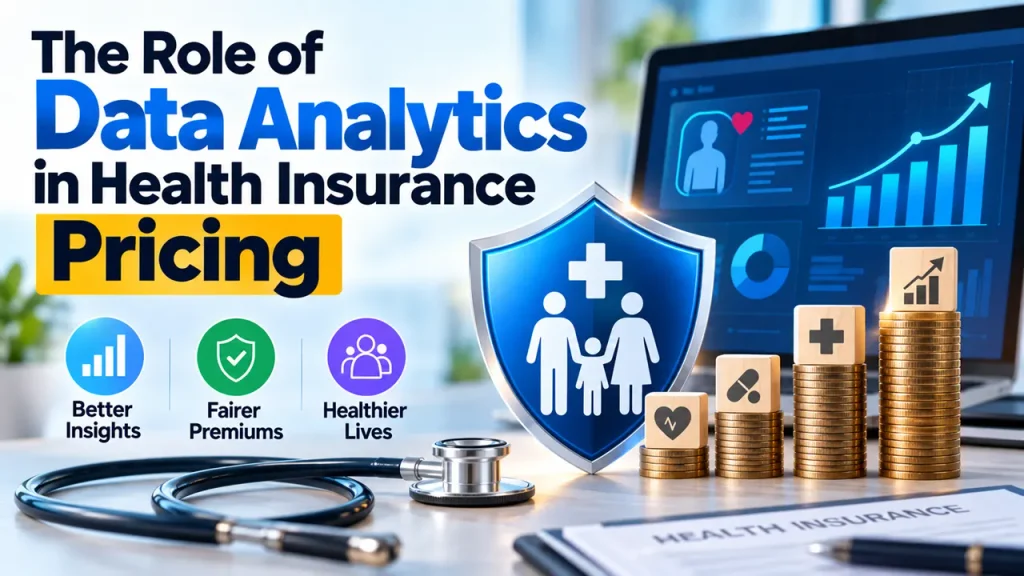
It helps insurers price policies with greater care while giving customers a clearer connection between risk, coverage, and cost. This makes pricing decisions more informed, consistent, and relevant over time.
Helps Set Health Insurance Premiums
Data analytics gives insurers a broader view of the factors that can influence premium pricing. Information linked to age, medical history, claim patterns, location, and lifestyle can be studied together rather than in isolation. This supports better assessment of risk across different customer groups.
- It helps insurers understand common claim patterns.
- It also helps customers understand why health insurance plans may carry different premium structures for different people.
- It supports more balanced pricing across different risk profiles.
Assesses Customer Health Risks
Understanding health risk is an important part of insurance pricing. Data analytics can bring together relevant information from applications, past claims, medical records, and other approved sources to create a clearer risk picture. This can help insurers avoid relying on broad assumptions.
- Health patterns can be assessed more consistently.
- Similar risk profiles can be grouped for better evaluation.
- A health insurance premium calculator can then help customers estimate premiums based on applicable details before making coverage decisions.
Predicts Healthcare Costs
Healthcare costs can change because of treatment trends, hospital charges, medical technology, and claim frequency. Analytics helps insurers study past and emerging patterns to estimate how these costs may develop. This is useful when premiums need to reflect realistic future exposure.
- Historical claim data can reveal cost movements.
- Treatment patterns may indicate changing expense levels.
- Better cost forecasting can support sustainable pricing while helping insurers keep coverage practical for customers over the longer term with greater confidence.
Improves Premium Accuracy
Premiums need to reflect risk without becoming unnecessarily broad or inconsistent. Data analytics improves accuracy by allowing insurers to compare multiple factors and identify patterns that may not be obvious through manual review alone. This can create a more refined pricing process.
- Risk factors can be weighted more carefully.
- Pricing models can be updated when patterns change.
- Greater accuracy may reduce the chance of overpricing or underpricing certain customer groups without proper supporting evidence during pricing reviews.
Identifies High-Risk Customers
Some customers may present a higher likelihood of future claims because of health conditions, past claim behaviour, or other relevant underwriting factors. Analytics can help insurers recognise these patterns more carefully and consistently. The purpose is not simply to label customers, but to understand risk more accurately.
- Higher risk patterns can be identified earlier.
- Underwriting decisions may become more evidence-based.
- Suitable pricing can then reflect the level of risk considered during assessment and applicable policy terms.
Helps Prevent Insurance Fraud
Fraudulent claims can increase costs across the insurance system and may eventually affect how premiums are calculated. Data analytics can help insurers detect unusual claim behaviour, repeated patterns, or inconsistencies that deserve closer review. This strengthens the overall pricing process.
- Suspicious claim patterns can be flagged for investigation.
- Duplicate or unusual activity may be identified faster.
- Reducing avoidable claim leakage can support more stable pricing and help protect genuine policyholders from unnecessary cost pressure across the system.
Supports Personalised Insurance Plans
Customers do not all have the same health needs, lifestyle patterns, or coverage expectations. Data analytics can help insurers understand these differences and design products that are more closely aligned with customer profiles. Personalisation can make insurance feel more relevant and practical.
- Coverage options may be matched with different needs.
- Pricing can reflect applicable risk more closely.
- Customers may receive plans that better suit their health priorities, budget considerations, and expected level of protection in everyday life.
Improves Health Insurance Pricing Decisions
Good pricing decisions depend on reliable information, consistent assessment, and regular review. Data analytics supports all three by helping insurers study risk, costs, claims, and customer behaviour together. This creates a stronger basis for pricing decisions rather than relying heavily on general assumptions.
- Pricing models can be reviewed as new patterns emerge.
- Decisions can become more consistent across customer groups.
- Insurers can respond more effectively to changing healthcare and claim conditions over time and support responsible pricing.
Conclusion
Data analytics has become an important part of modern health insurance pricing because it helps insurers understand risk with greater depth and consistency. From premium setting and cost forecasting to fraud detection and personalised coverage, data can support decisions that are more balanced and relevant. For customers, this can mean a pricing process that feels easier to understand and more closely connected to individual risk. Used responsibly, analytics can support a more informed and sustainable health insurance market overall today.