

Waterfront property has always had an obvious attraction, but the idea of waterfront living is changing. Buyers are no longer looking only at the view from an apartment or the distance to the beach. Increasingly, they are paying attention to what sits around the home: places to eat, walk, shop, work and spend time outdoors.
That is why mixed-use waterfront communities are gaining ground in cities around the world.
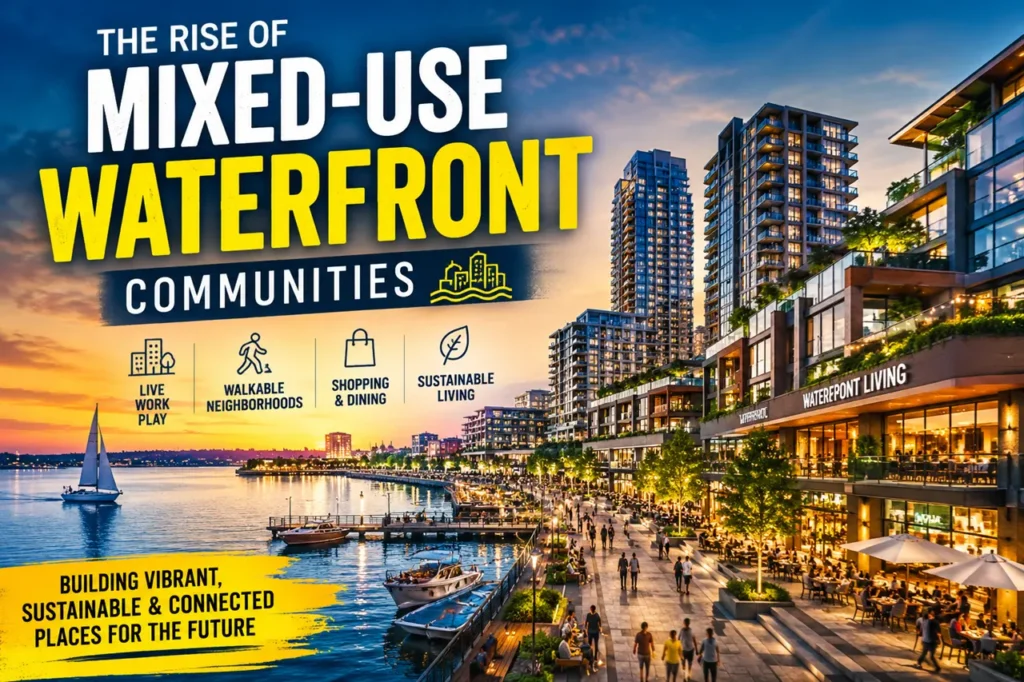
Why This Type of Neighbourhood Works
A waterfront district can make daily life easier without making it feel crowded. Residents may have a supermarket nearby, cafés within walking distance, and restaurants that do not require a long drive across the city.
People still want privacy at home, but they also want more of their routine to happen close by. That difference can matter more in practice than a long amenities list.
The Trend is Visible Across Global Cities
This trend is not limited to one market. Singapore’s Marina Bay combines homes, offices, hotels, retail and public waterfront spaces. In Sydney, harbour-side areas bring together residential buildings, restaurants, promenades and cultural spaces. Miami has also developed waterfront neighbourhoods where apartments, marinas, dining and leisure are close together.
Dubai has followed the same direction, although its waterfront communities vary widely in scale and character. Some are built around beaches, others around marinas or island settings.
For buyers comparing several international markets, Dubai may sit alongside places such as Singapore, Sydney or Miami rather than being considered in isolation.
Within the city, Jumeirah Bay apartments may interest buyers who want an island setting while remaining connected to Dubai. The appeal comes from the combination of waterfront surroundings, residential privacy and access to the wider city.
A Good View is Not Enough
Waterfront developments can look impressive at first. The longer-term experience usually depends on less glamorous details.
Traffic flow matters. So does parking. Residents need to know whether public areas become noisy at busy times, whether visitors can enter residential zones easily and whether shops and restaurants are genuinely convenient rather than simply part of the marketing plan.
Maintenance is another point that is easy to overlook. Promenades, landscaping, shared facilities and waterfront infrastructure need regular upkeep if the area is to remain pleasant over time.
Public Space Can Change the Feel of a Community
One reason mixed-use waterfront districts can feel livelier is the quality of their shared spaces.
A promenade that people actually use, shaded seating, walking routes and places to stop for coffee can make the neighbourhood feel more natural.
These details encourage residents to spend time outside rather than moving directly between their apartments, cars and workplaces.
The waterfront then becomes part of daily life rather than a backdrop.
Privacy Still Matters
More activity does not automatically mean better living. The strongest communities usually create some separation between busy commercial areas and quieter residential spaces.
Buyers may want to look at where restaurants are placed, how visitor traffic is managed and whether future construction could change the character of the area.
Conclusion
Mixed-use waterfront communities are becoming more popular because they offer more than scenery. They combine homes with the services and public spaces people use every day.
From Singapore and Sydney to Miami and Dubai, the most successful examples tend to balance activity with privacy and convenience with thoughtful planning.
For buyers, the real question is not whether the water is visible from the window. It is whether the neighbourhood still works well on an ordinary day. That is what gives a waterfront community lasting appeal.

Justwebworld has published guides since 2012. How we write and update articles Report an error
