

Note (October 2026): Banshee, listed below, is no longer developed (its repository is archived and its last release dates from 2014), and the cmus streaming service named “Loudcast” has been corrected to Icecast.
The best Linux music players include Rhythmbox (the default on Fedora, Ubuntu and Linux Mint), VLC for music and video, Amarok for KDE users with large libraries, Audacious for low resource use, GNOME Music and Lollypop for GNOME, and cmus for the terminal. Banshee is archived and no longer maintained as of October 2026.
Key Takeaways
- Rhythmbox is the default audio player on Fedora, Ubuntu and Linux Mint, according to Wikipedia.
- Amarok was revived in 2024; version 3.3.3 was released in June 2026.
- Banshee is archived; its last tagged release dates from March 2014.
- cmus is a keyboard-driven terminal player that streams SHOUTcast and Icecast radio.
- Strawberry, a Clementine fork, is an actively developed alternative for large collections.
In this Justwebworld guide, we compare the best linux music media player apps. Music is part of daily life for many people, so a good player matters. This guide covers ten music players for linux users. Each entry below explains what the player does well and whether it is still maintained as of October 2026, followed by a comparison table and tips on choosing one.
Latest Free Linux Music Player Apps

Banshee
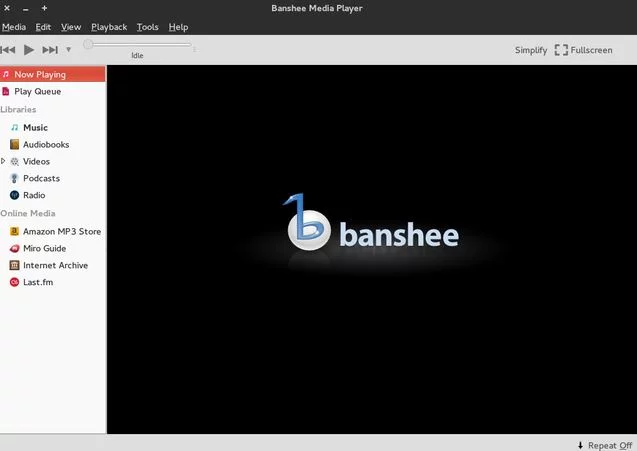
Banshee was a popular open-source music player for Linux; the original version of this article also described it as working on Windows and Mac OS. Banshee is no longer developed: its source repository is archived (read-only) on GNOME’s GitLab, and its last tagged release dates from March 2014. In its day, Banshee played a wide range of music and video formats, streamed music online and synced with some portable devices, but on a current Linux system an actively maintained player such as Rhythmbox or Strawberry is the safer choice.
VLC
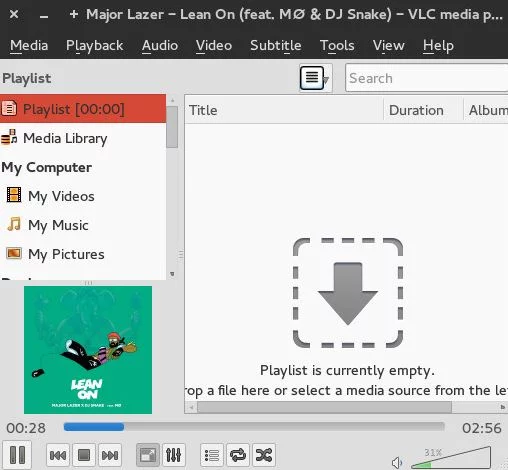
Most computer users have heard of VLC , the free and open-source media player from the VideoLAN project. VLC media player runs on Windows, macOS, Linux, Android, iOS and other platforms, and it plays most audio and video formats without extra codec packs because it bundles its own decoding libraries. Its best-known strengths are extensive keyboard shortcuts and built-in tools for converting and streaming media. As of October 2026, the current stable version is VLC 3.0.24.
RhythmBox

RhythmBox is a free audio player, tag editor and music organizer designed for the GNOME desktop that also works on other Linux desktop environments. Ubuntu is itself a Linux distribution, and according to Wikipedia, Rhythmbox is the default audio player on several distributions, including Fedora, Ubuntu (since version 12.04 LTS) and Linux Mint. The interface is basic, tidy and easy to use, and Rhythmbox can also play podcasts and online radio. As of October 2026, the latest release is Rhythmbox 3.5.1 (August 2026).
Amarok

Amarok is a feature-rich, open-source music player from the KDE project that runs on Linux, macOS, Windows and other Unix-like systems. The original version of this article said Amarok sounds better than VLC; that comparison is subjective and was never measured. The author’s favorite feature was Amarok’s option for finding song lyrics online. After years of slow development, Amarok was revived with version 3.0 in April 2024, and as of October 2026 the latest release is Amarok 3.3.3 (June 2026).
Gnome Music
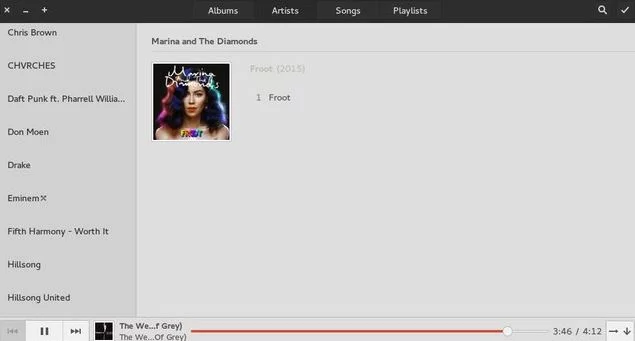
Gnome Music is the music app of the GNOME desktop environment, built as an easy way to play and organize a local music collection. GNOME Music has a clean interface that groups music into categories such as albums, artists and playlists, and it can create playlists automatically. It is light and attractive, and as of October 2026 the newest release is version 50.0 (June 2026), which can be installed from Flathub.
Cmus

Cmus (C* Music Player) is a small, fast console music player for Unix-like systems that runs in a terminal and is controlled from the keyboard. It suits users who are comfortable with the command line and vi-style keybindings. According to its website, cmus plays Ogg Vorbis, MP3, FLAC, Opus, AAC, WAV and anything FFmpeg supports, offers gapless playback and ReplayGain, and streams MP3 and Ogg internet radio over SHOUTcast and Icecast. It is known to work on Linux, macOS, FreeBSD, NetBSD, OpenBSD and Cygwin; the latest release is cmus 2.12.0 (October 2024).
Audacious
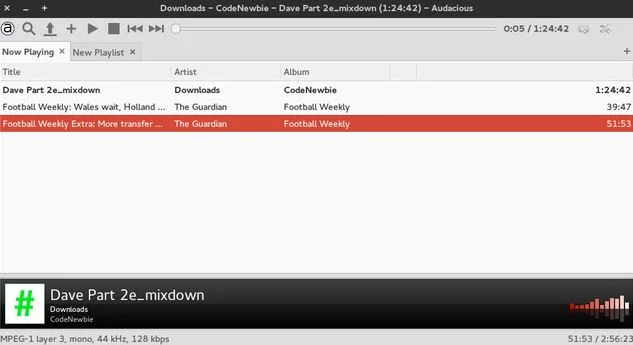
Audacious is a simple, lightweight open-source audio player descended from XMMS, with a focus on low resource use and broad format support. Audacious mainly plays music already stored on your HDD or SSD, plus audio CDs and internet streams; it does not connect to an online music store. It can use a Winamp Classic skin and includes plugins for fetching lyrics and showing a VU meter. The original article said Audacious uses less than 10 MB of RAM during background playback; that figure was not independently measured, and real memory use depends on the version, interface and plugins. As of October 2026, the current version is Audacious 4.6.1, and it also runs on BSD, macOS and Windows.
DeadBeef
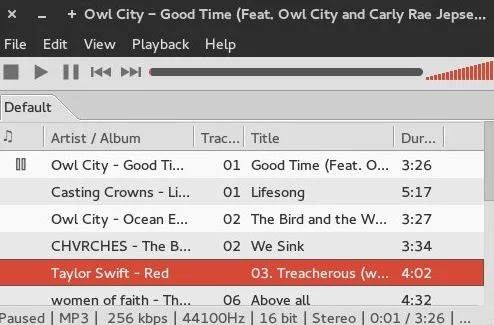
DeadBeef (officially styled DeaDBeeF, after the hex value 0xDEADBEEF) is a modular audio player first released in August 2009. DeaDBeeF suits users who want a classic, highly customizable player: it plays a very wide range of formats, including chiptune and tracker-module files, converts between formats, has a capable tag editor and lets you rearrange its interface. It runs on Linux, macOS, Windows, BSD and other Unix-like systems. The original author of this article reported using it for many years because of its build and sound quality.
Clementine
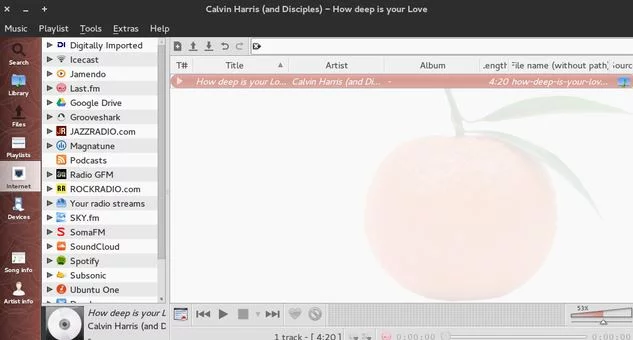
Clementine is a free, open-source audio player that started in February 2010 as a port of Amarok 1.4 to the Qt 4 and GStreamer frameworks. Its library, organized into folders and categories for browsing and searching music, invites comparison with iTunes, although the two apps look different. Clementine runs on Linux, Windows and macOS; after years without a stable release, a new non-release-candidate version appeared on 15 October 2024. Strawberry, a 2018 fork of Clementine, focuses on local music collections and is actively updated (version 1.2.31 was released in October 2026).
LollyPop

Lollypop is a lightweight, modern music player designed for the GNOME desktop. Lollypop plays MP3/MP4, Ogg and FLAC files, fetches lyrics, artist biographies and cover art online, supports ReplayGain, and offers a party mode and a full-screen view. A search option helps you find the song you want quickly. Lollypop is still maintained: version 1.4.47 was tagged in October 2026, and it is available on Flathub.
Free Music Downloading Apps For Android
Conclusion
Above are ten of the best media music player apps for linux. For most people, Rhythmbox or GNOME Music is the simplest choice, VLC also covers video, Audacious and DeaDBeeF suit those who want a light classic player, and cmus suits terminal users. If you have any question, you can contact us using the contact page or write a comment below, and feel free to share the post.
Thanks For Giving Us Your Precious Time. 😀
Linux Music Players Compared
The table below summarizes the ten players in this list, with their status as of October 2026, checked against each project’s official site or source repository.
| Player | Interface | Best for | Also runs on | Status (October 2026) |
|---|---|---|---|---|
| Banshee | Graphical | Legacy installs only | Linux | Archived; last tag March 2014 |
| VLC media player | Graphical (Qt) | Music and video in one app | Windows, macOS, Android, iOS | Active; version 3.0.24 |
| Rhythmbox | Graphical (GTK) | GNOME users, podcasts, radio | Other Unix-like systems | Active; version 3.5.1 |
| Amarok | Graphical (Qt, KDE) | Large libraries, KDE Plasma | macOS, Windows | Active; version 3.3.3 |
| GNOME Music | Graphical | Simple local collections | Linux (Flathub) | Active; version 50.0 |
| cmus | Terminal | Keyboard and command-line users | macOS, BSD, Cygwin | Version 2.12.0 (October 2024) |
| Audacious | Graphical (Qt or GTK) | Low resource use, Winamp skins | BSD, macOS, Windows | Active; version 4.6.1 |
| DeaDBeeF | Graphical, customizable | Many formats, chiptunes, tagging | macOS, Windows, BSD | Available from its official site |
| Clementine | Graphical (Qt) | Amarok 1.4-style library | Windows, macOS | Development resumed on GitHub |
| Lollypop | Graphical | Modern GNOME look, party mode | Linux (Flathub) | Active; version 1.4.47 |
How to Choose a Linux Music Player
The right Linux music player depends on your desktop, your library and how you like to work. These criteria narrow the choice quickly:
- Desktop environment: Rhythmbox, GNOME Music and Lollypop are designed for the GNOME desktop; Amarok is part of the KDE project and fits KDE Plasma.
- Maintenance: prefer a player with recent releases. Banshee is archived, so it no longer receives fixes.
- Library size and tagging: Amarok, Clementine, Strawberry and DeaDBeeF offer stronger library and tag-editing tools than minimal players.
- Resources: Audacious is designed for low resource use, and cmus runs in a terminal with no graphical interface at all.
- Video: VLC is the only full video player in this list.
- Streaming: Rhythmbox, Audacious and cmus can play internet radio streams; cmus supports SHOUTcast and Icecast.
How to Install a Music Player on Linux
Most of these players are free, open-source software available from Linux distribution repositories. The simplest method is the graphical software center that ships with your distribution: search for the player by name and install it.
- Open your distribution’s software center or package manager.
- Search for the player name, such as Rhythmbox, Audacious or Strawberry.
- Install it, then point the player at the folder that holds your music.
- If your distribution’s version is old, check whether the app is published on Flathub; GNOME Music and Lollypop both are.
For people choosing a library-style player on other systems, see our guide to alternatives to iTunes for playing music. VLC users can also speed up everyday playback with these VLC media player keyboard shortcuts.
Alternatives Worth Knowing
Strawberry Music Player is a fork of Clementine released in 2018. According to its official site, Strawberry is aimed at music collectors and audiophiles and supports bit-perfect playback on Linux, smart and dynamic playlists, lyrics from multiple sources, scrobbling to Last.fm and ListenBrainz, and streaming from Subsonic-compatible servers. It is a good replacement for Banshee or Clementine users who want an actively developed library-focused player.
If you record internet radio or streams rather than play local files, our list of streaming audio recorders covers that job.
Frequently Asked Questions
What is the best music player for Linux?
There is no single best Linux music player. Rhythmbox is the default on Fedora, Ubuntu and Linux Mint and suits most people, Amarok suits KDE users with large libraries, Audacious suits low-resource systems, and cmus suits terminal users.
What is the default music player on Ubuntu?
According to Wikipedia, Rhythmbox has been the default audio player on Ubuntu since version 12.04 LTS, and it is also the default on Fedora and Linux Mint.
Is Banshee still available for Linux?
Banshee is no longer maintained. Its source repository is archived as read-only on GNOME’s GitLab, and its last tagged release dates from March 2014, so Rhythmbox or Strawberry is a better choice today.
Can VLC play music on Linux?
Yes. VLC media player is a free, cross-platform player from the VideoLAN project that runs on Linux and plays most audio and video formats. As of October 2026, the current stable version is 3.0.24.
Which Linux music player works in the terminal?
cmus is a console music player for Unix-like systems. It is controlled from the keyboard with vi-style commands, supports gapless playback and ReplayGain, and can stream SHOUTcast and Icecast radio.

Justwebworld has published guides since 2012. How we write and update articles Report an error
