

To get more visitors to a travel blog, publish detailed first-hand posts that answer what travelers actually search for, give every post a clear descriptive title, add your own photos with descriptive file names and alt text, keep pages fast, link related posts together, track results in the free Google Search Console, and share posts where travelers already gather.
Key Takeaways
- Google says its ranking systems prioritize helpful, people-first content, and it names first-hand expertise, such as having actually visited a place, as a quality signal.
- Google Search Console is a free Google service that shows which searches bring visitors to a travel blog and whether its pages are indexed.
- Google’s Core Web Vitals targets are LCP within 2.5 seconds, INP under 200 milliseconds and CLS under 0.1.
- Travel photos help search traffic only when Google can read them: use an img element, a short descriptive file name and descriptive alt text.
- The US Federal Trade Commission expects bloggers to clearly disclose free or discounted trips, stays or payments from brands they mention.
Having a travel blog tells the world that you love to set out for adventure and to explore all that the world has to offer. You can even let others know where is Arizona and the best way to get there. While traveling and navigating unknown territories may thrill you, keeping your travel blog up to date and appealing may seem like a daunting task.
Ways to get More Traffic on your Travel Blog

You have had many travel adventures, and now you want to share it with the world. But how can you get more visitors to want to follow your travels?
The most obvious trick is to constantly update your travel blog. Your blog should almost be like a travel diary, detailing all the things that you saw or experienced that day or week. Being consistent always draws a crowd, and eventually people will be refreshing their browsers to see how your visit to India went.
Making sure to update your blog with your own personal experiences will let readers into your life and make them curious. They want to accompany you on your travels, so let them!
Keeping consistent with your travel and even venturing to new places will also keep your readers waiting for your next post. If you have a travel blog, you obviously love to travel, so try to seek out the unusual and unique places that most tourists wouldn’t go (or even know about), to give yourself and your followers an inside look at where you are traveling.
While you are posting your updates (daily, weekly, or whenever you have an internet connection!), remember to keep them detailed and interesting. Try to think of what you would want to read if you were considering traveling to the place you are. What makes it special? Is it the food, culture, people?
Every place is different, and by traveling you get to experience that, so try to give the people at home (or across the globe) a vivid picture of what you have experienced.
Posting photos that you have taken on your travels is an excellent way to add to your travel blog. Photos can show your perspective of the places you visited and your own personal experience. You may have not been the first person to travel to a specific place, but the way you see it through your eyes is unique, and the pictures that you take on your adventures are too.
Accompanying your words with photos can give your readers an in-depth and complete knowledge of what you are experiencing. Photographs can also add pops of color to your blog, instead of being pages of texts. You may be able to introduce people and places to your readers that they have never experienced before (which may be why they are looking at your blog in the first place)!
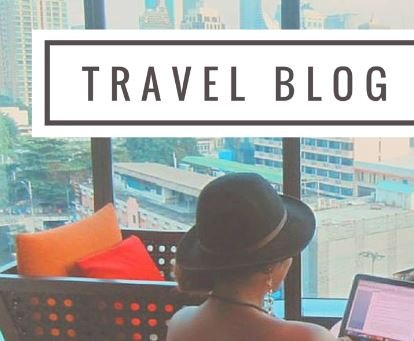
While you are traveling, try to make as many connections as you can. You can make lifelong friends to share adventures with, and you can swap practical travel tips with them, from ways to save money on the road to preparing for a driving trip (some travelers take a defensive driving course before a long road trip).
But networking can also help your blog! If you eat at an amazing hole in the wall restaurant and want to tell your followers all about it, consider talking to the owner or someone who works there and interview them for your blog. Then you can tell them and the new people you meet to check out your blog to keep in touch with you and to follow along on all of your adventures.
Staying innovative and consistent with your blog gives it the best chance of growing, although no single method guarantees traffic. There are many ways to keep your travel blog looking fresh. Only you and your travels can truly decide what will make your blog the best it can be. 🙂
Why Do Some Travel Blogs Get More Visitors Than Others?
Travel blogs that keep growing usually combine three things: content that answers a specific traveler question, pages that search engines can find and read, and steady promotion where readers already spend time. Personal stories still matter, but a diary entry alone rarely matches what people type into a search box.
According to Google Search Central’s guidance on creating helpful, reliable, people-first content, Google’s automated ranking systems are designed to prioritize helpful information created to benefit people, not content made mainly to manipulate rankings. The same guidance asks whether content shows first-hand expertise, and one of its own examples is expertise that comes from visiting a place. That is the natural advantage of a travel blogger who has been there.
How Do You Write Travel Posts People Search For?
A travel post attracts search visitors when it answers one clear question better than the pages already ranking for it. Turn each trip into several focused posts instead of one long diary entry.
- List the questions behind the trip. Examples: how many days a city needs, how to get from the airport to the center, where to stay, what a day actually costs, and the best time of year to go.
- Give each question its own post or section. A post built around one question is easier to rank than a post that touches ten topics briefly.
- Answer first, then tell the story. Put the direct answer in the first paragraph, then add the personal detail that only you can give.
- Add dated practical details. Prices, opening hours and visa rules change, so write “as of” with the month and year you checked them, and update old posts when they change.
- Write a descriptive title. Google’s title link guidance asks for descriptive, concise title text and warns against keyword stuffing, so a title such as “Two Days in Lisbon on a Budget” works better than “Lisbon Lisbon Travel Lisbon Tips”.
Readable formatting helps too. Google’s SEO Starter Guide recommends breaking long content into paragraphs and sections with headings. A free word and character counter can help you check that titles and summaries stay short.
How Should Travel Photos Be Optimized for Search?
Travel photos bring image-search visitors only when search engines can understand them. Google Search Central’s image guidance gives several concrete rules:
- Use real image elements. Google indexes images in the src attribute of an img element and does not index CSS background images.
- Use a supported format. Google Search supports BMP, GIF, JPEG, PNG, WebP, SVG and AVIF images.
- Name files descriptively. Google says a short, descriptive file name such as my-new-black-kitten.jpg is better than a generic name such as IMG00023.JPG.
- Write descriptive alt text. Alt text explains what the image shows and how it relates to the page.
- Place photos near related text. Google extracts information about an image from the page content, including captions and image titles.
Large photo files slow pages down, so compress them before uploading. The trade-offs are explained in our guide to lossy vs lossless image compression.
What Technical Basics Help a Travel Blog Get Found?
A travel blog needs to be discoverable, fast and measurable. These are the basics, with Google’s own figures as of October 2026.
| Basic | What Google says | Why it matters for a travel blog |
|---|---|---|
| Google Search Console | A free Google service to monitor, maintain and troubleshoot a site’s presence in Google Search results | Shows the searches that bring readers and indexing problems, and its URL Inspection tool can ask Google to crawl a new post |
| XML sitemap | A single sitemap is limited to 50MB uncompressed or 50,000 URLs; well-linked sites of about 500 pages or fewer may not need one | Helps search engines find new posts; most blogging platforms and SEO plugins generate one automatically |
| Largest Contentful Paint (LCP) | Aim for LCP within the first 2.5 seconds of the page starting to load | Large hero photos are a common cause of slow loading on travel blogs |
| Interaction to Next Paint (INP) | Aim for an INP of less than 200 milliseconds | Heavy ad and map scripts can make menus and galleries feel slow |
| Cumulative Layout Shift (CLS) | Aim for a CLS score of less than 0.1 | Images and ads without set dimensions push text around as the page loads |
Google’s SEO Starter Guide also notes that changes can take anywhere from a few hours to several months to show in search, and suggests waiting a few weeks before judging whether a change helped. Structured data is an optional next step, covered in our guide on how to improve SEO by using schema markup.
How Do Internal Links Increase Page Views?
Internal links keep a visitor reading after the first post. Link each destination post to related posts, such as from a city guide to a food guide or a packing list for the same trip.
Google’s SEO Starter Guide explains that anchor text, the visible text of a link, tells users and Google what the linked page is about. Use descriptive anchors such as “where to stay in the old town” rather than “click here”. A broader overview of content quality signals is in our article on what content search engines take seriously.
How Can You Promote a Travel Blog Beyond Search?
Search traffic grows slowly, so most travel bloggers also share posts directly with travelers.
- Social platforms: share photos and short trip summaries that link back to the full guide.
- Email newsletter: readers who subscribe come back for every new trip without depending on search rankings.
- Interviews and local features: as suggested above, interviewing restaurant owners or guides you meet gives the post unique information and gives them a reason to share it.
- Unusual destinations: less-covered places face less competition; our list of unusual places to visit for your next vacation shows the kind of angle that stands out.
- Cultural depth: posts about local customs and food often answer questions mainstream guides skip, as in our guide to cultural immersion and authentic travel.
What Do Travel Bloggers Need to Disclose About Free Trips?
Disclosure protects reader trust, and trust is what brings readers back. According to the US Federal Trade Commission’s guide “Disclosures 101 for Social Media Influencers”, a “material connection” with a brand includes a financial relationship, such as the brand paying you or giving you free or discounted products or services.
The FTC says the disclosure should sit with the endorsement itself so it is hard to miss, not only on an About page or at the end of a post. It lists plain wording such as “Thanks to Acme brand for the free product”, “advertisement”, “ad” or “sponsored” as often enough, and warns against vague terms such as “sp”, “spon” or “collab”. A travel blogger who received a complimentary hotel stay or tour should say so in the review.
Common Mistakes That Hold Travel Blogs Back
- Diary-only posts: “Day 3 in Rome” rarely matches a search; “How to Spend Three Days in Rome” does.
- Keyword stuffing: Google’s SEO Starter Guide says keyword stuffing is against its spam policies, and Google Search does not use the keywords meta tag.
- Unoptimized photos: camera file names and missing alt text waste image-search potential, and oversized files slow the page.
- Stale practical details: undated prices and rules mislead readers; date them and refresh them.
- Judging too early: Google suggests waiting a few weeks before assessing whether a change worked.
Frequently Asked Questions
How long does it take for a travel blog to get traffic from Google?
Traffic from Google usually builds over months rather than days. Google’s SEO Starter Guide says some changes take effect in a few hours while others can take several months, and it suggests waiting a few weeks before assessing whether a change had a beneficial effect.
Is Google Search Console free for travel bloggers?
Yes. Google describes Search Console as a free service that helps site owners monitor, maintain and troubleshoot their site’s presence in Google Search results. A blog does not need to sign up to appear in Google, but Search Console shows which searches bring visitors and flags indexing problems.
Do travel photos help a blog rank in Google Images?
Travel photos can bring image-search visitors when Google can read them. Google recommends using an img element rather than a CSS background, a supported format such as JPEG, PNG, WebP or AVIF, a short descriptive file name, descriptive alt text, and placing the image near relevant text.
Does a small travel blog need a sitemap?
A small travel blog may not need one. Google says sites of about 500 pages or fewer that are comprehensively linked internally might not need a sitemap, but most blogging platforms create one automatically anyway.
Do travel bloggers have to disclose free hotel stays?
In the United States, the FTC says endorsers should clearly disclose a material connection with a brand, which includes receiving free or discounted products or services. The disclosure should appear with the review itself, using clear words such as “ad” or “sponsored” or a plain statement of what was provided free.

Justwebworld has published guides since 2012. How we write and update articles Report an error

3 Comments
Hey if you want to increase conversions or you want to engage with new people go for seo services or make an app for your blog or website. Recently I had given my blog to most trusted known site in USA for my mobile app believe me they will do unlimited revisions.
Hope you like this message. Thank You!
Yes, you’re right. Many people who are reading a travel blog are actually accompanying the author and this is the true beauty of the travel blogging. Thanks for sharing.
Would like to be guest author here. Let me know
Thanks.
Hey Harshil,
Search engine optimization, is one of the key factors when it comes to increasing your blog’s visibility on Google and other search engines as well as helping you to grow your traffic base.
People are always looking for more information whether it’s about specific travel gear items, destinations or anything else travel-related so as long as you’re able to provide information that helps other people then you’re already well on your way towards increasing your traffic and becoming successful. Eventually, thanks for sharing your valuable information with us.
With best regards,
Amar kumar