

Diagnosis of IBS in Singapore is all too predictable most of the time. Months of bloating, cramps, irregular bowel movements, and going from one extreme to another. Multiple trips to GPs that go nowhere. Perhaps a referral to a gastroenterologist at a polyclinic or private clinic. An endoscopy that comes back structurally normal. A diagnosis of irritable bowel syndrome is based largely on symptom criteria, followed by antispasmodics or dietary advice that may or may not make any real difference to how you feel day to day.
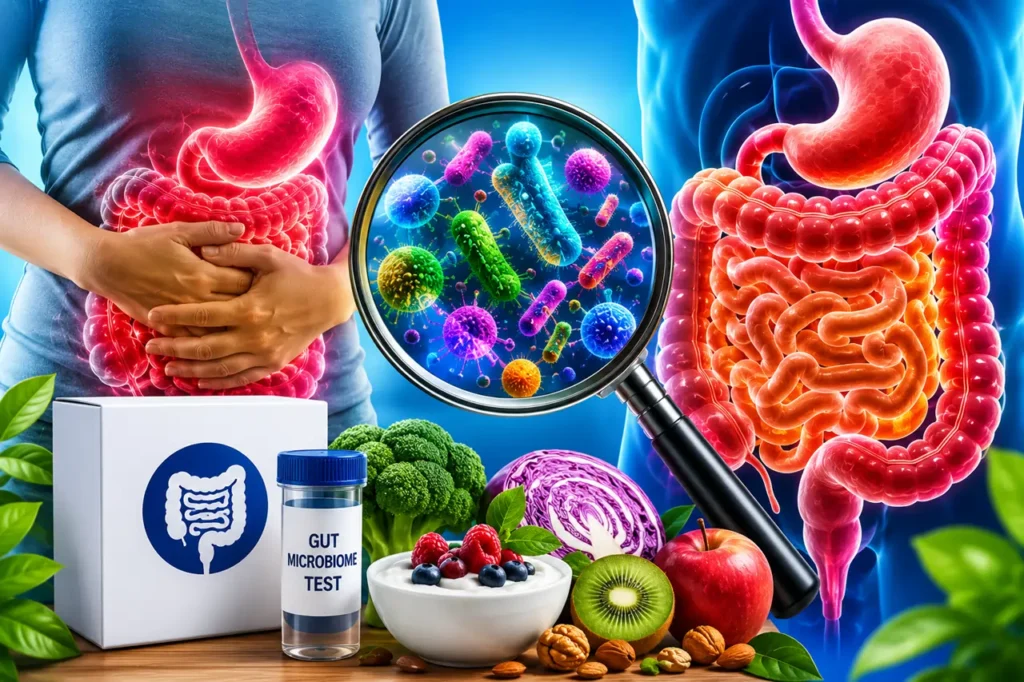
What almost never happens during that entire process is anybody checking what’s actually living inside your gut.
A gut microbiome test changes that conversation. It shifts the investigation from “what symptoms are you having” to “what bacterial imbalance may be driving them,” and for IBS patients in Singapore, that reframing can mean the difference between years of management and genuine recovery.
Why IBS and the Microbiome Are Essentially the Same Conversation
Published research has established that IBS patients consistently show measurable microbial differences. Reduced diversity, altered bacterial ratios, and overgrowth patterns correlating with symptom type.
Diarrhoea-predominant IBS tends to show different signatures than constipation-predominant presentations. Bloating-dominant cases frequently overlap with small intestinal bacterial overgrowth, where bacteria colonise the small intestine in numbers that belong downstream in the colon.
None of this appears on endoscopy or standard blood work. The only way to detect it is through a gut microbiome test that profiles what’s living in your digestive tract and whether those populations may be driving the symptoms your gastroenterologist has been calling IBS.
What a Gut Microbiome Test Reveals That Standard Workups Miss
Standard IBS diagnosis in Singapore excludes structural disease like IBD, coeliac, and colorectal pathology. Once cleared, the remaining symptoms are labelled IBS.
A gut microbiome test investigates what that pathway leaves untouched:
| What Gets Assessed | What It Tells You |
| Bacterial Diversity | Whether your ecosystem maintains digestive stability |
| Species Abundance | Which populations are overgrown or depleted |
| Inflammation Markers | Subclinical gut inflammation present without structural damage |
| Short-Chain Fatty Acid Production | Whether beneficial bacteria produce butyrate in your colon depends on |
| Pathogen and Parasite Screen | Infectious organisms contributing to symptoms attributed to IBS |
| Digestive Enzyme Output | Whether food gets broken down before bacteria ferment it |
That enzyme point catches more Singapore patients than expected. With hawker centre meals, rich laksa, and nasi lemak as staples, inadequate enzyme output creates fermentation loads mimicking IBS. Dietary restriction alone won’t resolve it because the issue isn’t what you eat but how your body processes it.
The SIBO Connection Getting Overlooked
Clinical literature suggests up to sixty per cent of IBS cases may involve SIBO as an underlying or contributing factor. That finding alone should influence how IBS gets investigated in Singapore, yet SIBO breath testing remains uncommon in standard gastroenterology practice here.
When bacteria overgrow in the small intestine, they ferment carbohydrates before nutrient absorption completes. The resulting gas production, whether hydrogen, methane, or both, can drive bloating, distension, abdominal pain, and altered bowel habits. Hydrogen-dominant overgrowth tends toward diarrhoea. Methane-dominant presentations lean toward constipation and slowed transit.
A gut microbiome test paired with SIBO breath testing creates a diagnostic picture neither provides alone. Stool analysis maps the large intestine. Breath test reveals small intestine compromise. Together, they give practitioners the specificity needed for targeted treatment.
From Symptom Management to Targeted Recovery
Treatment shifts once a gut microbiome test identifies specific imbalances rather than leaving patients with a generic label.
Low levels of butyrate producers could benefit from resistant starches such as cooked then chilled rice, unripe green bananas, legumes such as edamame and chickpeas. They provide the food required by certain bacteria responsible for producing short-chain fatty acids needed to maintain your colon mucosa. They are easily accessible in Singapore at markets and stores everywhere.
In cases of inflammation, it may be necessary to temporarily restrict certain foods based on testing results, instead of eliminating whole classes of foods indiscriminately.
Fermented foods help promote a more diverse gut flora. Kimchi, kefir, yogurt, tempeh, and miso are all common foods found in Singapore that would qualify as both prebiotic and probiotic.
For situations where it might be helpful to supplement with probiotics, strains can be suggested accordingly. The shelves at Guardian and Watsons are packed with products purchased without a diagnostic basis. A gut microbiome test provides that basis.
Conclusion
IBS does not have to remain a diagnosis you live with indefinitely. For patients in Singapore who have spent months or years managing symptoms through antispasmodics and dietary guesswork without meaningful improvement, a gut microbiome test offers what the standard workup never provided. Visibility into what may be driving the problem at a bacterial level. That transforms the clinical conversation from indefinite management to targeted intervention with measurable endpoints. The testing infrastructure exists in Singapore. Qualified practitioners are available. The missing piece for most patients is simply knowing this investigation is an option, and that their IBS likely has a more specific, treatable explanation than anyone has thought to look for.
A related condition gets confused with it — what to know about leaky gut syndrome separates them.

Justwebworld has published guides since 2012. How we write and update articles Report an error
