Parking has become a serious problem in modern cities because the number of vehicles is growing much faster than available space. This imbalance is creating traffic congestion, daily stress, pollution, safety risks, and long-term urban planning challenges. What once felt like a minor inconvenience has now turned into a full-scale urban crisis that affects how cities move, breathe, and function.
In this beginner-friendly guide, you’ll clearly understand why parking is the new urban crisis, how it impacts everyday city life, and what the future holds if cities don’t act now.
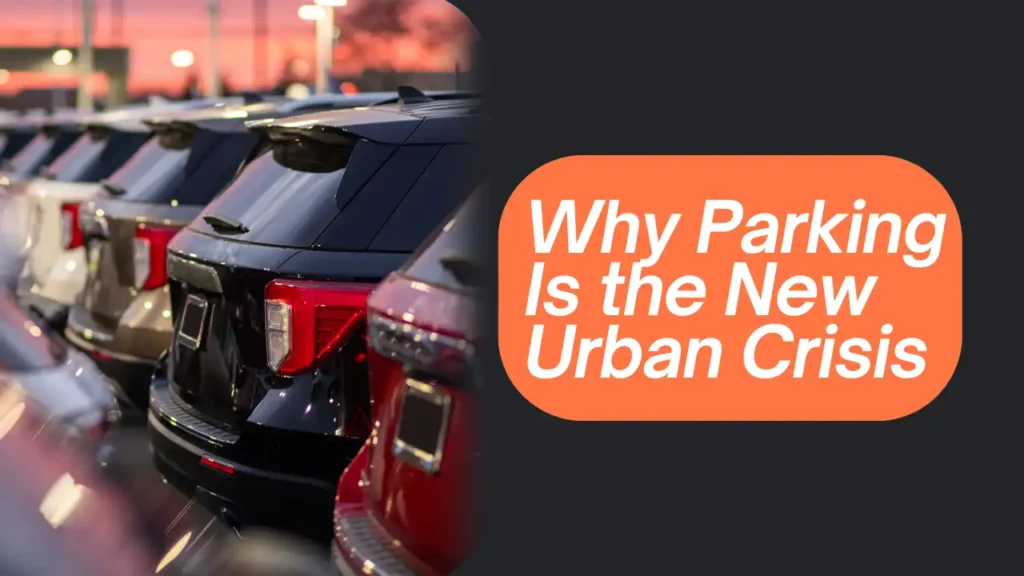
What Is the Parking Crisis and Why It Matters Today
The parking crisis refers to the growing gap between the number of vehicles and the space available to park them safely and legally. In simple words, cities have more cars than places to keep them.
Earlier, parking issues were limited to busy markets or office areas. Today, parking problems in urban areas exist everywhere—residential streets, hospitals, schools, malls, and even small neighborhoods. This shift shows that parking is no longer a local issue but a citywide problem.
Parking matters because it directly affects traffic flow, emergency access, air quality, mental health, and urban safety.
Rapid Urbanization and Rising Vehicle Ownership
One of the biggest reasons behind the urban parking crisis is rising vehicle ownership. As incomes grow and financing becomes easier, more households own one or even multiple vehicles.
However, cities are not expanding their infrastructure at the same pace. Most urban areas still rely on:
- Old road networks.
- Limited public parking facilities.
- Poorly planned residential layouts.
This results in car overpopulation in cities, where streets become storage spaces instead of movement corridors.

Urban growth without transport planning leads to long-term damage.
How To Negotiate Car Price Like A Pro.
Parking Shortage and Its Direct Impact on Daily Life
A parking shortage may sound like a small issue, but its daily impact is massive. People spend extra time searching for parking, arrive late to work, miss appointments, and feel frustrated even before their day begins.
Common effects include:
- Wasted time and fuel
- Increased stress levels
- Reduced productivity
- Avoidance of certain city areas.
Over time, this creates parking stress in cities, affecting overall quality of life.
How Parking Causes Traffic Congestion in Cities
Many people don’t realize that traffic congestion due to parking is a major contributor to urban traffic problems. When drivers circle roads looking for parking, they slow down traffic and block lanes.
This leads to:
- Longer travel times
- Unpredictable traffic patterns.
- Increased fuel consumption.
In crowded zones, even one wrongly parked car can disrupt traffic flow for hours. Parking congestion and city traffic congestion are deeply interconnected problems.
On-Street Parking Problems and Road Safety
On-street parking problems are among the most visible signs of poor urban planning. Vehicles parked along narrow roads reduce usable space and create blind spots.
This increases the risk of:
- Road accidents
- Pedestrian injuries
- Delayed emergency services.
Fire trucks, ambulances, and police vehicles often struggle to move through congested streets due to parked cars. This turns parking into a public safety issue, not just a convenience problem.
Illegal Parking in Cities: A Symptom, Not the Cause
Illegal parking in cities is often blamed on careless drivers. In reality, it is usually a result of lack of parking space and poor alternatives.
 The Top Most Expensive Diamonds In the World
When legal parking is:
- Too expensive
- Too far away
- Poorly managed
People choose illegal options. Strict fines alone cannot solve the problem. Without proper planning and parking management systems, enforcement only adds pressure, not solutions.
Illegal parking is a sign of deeper urban infrastructure issues.
Public Parking Problems and Economic Pressure
Public parking problems affect both individuals and businesses. High parking fees and limited availability discourage people from visiting markets, restaurants, and local shops.
Paid parking issues often:
- Increase daily commuting costs.
- Hurt small businesses.
- Create inequality in access.
Those who cannot afford premium parking are pushed toward illegal or unsafe options. This highlights how parking contributes to broader city life problems and social imbalance.
Parking Stress and Urban Mental Health
Urban driving stress often begins and ends with parking. The uncertainty of finding a spot creates anxiety, frustration, and fatigue.
Over time, this stress:
- Affects mental well-being.
- Reduces patience and road discipline.
- Increases aggression and burnout.
Parking issues in cities quietly add to the mental load of urban living, especially for daily commuters.
Environmental Impact of Parking and Pollution
The environmental impact of parking is often overlooked. Vehicles searching for parking release unnecessary emissions and increase air pollution from traffic.
Key environmental effects include:
- Higher carbon emissions.
- Increased fuel wastage.
- Noise pollution.
These factors work against sustainable urban transport goals. Even electric vehicles do not solve the problem entirely because they still require physical parking space.
Efficient parking is essential for cleaner cities.
How Parking Wastes Valuable Urban Space
Urban land is limited and expensive. Yet, a large portion of city space is used for parking.

Parking areas often replace:
- Green spaces
- Affordable housing
- Pedestrian zones
- Cycling infrastructure.
This creates long-term urban development challenges. Cities that prioritize vehicle storage over people-friendly spaces become less livable over time.
Urban Planning Failure and Infrastructure Gaps
Many modern parking issues are the result of urban planning failure. Cities expanded vertically but ignored transport and parking needs.
Common planning gaps include:
- Residential buildings without adequate parking.
- Commercial hubs without access planning.
- Poor integration of transport modes.
These urban infrastructure issues create long-term problems that are costly and difficult to reverse.
Smart Parking Solutions and Technology
Technology can play a major role in reducing parking problems. Smart parking solutions use sensors, apps, and real-time data to guide drivers to available spaces.
Benefits include:
- Reduced search time
- Lower congestion
- Better space utilization.
Smart city parking systems do not create new space but make better use of existing infrastructure. Combined with fair pricing and clear policies, technology can significantly reduce parking chaos.
Sustainable Urban Transport as a Long-Term Fix
Parking problems cannot be solved by parking alone. Cities must reduce dependence on private vehicles.
Sustainable urban transport includes:
- Reliable public transport
- Safe walking and cycling routes.
- Integrated mobility planning.
When people have better alternatives, car usage decreases naturally. This reduces pressure on parking space and improves urban mobility.
The Future of Urban Transport and Parking
The future of urban transport depends on how cities handle parking today. If current trends continue, cities will face:
- Worse congestion
- Higher pollution
- Increased stress
However, cities that act early can create:
 Essential Bensons Mattress Maintenance Tips
- Balanced mobility systems.
- Efficient parking management.
- Better quality of life.
Parking decisions today shape tomorrow’s cities.
Why Parking Is No Longer a Small Urban Issue
Parking is no longer just a personal inconvenience. It is a structural urban problem affecting traffic, safety, environment, economy, and mental health.
Ignoring it will only deepen the urban mobility crisis and transportation problems in cities.
Parking reflects how cities value space, people, and movement.
Conclusion: Rethinking Parking to Fix Urban Life
Parking has become the new urban crisis because cities grew without planning for vehicle storage. The parking crisis exposes deeper problems like urban planning gaps, car overpopulation, and inefficient land use.
To fix this, cities must shift focus from car-centric planning to people-first design. Smart parking management, sustainable transport, and better infrastructure planning can restore balance.
Parking is not the core problem. How cities plan for it is.
FAQs
Why is parking called an urban crisis?
Because it affects traffic, safety, pollution, mental health, and overall city functioning.
How does parking shortage increase traffic?
Drivers spend extra time searching for parking, slowing traffic and increasing congestion.
Can fines alone solve illegal parking?
No. Without proper alternatives, fines increase stress but do not reduce the problem.
How does parking affect air pollution?
More driving for parking increases fuel use and emissions.
What are smart parking solutions?
Technology-based systems that show real-time parking availability and improve efficiency.
Does public transport help reduce parking problems?
Yes. Better public transport reduces car dependency and parking demand.

Why do cities waste so much space on parking?
Because of outdated car-focused planning models.
What is the long-term solution to the parking crisis?
Integrated urban planning, sustainable transport, and smarter parking management.