

In Hungry Hungry Hippos, 2 to 4 players each control a hippo by pressing its tail. When a marble rolls into the middle, everyone presses fast to make their hippo gobble it. When all the marbles are gone, everyone counts their marbles, and the player whose hippo “munched” the most marbles wins.
This guide follows Hasbro’s official Hungry Hungry Hippos instructions: setup, the Beginner’s Game, the faster Advanced Game, how to win and how to fix a hippo that pops off.

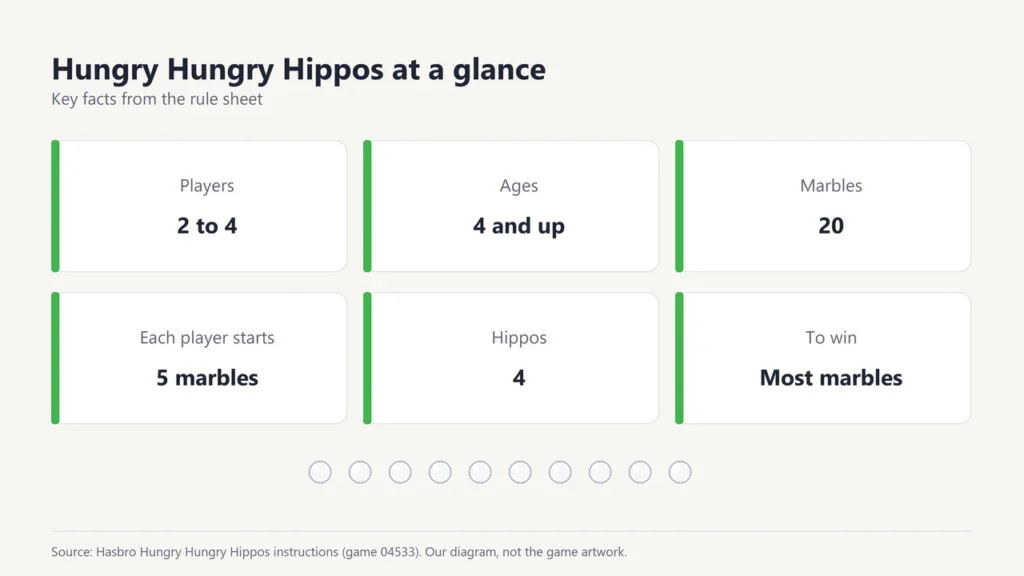
- Players: 2 to 4, ages 4 and up
- In the box: hippo game base, 4 hippo attachments, 4 hippo heads, 4 levers, 20 marbles and a label sheet
- To win: collect the most marbles
- Warning: small parts and marbles; not for children under 3
How to set up Hungry Hungry Hippos
The first time you play, an adult should put the game together:
- Put the game base on a flat surface and attach the four levers, with the round button on each lever facing up.
- Attach the four hippo heads to the necks of the same colour.
- Stick the matching colour labels on each hippo and its eyes.
- Lift the head and slide each hippo into the base, pressing down to connect it.
- Push each tail down to release the neck so the hippo is ready to play.
How to play: the Beginner’s Game
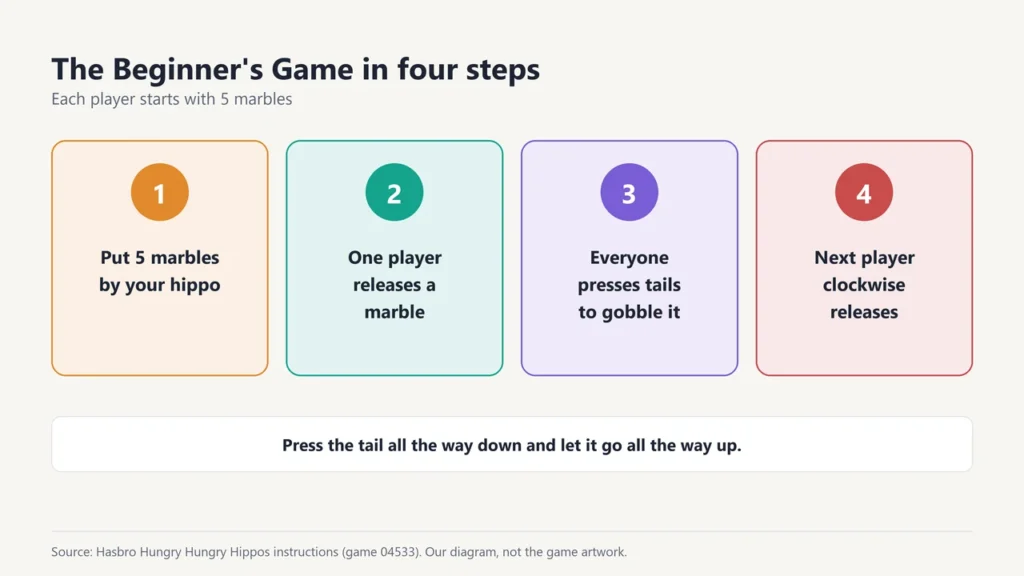
- Each player picks a hippo and puts 5 marbles in the marble release area near it.
- One player presses their marble release lever to send one marble into the middle.
- As soon as it rolls out, everyone presses their hippo’s tail to try to gobble it.
- When someone gets it, the next player (going clockwise) releases a marble.
- Keep going until every marble has been gobbled.
Hasbro’s tip: press the tail all the way down and let it go all the way back up. Half presses don’t let the hippo gobble properly.
How to play: the Advanced Game
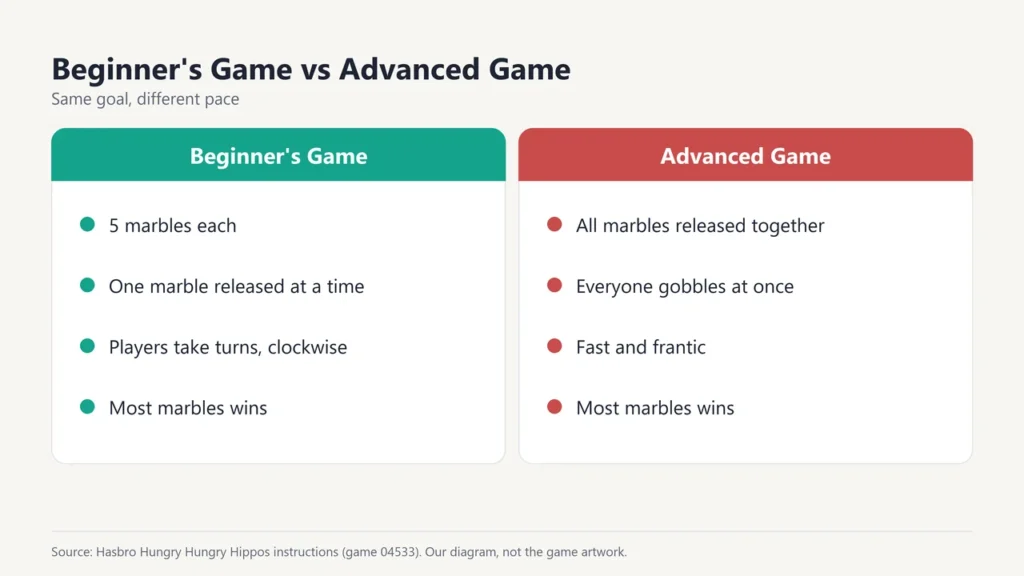
Hasbro calls this the frantic way to play. All players release their marbles at the same time, and everyone tries to gobble as many as they can. When all the marbles are gone, count them up.
How to win Hungry Hungry Hippos
In both games, each player counts the marbles in their hippo’s marble collecting area. The player with the most marbles wins.
What if a hippo pops off?
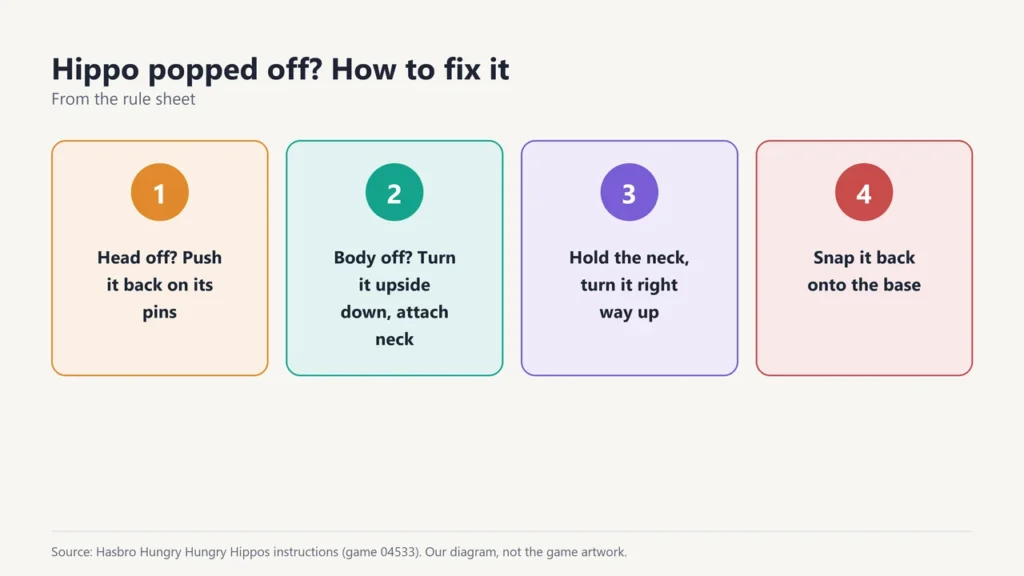
If a head pops off, just push it back on so the pin goes through the holes in the head. If a whole hippo body comes off, the rule sheet shows how to fix it: turn the body upside down and attach the neck to the tail base, hold the neck in place as you turn the hippo the right way up, then snap it back onto the base.
How to put the game away
Lift the hippos up and out of the base. Lock each neck by pressing the tail down and pulling the head up. Put the base in the box first, then the hippos, then the marbles on top.
Simple Hungry Hungry Hippos tips
- Use full presses. Quick half taps miss marbles.
- Watch the marble, not your hippo. Press when it rolls near your mouth.
- Keep the base still. Play on a flat, steady table.
- Count marbles before you start. The box has 20, so missing ones are easy to spot.
Newer editions of Hungry Hungry Hippos can work a little differently, so check the sheet in your box. More family game rules: Operation rules, Mouse Trap rules, Candy Land rules and Chutes and Ladders rules.
Frequently asked questions
How do you win Hungry Hungry Hippos?
Collect the most marbles. When all the marbles are gobbled, everyone counts theirs and the highest number wins.
How many marbles are in Hungry Hungry Hippos?
20 marbles. In the Beginner’s Game, each player starts with 5 in their release area.
How many players can play Hungry Hungry Hippos?
2 to 4 players, ages 4 and up.
What is the difference between the Beginner’s and Advanced games?
In the Beginner’s Game, players take turns releasing one marble at a time. In the Advanced Game, everyone releases their marbles at the same time.
Why won’t my hippo eat the marbles?
Press the tail all the way down and let it go all the way back up. Also check that the hippo is pushed firmly into the base.
Is Hungry Hungry Hippos safe for toddlers?
Hasbro warns that the game has small parts and marbles and is not for children under 3.

Justwebworld has published guides since 2012. How we write and update articles Report an error
