iMessage is not available on Android: as of October 2026 Apple keeps it exclusive to its own devices. The closest iMessage alternatives for Android are WhatsApp, Signal, Telegram, Facebook Messenger and Google Messages, which uses RCS to chat with iPhones. Two apps on the original 2017 list, BBM and Google Allo, shut down in 2019.
Key Takeaways
- Apple has never released iMessage for Android; third-party workarounds such as Beeper Mini were blocked by Apple in late 2023.
- Since iOS 18 (September 16, 2024), iPhones can exchange RCS messages with Android phones, and iOS 26.5 (May 2026) began a carrier-dependent beta of end-to-end encrypted RCS between the two.
- WhatsApp (3 billion monthly users as of May 2025) and Signal encrypt every chat by default; Telegram encrypts only Secret Chats.
- BlackBerry Messenger (consumer) closed on May 31, 2019, and Google Allo closed on March 14, 2019.
- Kik, Facebook Messenger and Discord do not need a phone number to sign up, which suits users who want to keep their number private.
Note (September 2026): Google shut Allo down in March 2019. Google Messages is now Google’s main messaging app on Android.
There were rumors Apple was going to come out with iMessage and even Facetime for Android smartphones as well as PCs. Those rumors never came true: as of October 2026, Apple has not released iMessage for Android, and the service still works only on Apple devices. iMessage might be amazing to use, but it just isn’t available for Android. And so one can only look for apps that match it in terms of the features it offers.
Top iMessage Alternatives for Android Mobile
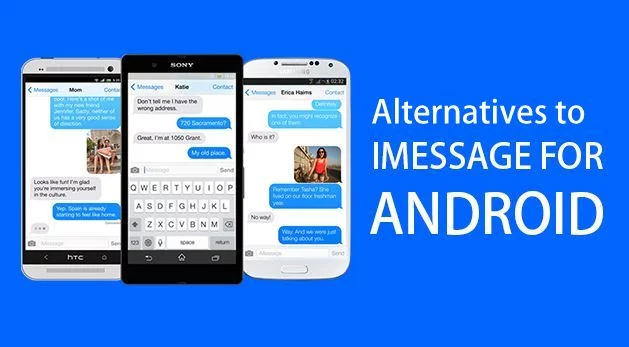
Of course, no app can be a carbon copy of the app it seeks to replace; neither can it have the exact same features nor can it look exactly the same. But if the two aspects are comparable and approximate, you can consider them to be alternatives to each other.
Following this train of thought, the list below covers 7 apps that were commonly suggested as iMessage alternatives. These were strong iMessage alternatives for Android when this list was first written in 2017; the status of each app as of October 2026 is noted below, and two newer options are added after the list.
Let’s get started!
1) Kik Messenger
Kik Messenger has been owned by MediaLab since October 2019; a shutdown announced in September 2019 was reversed, and the app was still operating as of 2026. A rare feature in Kik is that it doesn’t need your phone number to get you in touch with your friends, just the kik ID. Kik was an early adopter of chat bots: it introduced promoted chats with brand bots in 2014 and launched a bot store in April 2016, so bots could share information and advertise products. Kik works because of its not-so-serious interface, easy joining and leaving group conversations as well as the attractive chat window.
2) Whatsapp
In terms of popularity, WhatsApp leads: Meta-owned WhatsApp reported 3 billion monthly active users as of May 2025. WhatsApp has used end-to-end encryption for every chat and call by default since April 5, 2016. WhatsApp runs the same way on Android and iOS, so unlike iMessage it lets iPhone and Android users chat with full features.
FaceTime has no Windows or Android app (since iOS 15 in 2021, Windows and Android users can only join a FaceTime call through a web link an Apple user shares), whereas WhatsApp Web needs only a QR code scanned with the phone app, and an account can have up to four linked devices. That makes WhatsApp easy to use on a laptop or desktop as well as on the phone.
3) Telegram
Some iPhone users have long argued that Android and its apps are less safe and easier to track. The implication is that it is easier to hack an Android than an iPhone, or to remotely access its information. Telegram is popular with privacy-minded users, with more than 1 billion monthly active users as of March 2025, but its regular cloud chats are not end-to-end encrypted by default; only Secret Chats are, while WhatsApp and Signal encrypt every chat by default.
It has had security features like secret chats and automatically deleting media messages for a long time, making it a safer option to send photos and videos of sensitive nature. Telegram cloud chats sync across every logged-in device (Secret Chats stay on the device where they were started), and a Telegram group can hold up to 200,000 members.
4) Blackberry Messenger (BBM, consumer app closed in 2019)
Another app known for its data encryption is the Blackberry Messenger. BBM, as it is commonly called, was initially part of the Blackberry dream and had people running to buy the company’s smartphones which were marketed as business-class smartphones. BBM later came to Android, but BlackBerry shut down the consumer BBM service on May 31, 2019; only the paid BBM Enterprise edition continued.
BBM encrypted data, and connecting with friends required only scanning a QR code. It also offered free voice and video calls. In its later years BBM also offered shopping vouchers and free games in an effort to keep users as WhatsApp grew.
5) Google Allo (discontinued in 2019)
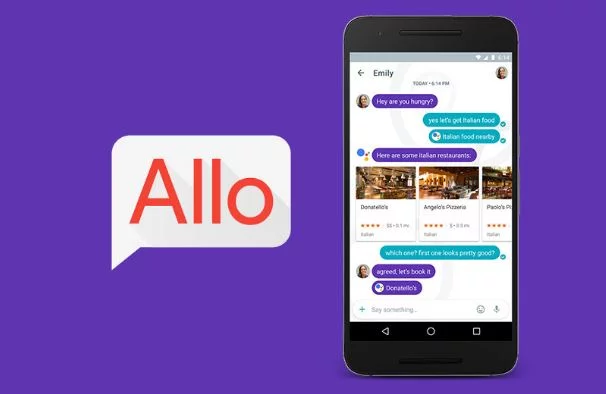
Google released Allo and Duo together on September 21, 2016. Google shut Allo down on March 14, 2019 and pointed users to Google Messages, and the Duo mobile app was renamed Google Meet in August 2022. Allo was one of the apps that supported the Google Assistant. The Google Assistant is Google’s counterpart to Apple’s Siri. Allo had the standard features: stickers, emojis and quick chatting.
Allo’s Smart Reply feature suggested replies to the last message, which helped when there was only time for a quick glance at the phone. End-to-end encryption in Allo was not on by default; it was available only in the optional Incognito mode, a choice privacy advocates criticized. Allo’s Whisper Shout feature made a message’s text larger or smaller to show volume.
6) Facebook Messenger
Like Whatsapp, Facebook Messenger is widely used because it is tied to Facebook, and people can read messages in a web browser when their phone is not at hand (Meta shut down the Messenger desktop app on December 15, 2025). Messenger has had its own built-in video calling since April 2015, and Meta began making end-to-end encryption the default for personal Messenger chats and calls on December 6, 2023. Skype itself was retired by Microsoft on May 5, 2025.
Facebook Messenger’s main advantage is reach: it is widely used and built into Facebook, a major social network. Messenger does not need a phone number, but since December 2019 it requires a Facebook account, except in the European Economic Area, where a Messenger-only account is available.
7) Discord
Discord suits communities built around games, hobbies and niche interests; it reported about 200 million monthly active users in 2025. The looks and the navigation are all different from what most apps offer, to the extent that newbies often take some time to get used to the entire layout.
That said, Discord is widely used by Reddit communities as a place to chat with other members while keeping the anonymity some of those communities expect. Discord registration needs only an email address and a username, not a phone number. Voice and video calls on Discord have been end-to-end encrypted by default since May 2025, but text messages are not.
There are other options too, like imo and Snapchat, and two strong newer picks, Google Messages and Signal, are covered below. Which apps do you like? 🙂
Can You Get iMessage on Android?
No. iMessage works only on Apple platforms (iPhone, iPad, Mac, Apple Watch and Vision Pro), and Apple has not released an Android or Windows version as of October 2026.
Third-party workarounds have not lasted. Beeper Mini, an Android app released on December 5, 2023 that reverse-engineered iMessage, was blocked by Apple within days; Apple said the service posed significant risks to user security and privacy, and Beeper later stopped trying to bypass the blocks.
What has changed is texting between iPhone and Android. Apple added RCS (Rich Communication Services) support with iOS 18 on September 16, 2024, so iPhones and Android phones can now exchange high-quality photos, typing indicators and read receipts, although those chats still appear as green bubbles. With iOS 26.5 in May 2026, Apple began rolling out end-to-end encrypted RCS between iPhone and Android in beta, based on the GSMA’s RCS Universal Profile 3.0 and the Messaging Layer Security protocol. It works only when both people use carriers that support the latest RCS version, and an encrypted chat shows a lock icon.
For video, Android users can join a FaceTime call from a web browser when an iPhone, iPad or Mac user shares a FaceTime link, a feature added with iOS 15 in 2021. Android users cannot start a FaceTime call.
Which iMessage Alternatives Still Work?
The table below shows the status of every app on the original list, plus Google Messages and Signal, as of October 2026.
| App | Status | Phone number needed to sign up? | End-to-end encryption by default |
|---|---|---|---|
| Kik Messenger | Active (owned by MediaLab since 2019) | No (name, email and birth date) | Not documented by Kik |
| Active, 3 billion monthly users (May 2025) | Yes | Yes, all chats and calls since April 2016 | |
| Telegram | Active, 1 billion+ monthly users (March 2025) | Yes | Only in Secret Chats |
| BlackBerry Messenger (BBM) | Consumer app closed May 31, 2019 | Not applicable | Not applicable |
| Google Allo | Closed March 14, 2019 | Not applicable | Not applicable |
| Facebook Messenger | Active; desktop app closed December 15, 2025 | No, but a Facebook account is required outside the EEA | Yes, personal chats and calls (rollout began December 2023) |
| Discord | Active, about 200 million monthly users (2025) | No (email and username) | Voice and video only (since May 2025); text is not |
| Google Messages | Active; default RCS app on many Android phones | Uses your phone number | Yes for RCS chats between Google Messages users; iPhone chats only where carriers support encrypted RCS |
| Signal | Active, about 70 million monthly users (January 2025) | Yes, but usernames can hide it | Yes, everything |
Two Newer Alternatives: Google Messages and Signal
Google Messages
Google Messages is Google’s official messaging app for Android and the closest thing to iMessage on the platform, because it upgrades ordinary texting with RCS chat features. Google began rolling out RCS in Google Messages in December 2019, and since August 2023 the app uses RCS by default unless the user opts out. One-to-one RCS chats between Google Messages users have been end-to-end encrypted since June 2021 using the Signal Protocol, and group chats gained encryption in 2023. Google Messages passed 1 billion installs in April 2020.
Signal
Signal is a free, open-source messenger run by the nonprofit Signal Technology Foundation, launched in February 2018 with $50 million from WhatsApp co-founder Brian Acton. Every Signal message and call is end-to-end encrypted by default with the Signal Protocol, and the app runs on Android, iOS, Windows, macOS and Linux. Signal still verifies accounts with a phone number, but since 2024 users can set a username so they can chat without sharing that number. Signal had about 70 million monthly active users as of January 2025.
How to Choose an iMessage Alternative for Android
- Check what your contacts use. A messenger is only useful if the people you talk to are on it; WhatsApp has the largest reach worldwide.
- Decide how much privacy you need. Signal and WhatsApp encrypt every chat by default; Telegram encrypts only Secret Chats, and Discord does not encrypt text messages.
- Decide whether to share your phone number. Kik, Discord and Facebook Messenger (with a Facebook account) do not need one; Signal lets you hide it behind a username.
- Look at device support. If you chat from a computer, WhatsApp Web, Telegram, Signal Desktop and Discord all work on PC; Messenger is now browser-only on desktop.
- For iPhone friends, start with RCS. If friends refuse to install another app, Google Messages with RCS gives the most iMessage-like experience with iPhones running iOS 18 or later.
For general habits that keep any chat safer, see this guide on keeping the messages you send safe and secure. For calling rather than texting, compare the best VoIP apps for Android and Apple, and read these tips for choosing a video chat app.
Switching Between iPhone and Android
People who switch phones often lose more than iMessage. Chats and contacts can be moved with the right tools. These guides explain how to transfer WhatsApp between Android and iPhone and how to transfer contacts from Android to iPhone.
Frequently Asked Questions
What is the closest app to iMessage on Android?
Google Messages is the closest built-in equivalent, because its RCS chat features (typing indicators, read receipts, high-quality media) also work with iPhones on iOS 18 or later. For a separate app that both sides install, WhatsApp and Signal are the most widely recommended.
Can Android users join FaceTime calls?
Yes, but only by invitation. Since iOS 15 in 2021, an Apple user can share a FaceTime link that Android and Windows users open in a web browser. Android users cannot start a FaceTime call themselves.
Are messages between iPhone and Android encrypted?
Standard SMS is not encrypted. iOS 26.5, released in May 2026, began a beta of end-to-end encrypted RCS between iPhone and Android, but it works only when both carriers support the latest RCS standard. WhatsApp and Signal encrypt chats between the two platforms regardless of carrier.
Is BlackBerry Messenger still available?
No. BlackBerry shut down the consumer BBM service on May 31, 2019. Only the paid business edition, BBM Enterprise, continued after that date.
Which messaging apps work without a phone number?
Kik (name, email and birth date), Discord (email and username) and Facebook Messenger (with a Facebook account) do not require a phone number. Signal needs a number to register but lets users chat by username so the number stays hidden.