

Note (October 2026): An earlier version said FCC certification is mandatory for every bulb, including incandescent and halogen bulbs, and that UL, ETL or CSA listing is not required for lighting. Both statements were inaccurate and have been corrected below.
Yes and no. Under US rules, LED bulbs and fixtures with electronic drivers must comply with FCC Part 15, and smart lights with Wi-Fi or Bluetooth need an FCC ID. Plain fixtures with only sockets, incandescent bulbs and simple low-voltage DC LED strips need no FCC authorization of their own. Sellers, not buyers, carry the legal duty, but a non-compliant light can cause radio interference.
Key Takeaways
- According to FCC guidance (KDB Publication 640677), LED lighting that uses electronic driver circuitry is an unintentional radiator under Part 15 of the FCC rules.
- Ordinary LED lights are authorized through the Supplier’s Declaration of Conformity (SDoC), which replaced the older Verification and Declaration of Conformity procedures from November 2017.
- Smart lights with Wi-Fi, Bluetooth or Zigbee radios go through FCC Certification and must carry an FCC ID.
- CFLs and electronic fluorescent ballasts typically fall under Part 18; incandescent bulbs are incidental radiators with no specified emission limits.
- FCC rules cover radio interference, not electrical safety. Safety comes from a UL, ETL or CSA listing, and NEC section 410.6 requires luminaires and lampholders to be listed.
Online shopping grew during the COVID-19 pandemic, and people now buy everything from groceries and sports gear to larger items such as light fixtures and furniture online.
When buying lighting, many shoppers check whether a product carries a UL, ETL or CSA safety listing but overlook the separate FCC rules on radio interference. So, can you buy a light product without FCC certification from an online store? The answer is yes and no: some lights need no FCC authorization at all, while LED products with electronic drivers must meet FCC rules before they can be legally marketed in the US.
Then, what’s FCC certification? You may already know that FCC is Federal Communications Commission. The FCC’s Office of Engineering and Technology, Laboratory Division, publishes guidance on how the FCC rules apply to lighting products, so that these devices do not cause harmful interference to radio communications services. Compliance is mandatory for lighting that uses electronic driver or ballast circuitry, because that circuitry can generate radiofrequency (RF) energy as well as light.
For example, the driver in a mains-powered LED light converts high-voltage alternating current (AC) into the low-voltage direct current (DC) that the LED chips need. The electronic switching that performs this conversion can generate RF energy, which is why the FCC sets emission limits for it.
Suppose it’s a traditional light fixture, such as an 18-light chandelier with medium screw bases, the fixture itself needs no FCC authorization, because each lamp socket simply receives line voltage and the fixture has no driver or other electronics that convert it. The bulbs that go into such a fixture are a different matter, and the rules depend on the bulb type: LED bulbs with electronic drivers fall under FCC Part 15 as unintentional radiators, CFLs typically fall under FCC Part 18, and incandescent bulbs (a halogen lamp is a type of incandescent lamp) do not intentionally generate RF, so they are classified as incidental radiators with no specified emission limits.
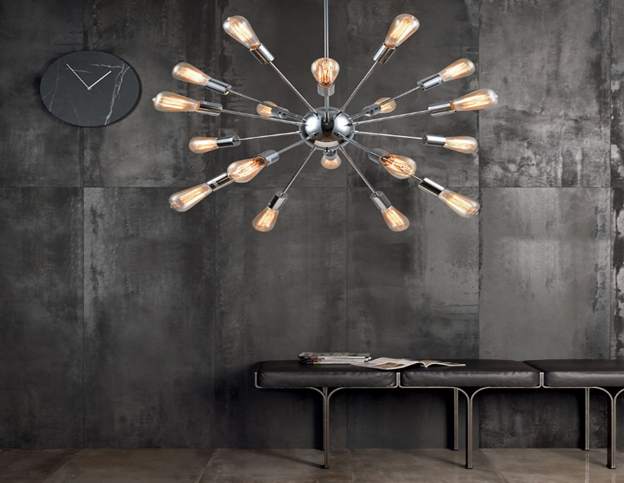
(XD3218C)
An LED light that connects directly to line voltage must comply with the FCC Part 15 rules. Some LED lights use a driver that is FCC compliant on its own. That helps, but if the driver is built in and not detachable, the complete LED light still has to be tested and authorized as one product.
An LED vanity light is a typical example: the driver is glued inside the backplate and is not meant to be removed by the customer, so the vanity light as a whole must meet the FCC requirements.
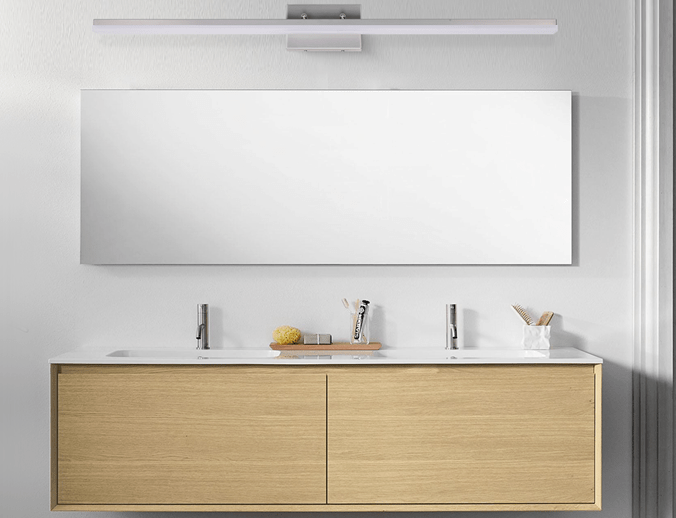
(J1200-46W(CW)MN)
A simple LED light with no switching electronics of its own, powered from a low-voltage DC source such as a 12V or 24V LED driver, generally needs no separate FCC authorization; under the FCC rules, a lighting device whose circuitry does not operate above 9 kHz is an incidental radiator rather than an unintentional radiator.
Take the LED strip light as an example. Inside a basic LED strip the current is pure DC: the voltage drops along the strip from the driver’s output, but nothing in the strip converts or switches it. The 12V or 24V driver that powers the strip does contain switching circuitry, so the driver must comply with the FCC rules.

(KVG-12060-DWJ)
UL, ETL and CSA safety listings are separate from the FCC rules, and they matter: the National Electrical Code (NEC) requires in section 410.6 that luminaires and lampholders be listed, and a listed product has been tested by a laboratory against recognized safety standards. The safest choice is a light listed by UL, ETL (Intertek) or CSA, or at least one built from UL, ETL or CSA listed components.
Which Lighting Products Need FCC Authorization?
FCC rules for lighting depend on what electronics the product contains, not on whether it is sold in a store or online. The table below summarizes the categories described in FCC guidance and by the ARRL, the US national association for amateur radio.
| Product type | FCC rule part | What applies |
|---|---|---|
| LED bulb, tube or fixture with an electronic driver (mains powered) | Part 15, Subpart B (unintentional radiator) | Must meet conducted and radiated emission limits; authorized through SDoC |
| Smart light with Wi-Fi, Bluetooth or Zigbee | Part 15 (wireless device) | FCC Certification and an FCC ID on the product |
| CFL or electronic fluorescent ballast | Part 18 (RF lighting device) | Separate consumer and non-consumer emission limits; consumer-rated products are the ones intended for homes |
| Incandescent or halogen bulb | Part 15 (incidental radiator) | No specified emission limits; must not cause harmful interference |
| Fixture with only sockets and wiring (no driver) | None for the fixture itself | The bulbs used in it follow their own rules |
| 12V or 24V LED driver | Part 15, Subpart B | The driver must comply even if the strip it powers does not need its own authorization |
According to the FCC’s KDB Publication 640677, first published on June 17, 2016, LED lamps operating above 9 kHz must meet the conducted emission limits in section 15.107 and be tested for radiated emissions from 30 to 1,000 MHz under section 15.109, regardless of their highest operating frequency.
What Is the Difference Between FCC SDoC and FCC Certification?
The phrase “FCC certification” is often used loosely for any FCC approval, but the FCC has two separate equipment authorization procedures that matter for lighting.
- Supplier’s Declaration of Conformity (SDoC): a self-approval process. The responsible party tests the product for compliance; nothing is filed with the FCC and no FCC ID is issued. The responsible party must be located in the United States, and for imported equipment the importer takes that role. Ordinary LED lighting falls here.
- Certification: an application is filed with the FCC or an accredited Telecommunication Certification Body (TCB), and the approved product is labeled with its FCC ID. Most intentional radiators, including smart lights with built-in radios, need Certification.
The SDoC procedure took effect in November 2017 and replaced the older Verification and Declaration of Conformity procedures after a one-year transition that ended on November 2, 2018. Since November 2017, the FCC logo has been optional, so a missing logo alone does not prove a light is non-compliant.
Is It Illegal to Buy a Light Without FCC Approval?
The FCC’s marketing rules place the obligation on the party that sells or imports the product. Before an RF device is marketed to the public, the responsible party must obtain the appropriate authorization, and marketing includes selling, leasing, advertising, importing or otherwise offering a device for sale. According to a summary of the rules by the law firm Pillsbury, the base forfeiture for importing or marketing unauthorized equipment is $7,000.
For a buyer, the practical risk is interference. FCC rules require that a device not cause harmful interference, and the user of a device that does cause it is required to stop operating it. The ARRL notes that the user of a noisy bulb is ultimately responsible for fixing any interference it causes, and that any LED bulb used with a dimmer can create interference problems, even one that is quiet without the dimmer.
How to Check a Light Product Before Buying Online
- Look for the FCC compliance statement. LED bulbs, as unintentional radiators, typically come with the Part 15 statement that the device may not cause harmful interference and must accept any interference received. Ask the seller for compliance information if the listing does not show it.
- Check the FCC ID on smart lights. A Wi-Fi or Bluetooth bulb should display an FCC ID on a label, etched on the product or shown electronically. If you are building a connected home, see our guide to smart home automation features.
- Look for a safety mark from a recognized lab. UL LLC, Intertek Testing Services NA (the ETL mark) and CSA Group Testing and Certification are all on OSHA’s list of Nationally Recognized Testing Laboratories (NRTLs).
- For CFLs and fluorescent ballasts, choose consumer-rated products. The ARRL advises checking that a ballast is rated as a Part 18 consumer device, not a non-consumer one, before using it in a home, and warns that products sold as heavy duty or industrial grade are particularly suspect.
- Buy from sellers that name a responsible party. Under SDoC, a US-based responsible party, such as the importer, is accountable for compliance.
For broader buying advice, see how to choose the right LED light bulb for your home and our tips on safe online shopping. If you use low-voltage strips, our article on creative ways to use LED strip light covers practical setups, and our guide to passing a home electrical safety inspection covers the wider safety picture.
Frequently Asked Questions
Do LED bulbs need FCC approval?
Yes. LED bulbs that use electronic driver circuitry are unintentional radiators under FCC Part 15 and must meet its emission limits, according to FCC KDB Publication 640677. Ordinary LED bulbs are authorized through the Supplier’s Declaration of Conformity rather than with an FCC ID.
Do incandescent bulbs need FCC certification?
No. Incandescent bulbs do not intentionally generate RF, so the ARRL describes them as incidental radiators under Part 15, with no specified emission limits beyond the requirement not to cause harmful interference.
Does an LED strip light need FCC certification?
A basic LED strip with no switching electronics, run from a 12V or 24V DC driver, generally does not need its own authorization, but the driver does. Strips with built-in circuitry operating above 9 kHz fall under the Part 15 emission rules, and strips with Wi-Fi or Bluetooth control need FCC Certification.
Is the FCC logo required on lights?
No. The FCC logo became optional in November 2017. Products authorized through SDoC must still be accompanied by a Supplier’s Declaration of Conformity, and certified products such as smart bulbs must show their FCC ID.
Is UL listing the same as FCC compliance?
No. FCC rules limit radio interference, while UL, ETL and CSA listings show that a product was tested against safety standards. A well-made light product has both: FCC compliance and a safety listing from a Nationally Recognized Testing Laboratory.

Justwebworld has published guides since 2012. How we write and update articles Report an error
