

The biggest engagement ring trends right now are lab-grown diamonds, oval and other fancy shapes, and yellow gold. According to The Knot’s 2026 Real Weddings Study of 10,474 US couples married in 2025, 61% of engagement rings had a lab-grown center stone, round (26%) and oval (25%) were almost tied, and yellow gold led metals at 39%.
Key Takeaways
- Lab-grown leads: 61% of engagement rings in The Knot’s 2026 Real Weddings Study had a lab-grown center stone, a 239% increase since 2020.
- Oval has caught round: round center stones were 26% of rings and ovals 25%, the closest the two shapes have been in the study.
- Yellow gold is back: 39% of rings were yellow gold, more than double its share five years earlier; white metals together were 48%.
- Average spend fell: the average engagement ring cost $4,600 for couples married in 2025, down from $6,000 in 2021.
- Most trends from 2019 lasted: fancy shapes, three-stone rings, yellow gold and stacked sets are still common choices.
It is not just an engagement ring; it is something that signifies your relationship. That is why many buyers look at current trends before choosing one, while still putting the wearer’s own taste first. You should look for the latest trends; see what others are selecting for their big day.
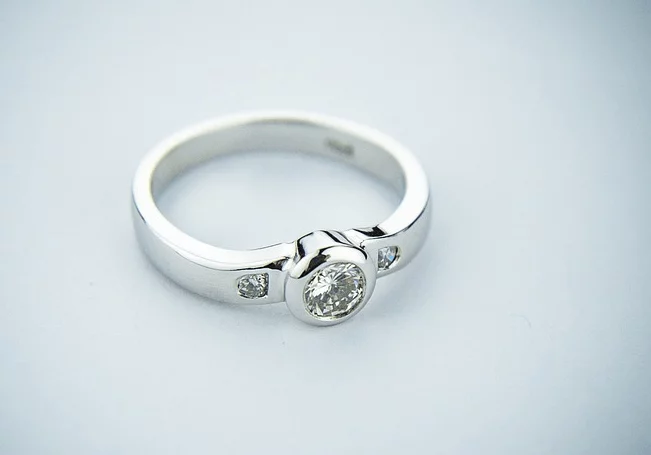
With these trends, you will have an idea to select the ring that suits your fiance. Ring styles shift gradually rather than resetting every year, so each section below notes how the trend has held up, based on The Knot’s most recent survey data.
Here are the engagement ring trends of 2019, as originally reported, with notes on how each one has held up as of October 2026.
The fancy custom diamond rings
Diamond has always been the mark of excellence. Whenever you think of a diamond ring, you might have in mind the old fashioned round solitaire diamond ring. Fancy shapes have since gained a lot of ground: in The Knot’s 2026 Real Weddings Study (couples married in 2025), round was still the most popular center stone at 26%, but oval was close behind at 25%.
A custom ring lets a couple choose the exact center-stone shape, setting and metal. Custom diamond engagement rings are offered by many jewelers, Linara being the example named when this article was first written. Pear and marquise shapes were each chosen for 8% of rings in The Knot’s 2026 study, and heart shapes are a rarer option.
Fancy shapes are also sold ready-made, but a custom design gives full control over the stone, setting and band. Spice up the engagement and surprise everyone this year with a unique diamond ring. Since 2019, buyers have kept moving away from the classic round solitaire toward ovals and other fancy shapes.
The Contemporary three stone rings
It is a trend that will never get old. Three-stone rings stayed a popular choice after 2019; Meghan Markle’s 2017 engagement ring, for example, has a center diamond from Botswana flanked by two smaller diamonds. You might not know the significance, but these three stones tell the couple’s past, present, and future.
In 2019 some buyers wanted a twist on the classic design. Instead of adding all three diamonds, they are looking for adding two other stones and the middle one diamond. Colored side stones add contrast to the diamond in the center.
This year, the trend of the traditional three-stoned ring is changing. You will see many people are now getting the middle stone diamond and the other two sapphires. In 2019 many three-stone rings were set in white gold or platinum. By The Knot’s 2026 study, yellow gold (39%) had become the single most popular engagement ring metal, although white gold and platinum together still made up 48%.
The yellow gold ring
Yellow gold was rising in 2019, and the trend continued. According to The Knot’s 2026 Real Weddings Study, as reported by National Jeweler, 39% of engagement rings were yellow gold, more than double its share five years earlier. Celebrity rings helped the trend: Meghan Markle’s engagement ring, made by Cleave and Company, was set on a yellow gold band, and Emily Ratajkowski’s 2018 toi et moi ring paired a pear-cut and a princess-cut diamond on a yellow gold band.
It is a beautiful way to express the love. Yellow gold is used with diamonds as well as colored gemstones. You will see these yellow gold rings studded with diamonds and many other gems.
The Stacked and nested rings
If you are looking for something new, then try the stacked and nested rings, which were in fashion in 2019 and are still common. Whether you want to accessorize the right hand or augment the bridal set, it is the perfect ring for the engagement.
It is something new, and everyone will love to see it as an engagement ring. A nested set is designed so that the engagement ring and wedding band sit together neatly, so it is worth planning both pieces at the same time.
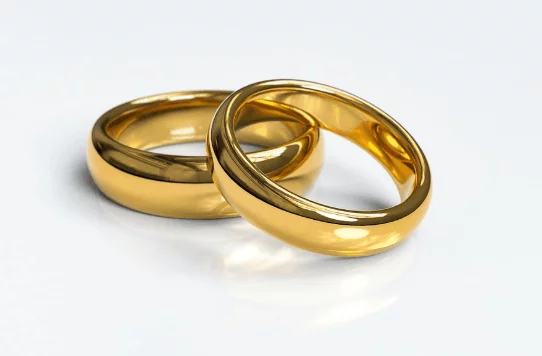
In 2019 most nested designs were made in white gold rather than yellow gold. It doesn’t mean that there won’t be yellow gold at all, and with yellow gold now the most popular engagement ring metal, the choice is a matter of personal taste.
The Distinct Halos
The halo engagement ring offers many styles. Halos were popular in 2019 and are still widely sold. Choosing delicate or distinctive halos featuring a cushion diamond are elegant and also glamorous. A halo surrounds the center stone with a ring of smaller stones.
The thing is the diamond looks even better with this style. These halo designs have delicate detailing. You can use the traditional gold or the white gold. In 2019 white gold was the usual metal for halo designs; today buyers choose between white gold, platinum and yellow gold.
The Organic style rings
In 2019 many buyers wanted rings that looked less traditional. You will see a lot of changes in the engagement ring designs.
One such design was the organic style. The ring that features an organic cluster of diamonds is one of the best ways to express a unique sparkle for the engagement.
At the far end of the market, the most expensive rings ever made puts the trends in perspective.
Engagement Ring Trends by the Numbers
The Knot’s 2026 Real Weddings Study surveyed 10,474 US couples married between January 1 and December 31, 2025. It is the newest large survey of engagement ring choices as of October 2026, and its figures show which trends have moved from fashion into the mainstream.
Most popular engagement ring shapes
| Center stone shape | Share of rings |
|---|---|
| Round | 26% |
| Oval | 25% |
| Emerald | 8% |
| Pear | 8% |
| Marquise | 8% |
| Princess | 8% |
| Cushion | 6% |
| Radiant | 6% |
Source: The Knot 2026 Real Weddings Study, figures as reported by National Jeweler (March 2026).
Most popular engagement ring metals
| Metal | Share of rings |
|---|---|
| Yellow gold | 39% |
| White gold | 35% |
| Platinum | 13% |
Yellow gold more than doubled its share over five years, while white gold continued a gradual decline. Gold purity is measured in karats out of 24: 18-karat gold is 75% gold, and 14-karat gold, the most common fineness for jewelry in the United States, is about 58.3% gold.
Lab-Grown vs Natural Diamonds: The Biggest Trend
Lab-grown diamonds are the defining engagement ring trend of the 2020s. In The Knot’s 2026 Real Weddings Study, 61% of engagement rings featured a lab-grown center stone, a 239% increase since 2020, and 40% of couples said it was specifically important that their stone be lab-grown.
A lab-grown diamond is not an imitation. Synthetic diamonds are made of the same pure carbon crystal as mined diamonds and have identical chemical and physical properties; they are produced by high pressure, high temperature (HPHT) or chemical vapor deposition (CVD) methods. Imitations such as cubic zirconia are different materials.
| Measure (couples married in 2025) | Natural diamond | Lab-grown diamond |
|---|---|---|
| Average ring cost | About $7,000 | About $4,300 |
| Average center stone size | 1.6 carats | 2.0 carats |
Source: The Knot 2026 Real Weddings Study. Lower prices explain much of the shift: couples choosing lab-grown stones spent less on average while buying larger stones.
How Much Does an Engagement Ring Cost?
The average engagement ring cost $4,600 for US couples married in 2025, according to The Knot’s 2026 Real Weddings Study, down from $6,000 in 2021 as reported by National Jeweler. Averages hide a wide range, so the right budget is the one that fits the couple’s finances. Our guides on budget-friendly wedding planning and how to finance a wedding cover the bigger picture.
How to Choose an Engagement Ring
Choosing an engagement ring comes down to the stone, the setting and the metal. The Knot’s study found couples ranked cut and shape first, style or setting second and metal third, and 79% of ring recipients took part in choosing their ring.
- Learn the four Cs. Diamonds are graded on carat, cut, color and clarity. One carat equals 200 milligrams, and the GIA color scale runs from D (colorless) to Z (bright yellow tint).
- Decide natural or lab-grown. Both are real diamonds; the main differences are price, origin and personal preference.
- Pick a shape. Round and oval dominate, while emerald, pear, marquise and princess cuts are each about 8% of rings.
- Choose the metal. Yellow gold, white gold and platinum are the three main options; match the wedding band if a stacked or nested set is planned.
- Start early. In the 2026 study, 57% of proposers began searching six months or more before proposing.
- Ask for a grading report from an independent lab before buying a diamond of significant value.
For colored alternatives, see our guide to pink diamonds as an engagement ring. Matching jewelry for the wedding day is covered in types of diamond earrings explained.
Common Mistakes When Following Ring Trends
- Ignoring the wearer’s taste: the 79% involvement figure shows most recipients want a say.
- Buying the band separately without checking fit: curved or nested designs may need a matching band.
- Comparing prices across different grades: a lower price often reflects a lower carat, cut, color or clarity grade.
- Confusing simulants with diamonds: a lab-grown diamond is a diamond; a simulant is a different material.
Once the ring is chosen, our engagement party planning tips help with the next step.
Frequently Asked Questions
What is the most popular engagement ring shape?
Round is still the most popular engagement ring shape, chosen for 26% of rings in The Knot’s 2026 Real Weddings Study, but oval is a very close second at 25%. Emerald, pear, marquise and princess cuts each account for about 8%.
Are lab-grown diamonds real diamonds?
Yes. Lab-grown diamonds are made of the same carbon crystal as mined diamonds and have identical chemical and physical properties. They are made by HPHT or CVD processes and, in The Knot’s 2026 study, featured in 61% of engagement rings.
Is yellow gold back in style for engagement rings?
Yes. Yellow gold was the most popular engagement ring metal at 39% in The Knot’s 2026 Real Weddings Study, more than double its share five years earlier. White gold (35%) and platinum (13%) together still make up 48%.
How much is the average engagement ring?
The average engagement ring cost $4,600 for US couples married in 2025. Rings with natural center stones averaged about $7,000 and rings with lab-grown center stones about $4,300, according to The Knot’s 2026 Real Weddings Study.
What is a toi et moi ring?
A toi et moi ring (French for “you and me”) sets two stones side by side. Emily Ratajkowski’s 2018 engagement ring, which paired a pear-cut and a princess-cut diamond on a yellow gold band, is a widely cited example.

Justwebworld has published guides since 2012. How we write and update articles Report an error
