

A cancelled flight doesn’t just delay your trip. It throws your plans, budget, bookings, and patience off track. One minute you are ready to board. Next, you are stuck refreshing airline apps and hunting for backup flights. The good news? A few smart moves, along with the right travel insurance, can stop travel chaos from turning into a financial hit.
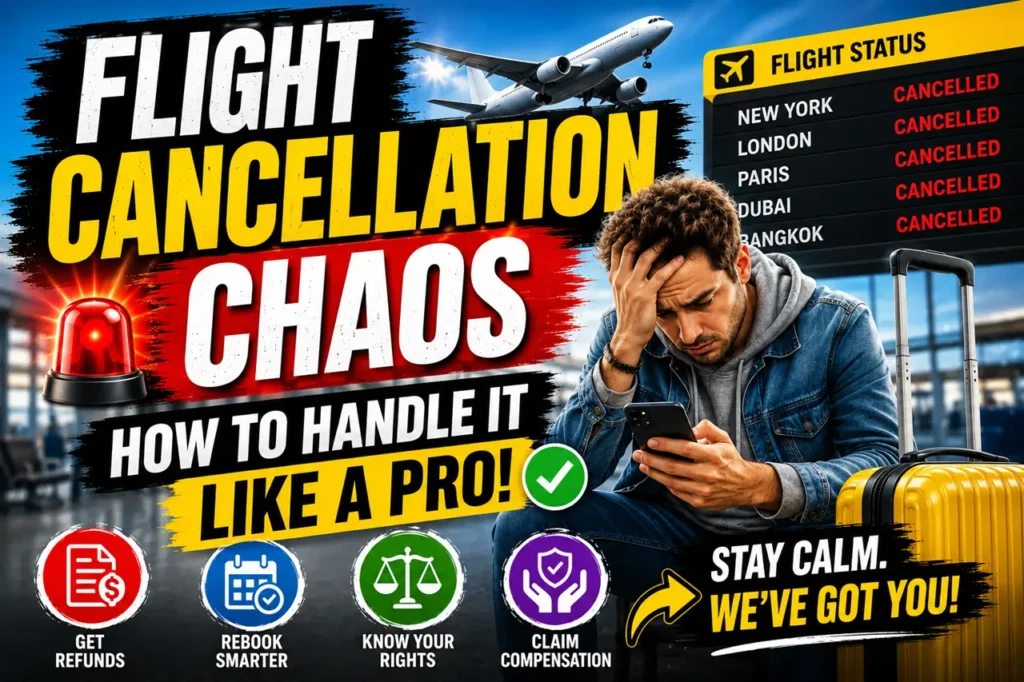
What To Do After a Flight Cancellation
The moment your flight gets cancelled, move fast. Everyone on that flight is suddenly competing for the same few seats.
Open the airline app immediately. Check alternate flights before joining the customer service queue. App users often grab rebooked seats faster than people waiting at the counter.
If the airline offers free rebooking, do not accept the first option. A “free” replacement flight with a 15-hour layover is not exactly a travel win.
Also, check for:
- Cancellation alerts
- Delay notifications
- Boarding passes
- Airline emails
Future-you dealing with a travel insurance claim will seriously appreciate the documentation.
How To Rebook Flights Without Overspending
People panic-book expensive tickets during cancellations. Airlines know this, and prices can jump within minutes.
Before you pay for another flight, slow down a bit, and check your real options:
- Nearby airports with cheaper or faster departures.
- Partner airlines that can reroute you without a premium price tag.
- Alternate routes with shorter delays, even if they have a stop.
- Ask the airline directly if they can shift you to another carrier.
Sometimes the smartest move is not even another flight. Landing in a nearby city and taking a train can be faster and way cheaper than waiting 24 hours for a direct one.
And don’t rush into refunds without thinking it through. A refund feels safe, but it can backfire when last-minute tickets cost 2-3x more. Rebook first, calculate properly, then decide.
If you are rebooked through a different airport, check its security rules too. Our guide to liquids in hand luggage explains how the 100 ml rule can change between airports.
Understanding Airline Responsibilities During Cancellations
Not every flight cancellation comes with compensation. That is where most travellers get confused. If the cancellation happened because of:
- Technical issues
- Staffing shortages
- Operational disruptions
You could be eligible for:
- Refunds
- Meal vouchers
- Hotel stays
- Alternate flights
How Travel Insurance Helps During Flight Disruptions
Many travellers buy travel insurance only because the visa process requires it. Big mistake.
Good travel insurance helps when cancellations start eating into your budget. Depending on the policy, it may cover:
- Hotel stays during long delays
- Meals and local transport
- Missed connections
- Non-refundable bookings
- Emergency rebooking expenses
Always check:
- Waiting period rules
- Claim limits
- Covered reasons for cancellation
Practical Tips To Reduce Travel Disruption Stress
Some flight chaos is unavoidable. But getting stranded, overspending, or scrambling at the airport can be reduced with the right planning. A few smart moves that actually help:
- Book early morning flights whenever possible, as delays tend to pile up later in the day.
- Avoid super-tight layovers that leave no buffer for delays or gate changes.
- Choose nonstop flights for important trips to eliminate the risk of connections.
- Track weather and airline alerts before departure so you are not caught off guard.
- Buy travel insurance right after booking, so cancellation and delay coverage is active for your trip window.
Conclusion
A cancelled flight does not end your trip. It just tests how prepared you are for travel and for going off-script.
The travellers who stay ahead are not lucky. They are prepared. They move fast, keep records, and don’t treat travel insurance as an afterthought. They treat it like a backup system that actually saves money when plans collapse.
And for international trips, especially the US, USA travel insurance is not overplanning. It is damage control. Because in travel chaos, the real win is not avoiding disruption. It is not letting disruption empty your wallet.

Justwebworld has published guides since 2012. How we write and update articles Report an error
