

Heavy rain can turn familiar roads into waterlogged stretches. A car may look safe from the outside, yet water can reach the engine and affect internal parts. These repairs can involve a garage visit.
Engine protection has practical value because it addresses engine and gearbox expenses arising from water ingress or lubricant leakage, subject to policy terms. It gives drivers a layer of financial support during the monsoon.
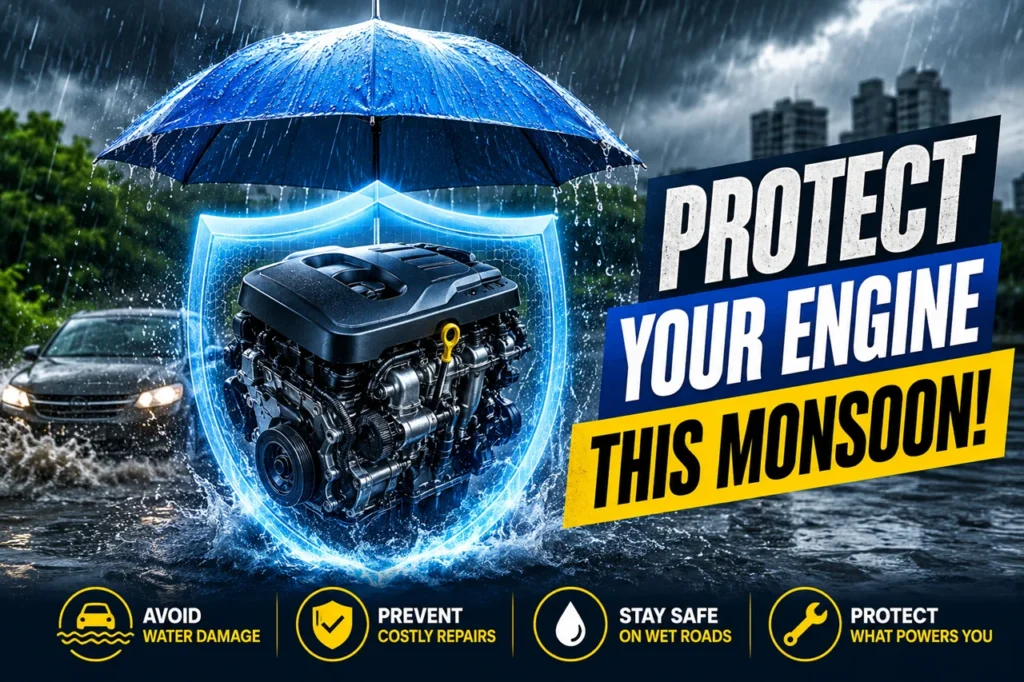
Limits a Major Repair Burden
Engine repairs can involve inspection, dismantling, labour, and the replacement of damaged internal parts. The expense may become difficult to manage. Engine protection may cover eligible costs connected with engine or gearbox damage.
Its value can be seen through:
- Support for covered internal engine repairs
- Cover for eligible gearbox components
- Reduced pressure from a large repair bill
The payable amount depends on the policy wording and claim assessment.
Addresses Water Ingress Damage
Water ingress is a monsoon concern because the damage may develop inside the engine. Water entering the engine can disrupt combustion and damage pistons, connecting rods, cylinders, or the gearbox, causing a sudden breakdown.
Engine protection can matter when:
- Rainwater reaches important mechanical parts
- A flooded road causes extensive internal damage
- Repair work requires a detailed engine inspection
Coverage applies only to causes and parts listed in the policy.
Protects the Vehicle’s Core System
The engine is central to the car’s operation. Damage to a bumper or panel may affect one visible area, but engine damage can stop the vehicle completely. Restoring it may require work, parts, and testing before the car returns to the road.
The cover provides practical value by helping with:
- Eligible repair or replacement work
- Labour linked to covered engine damage
- Expenses involving listed gearbox parts
This support can be especially relevant for newer or frequently used cars.
Helps in Flood-Prone Locations
The need for engine protection depends on where the car is driven and parked. Low-lying roads, underpasses, open parking areas, and basements may face water accumulation. Daily travel through such locations increases the importance of suitable monsoon protection.
It may offer greater value for drivers who:
- Regularly use waterlogging-prone routes
- Park in areas exposed to rising water
- Depend on the car for daily travel
The decision should reflect usage rather than general assumptions.
Strengthens a Car Insurance Policy
A standard own damage section may not address every form of internal engine loss. Adding engine protection to an eligible car insurance policy can extend support for specified damage caused by water ingress or lubricant leakage. It works as an optional addition and does not operate as a separate policy.
Before adding it, check:
- The causes of damage included
- Eligible engine and gearbox parts
- Deductibles, limits, and claim conditions
Clear policy wording helps the owner understand when the cover may apply.
Encourages the Right Response
Engine protection does not remove the need for careful driving. Its practical value also lies in making owners more aware of how quickly water can affect a vehicle. A stalled car in deep water should not be restarted repeatedly, as further engine damage may occur.
During such a situation:
- Switch off the ignition
- Move to a safe place where possible
- Contact roadside or insurer assistance
- Follow the advised towing process
These steps may help prevent avoidable damage and support proper claim assessment.
Supports a Clearer Claim Process
Prompt action can make a water-related claim easier to assess. The insurer should be informed before major repair work begins. Photographs, towing records, garage estimates, and requested documents can help explain the incident and the damage.
For a smoother process:
- Report the incident without unnecessary delay
- Keep repair and towing records safely
- Allow the required inspection
- Follow the authorised repair guidance
Claim approval remains subject to the policy terms, supporting documents, deductibles, and insurer assessment.
Final Thoughts
Engine protection carries practical value during Indian monsoons because water damage can reach costly internal parts without leaving obvious signs outside the car. It can support eligible engine and gearbox repairs, reduce the financial strain of a major bill, and strengthen protection for vehicles used in waterlogging-prone areas.
The cover should match the car’s age, location, and usage. Safe driving, timely assistance, and a clear understanding of the policy remain equally important.

Justwebworld has published guides since 2012. How we write and update articles Report an error
