

To install Windows 10, download Microsoft’s Media Creation Tool, use it to create a bootable USB flash drive (at least 8 GB) or an ISO file, then start the PC from that media and follow the setup screens. You need a Windows 10 license. Windows 10 support ended on October 14, 2025, so consider Windows 11 or Extended Security Updates.
Key Takeaways
- Microsoft’s Media Creation Tool creates Windows 10 installation media on a USB flash drive (8 GB or larger), a DVD or an ISO file; the version it offers is Windows 10 version 22H2, the final release.
- A clean installation erases the system drive; an in-place upgrade can keep personal files and apps, but a backup is still essential.
- A Windows 10 license is required. Microsoft officially closed the last free upgrade route from Windows 7 and 8.1 on September 20, 2023.
- Windows 10 stopped receiving free security updates on October 14, 2025. Home users can enroll eligible PCs in Extended Security Updates (ESU), free or for a one-time $30 fee.
- If the PC meets the Windows 11 requirements, Windows 11 is the better choice for a new installation.
Note (September 2026): Microsoft ended support for Windows 10 on 14 October 2025; only paid Extended Security Updates remain. For a new installation, Windows 11 is the current version if your PC meets its requirements.
How to Downloading and Installing Windows 10: Welcome back to Justwebworld. This guide explains how to install Windows 10 on a desktop computer or laptop. It covers two methods: a clean installation from a USB flash drive or DVD, and an in-place upgrade for a PC that already runs a genuine, activated copy of Windows 7, 8.1 or later. A clean installation erases the drive Windows is installed on, so any data that is not backed up, or moved to a Not USING drive (one that Windows setup will not touch), can be lost. The step-by-step guide on how to install Windows 10 on your PC follows below.
How to Download and Install Windows 10

Clean Install: Downloading and Installing Windows 10
A clean installation is the longer of the two methods. It has three stages: back up the files you want to keep, download the Windows 10 installation media from Microsoft, and then install Windows. If your PC already runs a genuine, activated copy of Windows 7, 8 or 8.1, the upgrade method further down is usually simpler; otherwise, follow the steps below to install Windows 10 using the download from Microsoft’s website.
Backing Up Files
Backing up is the simplest stage of a clean install, but it can take time, depending on how much data you have, how much storage space is free and how long it takes to find every file worth saving. Choose the documents, photos, movies and music you want to keep, then copy them to a cloud storage service such as JustCloud, Google Drive or Drop Box, several of which offer some free storage (check each service’s current limits). You can also copy the files to a Local Disk partition that will not be used for the Windows installation, or to external storage such as a pen drive, an external hard drive or a CD.
Downloading Windows 10 ISO
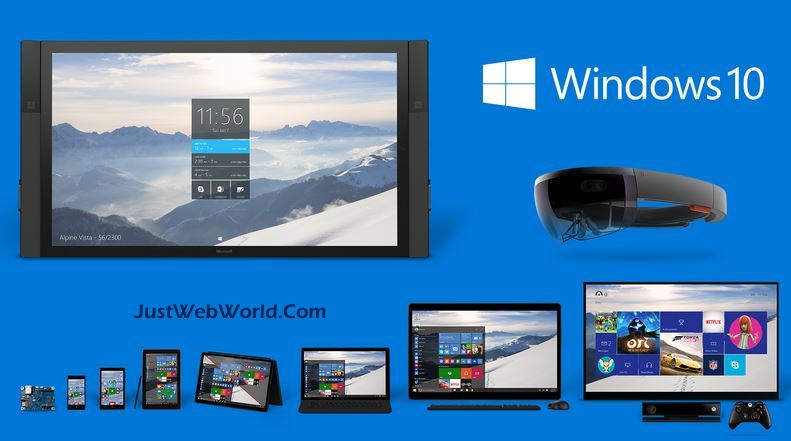
The next stage in the installation of windows 10 is the download. Before downloading Windows 10, check that the PC meets the minimum system requirements (see the table further down this page); otherwise setup may fail or the PC may run poorly afterwards. 😛 Once the PC meets the requirements, download the windows 10 ISO from Microsoft’s official software download page. When the download finishes, move on to the final step: the installation itself.
Installation Process
Installing windows 10 on a PC or laptop can be done from a USB flash drive or from a DVD.
1. Installing Windows 10 from USB. Microsoft’s Media Creation Tool can write the installer straight to a blank USB flash drive with at least 8 GB of space (anything already on the drive is deleted). This guide originally used an older Microsoft utility named Windows 7 USB / DVD Tool to copy the ISO file in your USB Drive. When the USB drive is ready, leave it plugged in and restart the computer. If the PC does not start from the USB drive, open the boot menu or change the boot order in the BIOS/UEFI settings. 😀
2. Installing Windows 10 from a DVD. Burn the ISO file to a blank DVD with a burning program such as Nero or the tool mentioned above (Microsoft notes that a dual-layer DVD may be needed if the ISO file is too large), then start the computer from the DVD to finish the installation.
Upgrading to Windows 10 from Windows 7, 8.1 or Later
The in-place upgrade is the easier method, but it needs a valid Windows 10 license. Microsoft’s free upgrade offer for genuine Windows 7 and 8.1 PCs ended in 2016, and the last workaround was officially closed on September 20, 2023, so a PC that has never run Windows 10 now needs a purchased license. During setup you can keep personal files and apps, keep personal files only, or keep nothing. Files are normally kept, but back them up first in case something goes wrong. The steps are below.

1. Download the ISO file. Download the Windows 10 ISO file from the Microsoft link provided above, then follow the step below to complete the installation.
2. Installing Windows 10 This is the step that needs the most attention. Once the ISO file is downloaded, mount it as a virtual drive, either with a program such as Daemon Tools or by right-clicking the ISO file in File Explorer and selecting Mount. A new drive icon, like a CD drive, appears in File Explorer. Open it, double-click setup.exe, choose what to keep, and select Install. The PC restarts several times during the upgrade, so do not switch it off.
That’s All You Need To Do.
Final Verdict
This guide has covered How to Install Windows 10 On Your Laptop. If you have questions about the installation process, leave a comment below and we will try to get back to you.
Thank you for reading. 😉
What Do You Need Before Installing Windows 10?
Before installing Windows 10, Microsoft’s download page lists these requirements:
- A Windows 10 license (a product key or a digital license). If Windows 10 was already activated on the PC and you are reinstalling it, you do not need to enter a product key; Windows activates automatically later using the digital license.
- An administrator account to run the Media Creation Tool.
- An internet connection and enough free storage for the download.
- A blank USB flash drive with at least 8 GB, or a blank DVD and a DVD burner.
- The right edition and architecture. Match the language, edition (Home or Pro) and 32-bit or 64-bit architecture of the Windows license you have. Windows 10 Enterprise is not available in the tool.
- A backup of your files, for example with one of the backup programs for Windows PCs or a cloud service. Our guide on why cloud backup matters explains the options.
Windows 10 vs Windows 11 Minimum System Requirements
The minimum hardware requirements for Windows 10 are far lower than those for Windows 11. The Windows 11 figures come from Microsoft’s Windows 11 specifications page; the Windows 10 figures are the long-standing minimums published by Microsoft and summarized on Wikipedia.
| Component | Windows 10 (minimum) | Windows 11 (minimum) |
|---|---|---|
| Processor | 1 GHz or faster | 1 GHz or faster, 2 or more cores, compatible 64-bit processor or SoC |
| RAM | 1 GB (32-bit) or 2 GB (64-bit) | 4 GB |
| Storage | 32 GB (since the May 2019 Update) | 64 GB or larger |
| Graphics | DirectX 9 with a WDDM 1.0 driver | DirectX 12 compatible with a WDDM 2.0 driver |
| Display | 800 x 600 | 720p (HD), larger than 9 inches diagonally |
| Firmware and security | No TPM requirement for installation | UEFI with Secure Boot capability, TPM 2.0 |
How to Create a Windows 10 Bootable USB with the Media Creation Tool
The Media Creation Tool is Microsoft’s official way to make Windows 10 installation media. The steps on Microsoft’s download page are:
- Select Download tool now on Microsoft’s Windows 10 download page and run the tool as an administrator.
- Accept the license terms.
- On the What do you want to do? page, choose Create installation media for another PC and select Next.
- Select the language, edition and architecture (64-bit or 32-bit).
- Choose USB flash drive to write the installer to a USB drive, or ISO file to save an ISO you can burn to a DVD later.
- When the media is ready, plug it into the PC and restart. If the PC does not start from the media, open the boot menu or change the boot order in the BIOS/UEFI settings.
- On the Install Windows page, set your language, time and keyboard preferences, then select Install Windows and follow the prompts.
Before a clean installation, it can help to understand how drives and partitions work; see our guide on disk management with MiniTool Partition Wizard. After installation, Microsoft recommends checking the PC maker’s website for updated drivers.
Clean Install vs In-Place Upgrade: Which Should You Choose?
| Factor | Clean install (USB/DVD) | In-place upgrade (setup.exe) |
|---|---|---|
| Personal files | Erased from the system drive; restore from backup | Can keep files and apps, files only, or nothing |
| Installed apps | Must be reinstalled | Can be kept |
| Best for | New drives, badly broken systems, a fresh start | Moving a working PC to Windows 10 with minimal setup |
| Media needed | Bootable USB drive (8 GB+) or DVD | Media Creation Tool or a mounted ISO |
If you are moving Windows 10 to a new drive rather than reinstalling it, see our guide on how to transfer Windows 10 to a new hard drive.
Is Windows 10 Still Supported?
Windows 10 reached end of support on October 14, 2025. According to Microsoft, after that date Windows 10 no longer receives free software updates, technical support or security fixes. Windows 10 version 22H2 was the final feature update; Microsoft announced on April 27, 2023 that 22H2 would be the last version.
The Windows 10 Consumer Extended Security Updates (ESU) program provides critical and important security updates, but no new features or technical support, for PCs running Windows 10 version 22H2 in the Home, Pro, Pro Education or Workstations editions. As of October 2026, Microsoft’s ESU page lists three ways to enroll:
- Free, by syncing your PC settings with Windows Backup.
- Free, by redeeming 1,000 Microsoft Rewards points.
- A one-time purchase of $30 plus applicable tax.
Microsoft’s consumer ESU page gives October 12, 2027 as the end date of the program. Businesses and schools have a separate commercial ESU program that runs until October 10, 2028, according to Wikipedia’s Windows 10 article. For a PC that meets the Windows 11 requirements, Microsoft recommends upgrading to Windows 11; eligible PCs on Windows 10 version 2004 or later see the option in Windows Update.
Common Windows 10 Installation Problems and Fixes
- The PC does not boot from the USB drive or DVD. Open the boot menu or change the boot order in the BIOS/UEFI settings, as Microsoft advises.
- The ISO file does not fit on a DVD. Use a dual-layer DVD, or use a USB flash drive instead.
- Setup asks for a product key. If Windows 10 was activated on that PC before, Microsoft says you can skip the key and the digital license activates Windows later.
- Files are missing after a clean install. A clean install erases the system drive. If there was no backup, data recovery software may help; see our guide on how to recover a formatted hard drive in Windows 10.
- The PC is slow after installing. Install the latest drivers from the manufacturer and check our tips to speed up your laptop.
Frequently Asked Questions
Can I still download Windows 10?
Yes. As of October 2026, Microsoft’s Windows 10 download page still offers the Media Creation Tool and Windows 10 version 22H2, although Windows 10 support ended on October 14, 2025.
Is Windows 10 still a free upgrade from Windows 7 or 8.1?
No. The official free upgrade offer ended in 2016, and Microsoft officially closed the last remaining upgrade route on September 20, 2023. A PC that has never run Windows 10 needs a Windows 10 license.
Do I need a product key to reinstall Windows 10?
Not if Windows 10 was previously activated on the same PC. Microsoft says a reinstall on such a PC does not need a product key because Windows activates automatically later using the digital license.
Will installing Windows 10 delete my files?
A clean installation from USB or DVD erases the drive Windows is installed on. An in-place upgrade lets you keep personal files and apps, keep personal files only, or keep nothing. In every case, back up important files first.

Justwebworld has published guides since 2012. How we write and update articles Report an error

1 Comment
I must confess, I read every bit of this post and am satisfied with what I read. My goal is to implement every step on my blog. Thanks #Rose