

In Jenga, you build a tower of 54 wooden blocks in layers of three, then take turns pulling out one block and stacking it on top. You must use only one hand, and you can only take a block from below the highest completed level. The player who makes the tower fall loses; the last player to stack a block without toppling it wins.
This guide follows Hasbro’s official Jenga rulebook (game 53557). It covers setup, who goes first, which blocks you can take, the 10-second rule, how to win, and the solo practice version. It also clears up the most common argument: whether you can take blocks from the top rows.
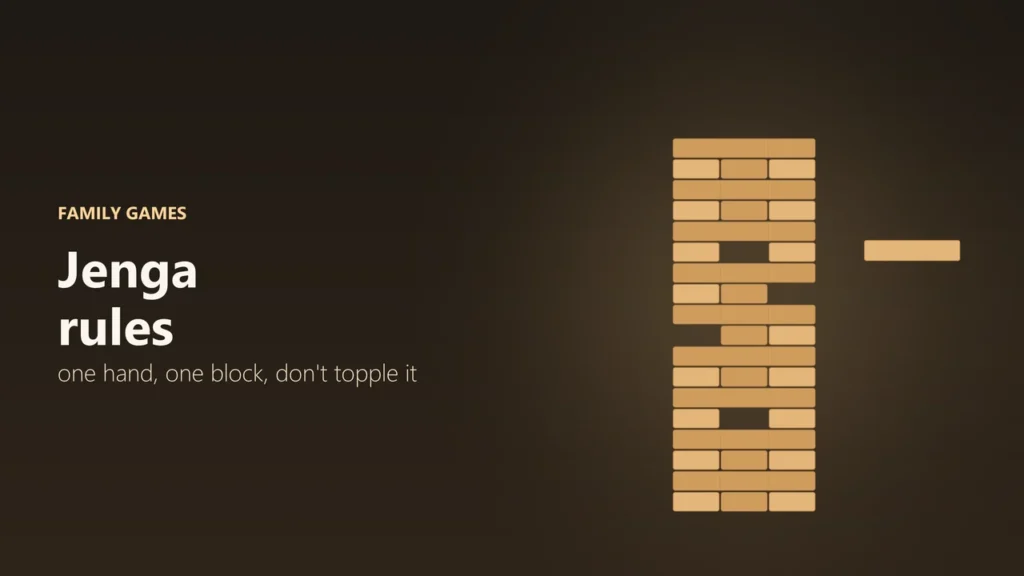
- Players: 1 or more, ages 6 and up
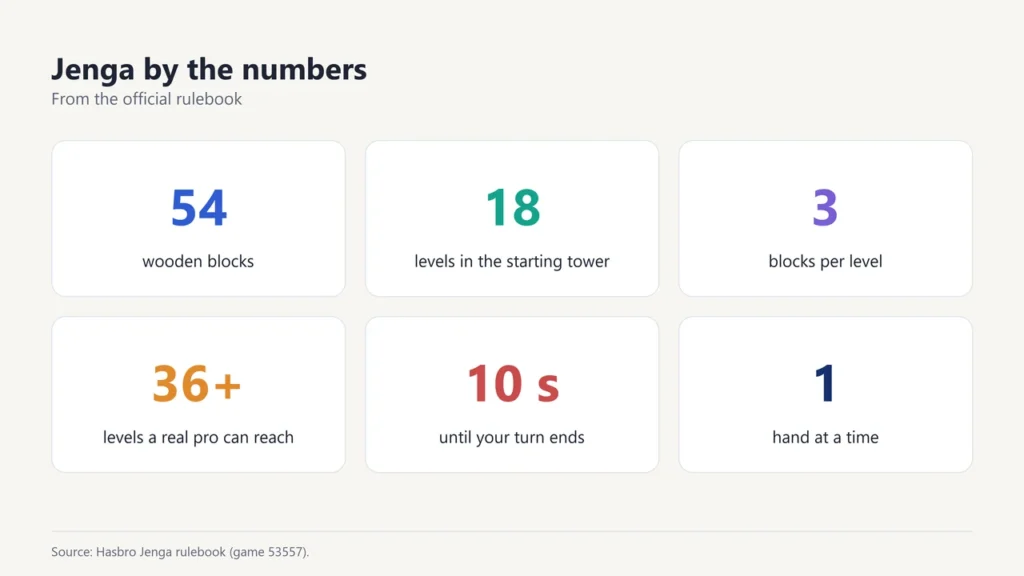
- Pieces: 54 wooden blocks
- Starting tower: 18 levels of 3 blocks
- Who starts: the player who built the tower
- Each turn: remove one block with one hand, stack it on top
- Winner: the last player to stack a block without the tower falling
How to set up Jenga
Empty the blocks onto a flat surface. One person builds the tower using the stacking sleeve: put down layers of three blocks side by side, with each layer at a right angle to the one below. When you finish, you have a solid tower 18 levels (or “stories”) high. Stand the sleeve upright, then lift it away so the tower stands on its own.
How to play Jenga
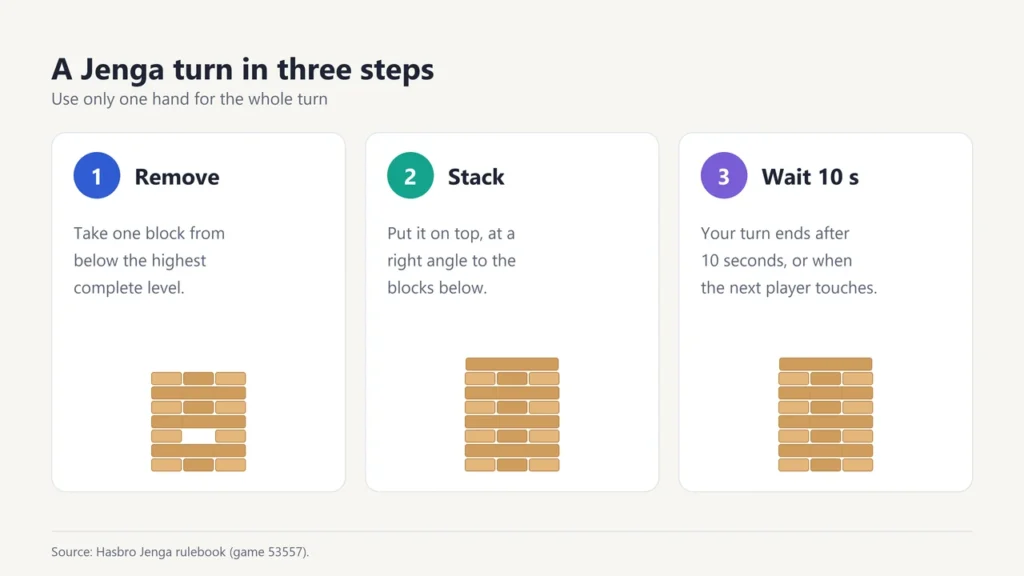
The player who built the tower goes first. Play then passes to the left. On your turn:
- Remove one block from anywhere below the highest completed level. Use only one hand.
- Stack it on top of the tower, at a right angle to the blocks just below it.
- Wait. Your turn ends 10 seconds after you stack your block, or as soon as the next player touches a block.
Can you take blocks from the top in Jenga?
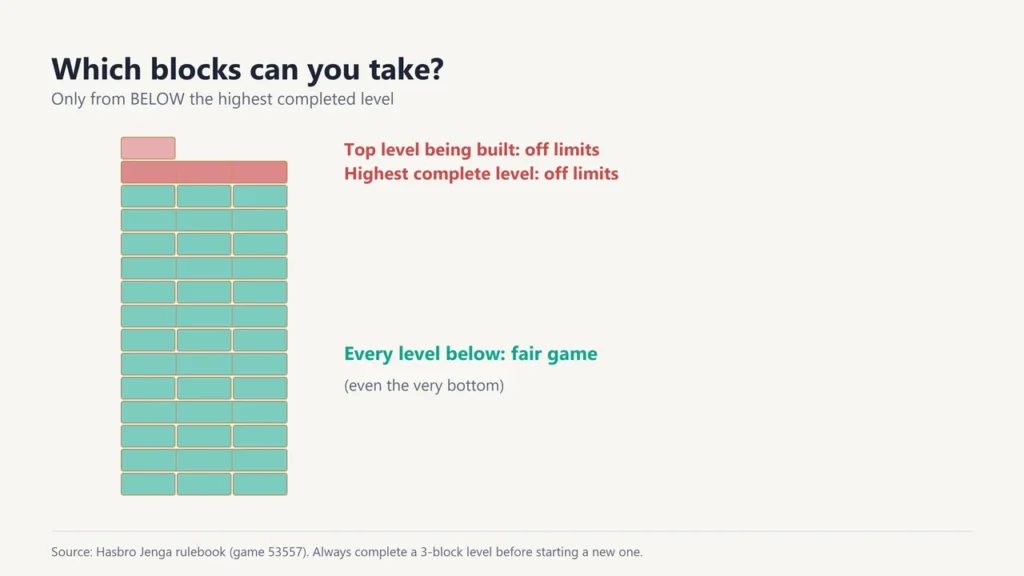
No. The official rule is that you remove a block from anywhere below the highest completed level. A completed level is one with all three blocks in place. So:
- You can’t take blocks from the top level while it is still being built (with one or two blocks).
- You can’t take blocks from the highest complete level either.
- Any level below that is fair game, including the very bottom.
There’s a related stacking rule: always complete a three-block level on top before starting a new one.
The one-hand rule and touching blocks
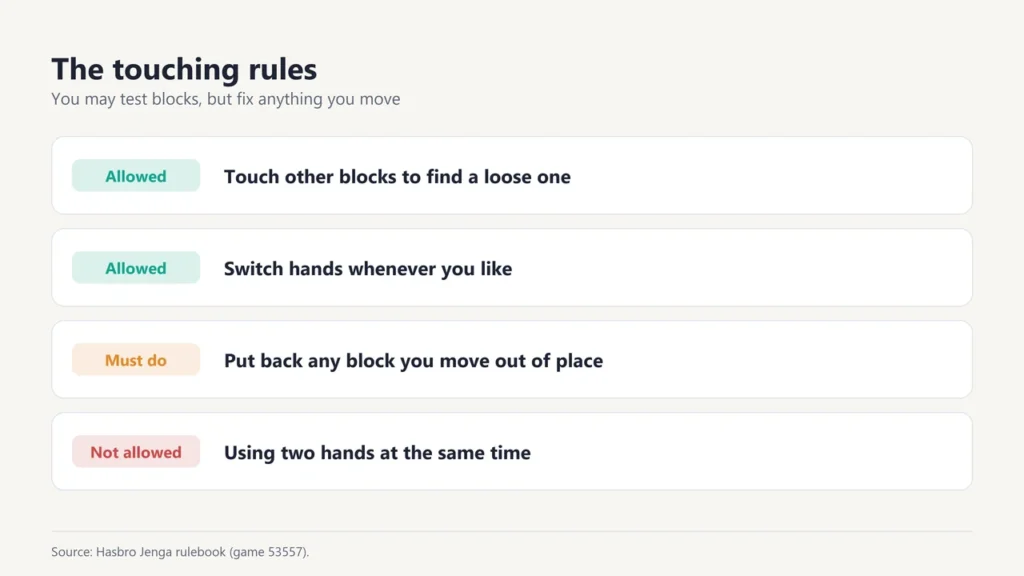
- One hand only. You can switch hands whenever you like, but you can never use both at once.
- You can test blocks. As the tower shifts, some blocks get looser and easier to remove. You can touch other blocks to find a loose one.
- Fix what you move. If you move a block out of place, you must put it back (with one hand) before touching another block.
How to win at Jenga
Keep removing and stacking blocks until someone knocks the tower over. If you are the last player to stack a block without toppling the tower, you win. The player who makes the tower fall sets it up for the next game. Hasbro’s rulebook says a real pro can build a tower 36 levels high or more, which is double the starting height.
Solo Jenga: playing alone
You can play on your own for practice. In the solo version you can take one block from any level, then use a steady hand to stack it on top. Keep going and try to beat your record height before the tower falls.
Simple Jenga tips
- Push gently first. Tap a block to test it. If it doesn’t move easily, try another one.
- Look for the loose one. As the tower’s weight shifts, the loose block in a level is sometimes the middle one and sometimes a side one, so test before you pull.
- Push, then pull. Pushing a block part of the way out from one side, then pulling it from the other, helps keep the tower steady.
- Stack straight. Place your block neatly in line on top, so the next player isn’t left with a lopsided tower (unless that’s your plan).
More family game rules: the official Connect 4 rules, Guess Who rules and the full UNO rules.
Frequently asked questions
How many blocks are in Jenga?
54 wooden blocks, which make an 18-level tower with 3 blocks on each level.
Can you take blocks from the top row in Jenga?
No. You can only take a block from below the highest completed level, so the top level and the highest full level are off limits.
Can you use two hands in Jenga?
No. You must use only one hand, but you can switch hands whenever you want.
Who goes first in Jenga?
The player who built the tower goes first, and play passes to the left.
How long is a turn in Jenga?
Your turn ends 10 seconds after you stack your block, or as soon as the next player touches a block. So if the tower falls in that time, you are the one who toppled it.
Who wins in Jenga?
The last player to stack a block without making the tower fall. The player who knocks it over sets up the next game.
Can you touch other blocks in Jenga?
Yes, to find a loose one. But if you move a block out of place, you must fix it with one hand before touching another block.

Justwebworld has published guides since 2012. How we write and update articles Report an error
