

Note (September 2026): Earlier versions of this article said cryptocurrencies are not regulated by any government, are “completely safe” and let people “easily make millions”; none of that is accurate, and the article has been corrected with current facts and regulator warnings.
People invest in bitcoin (BTC) and ether (ETH), the currency of the Ethereum network, for their potential returns, round-the-clock global transfers and tamper-resistant blockchain records. Both are highly volatile, are not covered by deposit insurance and are frequent targets of hacks and scams. As of 27 September 2026, bitcoin traded roughly a third below its October 2025 peak.
Key Takeaways
- Returns are possible but not reliable: as of 27 September 2026, bitcoin was about 33% and ether about 45% below their 2025 all-time highs, according to CoinGecko data.
- Crypto is regulated in more places than before: the EU’s MiCA regulation has covered crypto service providers since 30 December 2024, and US spot bitcoin and ether ETFs have traded since 2024.
- A blockchain is hard to alter, but coins still get stolen: the February 2025 Bybit hack took about $1.4-1.5 billion in ether.
- Scams are the biggest everyday danger: the FBI’s IC3 recorded about $11.4 billion in cryptocurrency-related losses reported in 2025.
- Regulators’ baseline advice: the UK FCA says anyone investing in crypto should be prepared to lose all their money.
Although there are plenty of investment and trading options, one of the most discussed, and most volatile, is cryptocurrency. Cryptocurrencies are Internet-based currencies with no physical existence, but you can trade in them whenever you want and from wherever you want.
Cryptocurrencies are not issued by any government or central bank, but they are increasingly regulated: the European Union’s Markets in Crypto-Assets (MiCA) regulation has applied to crypto service providers since 30 December 2024, and in the UK the Financial Conduct Authority regulates how crypto is marketed. In September 2021, El Salvador became the first country to make bitcoin legal tender, but in early 2025, under a $1.4 billion agreement with the International Monetary Fund, it amended its Bitcoin Law so that merchants are no longer required to accept bitcoin and the government no longer accepts it for tax payments. The only other country to adopt bitcoin as legal tender, the Central African Republic, did so in April 2022 and repealed the move about a year later.
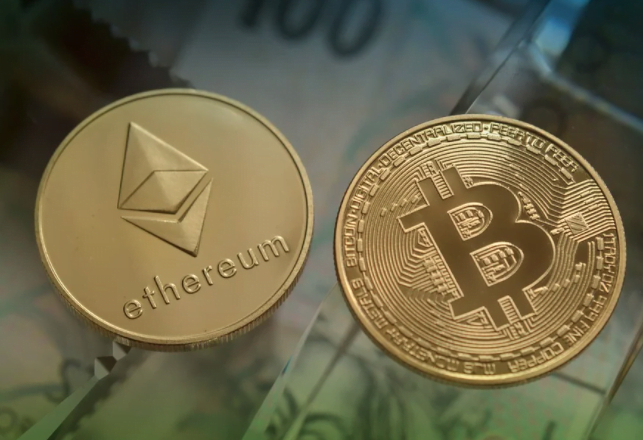
Although trading bitcoin is not easy, plenty of people still choose to invest money in it. One of the most important groups of people who like to invest their money in cryptocurrencies is seeking thrill and adventure. Yes, this is also one of the most important and prominent reasons.
Some people are drawn to cryptocurrencies precisely because prices are volatile: large price swings create the chance of large gains, and of equally large losses. This guide explains the reasons most often given for buying bitcoin and ether, and the facts and risks that qualify each one.
Top reasons people buy crypto
You might be well aware of the fact that the world is changing. Real estate, stocks and bonds remain the mainstream choices, but digital assets have become an additional option alongside them.
Many investors are now curious about modern technology-driven assets like cryptocurrencies, and the reasons they give fall into a few recurring themes.
The points below explain each commonly cited reason, together with what an investor should weigh before putting money into cryptocurrencies.
High potential return (with high risk)
The most cited reason for buying crypto is the potential for high returns, but returns are not guaranteed and past gains do not predict future ones. As of 27 September 2026, bitcoin traded around $84,800, about 33% below its all-time high of roughly $126,000 set on 6 October 2025, while ether traded around $2,700, about 45% below its August 2025 high near $4,950, according to CoinGecko market data.
There are various other trading options available, but many people choose bitcoin and ether because they can be traded at any hour, from anywhere with an internet connection.
Traditional investments still dominate most portfolios. They can involve more paperwork, but bank deposits also carry protections that crypto holdings lack, such as government deposit insurance.
Speedy transactions
As far as it is concerned with the most prominent reasons for dealing in bitcoins and ethereum like cryptocurrencies, one such important reason is speedy transactions. Traditional transfers, especially international ones, can involve paperwork and waiting times.
Cryptocurrency transfers settle on a blockchain instead: a new bitcoin block is added roughly every 10 minutes and a new Ethereum block about every 12 seconds, although network congestion, fees and exchange processing can slow a transfer down.
Unfortunately, nowadays, only a few of the people in the world got time, and most of them are busy. Due to this busy schedule, they cannot devote complete time to a lot of paperwork associated with traditional trading options, and therefore they prefer choosing cryptocurrency trading.
Security, not complete safety
Safety and security are some of the most prominent reasons why the cryptocurrency trading market is thriving nowadays. Cryptocurrency transactions are recorded on a blockchain, a shared ledger that is very hard to alter once a transaction is confirmed, but that does not make every holder’s coins safe.
Once stored in blockchain technology, confirmed records are extremely hard to modify, yet coins are still stolen through hacked exchanges, phishing and leaked private keys: on 21 February 2025, attackers the FBI linked to North Korea’s Lazarus Group took about 400,000 ether, worth roughly $1.4-1.5 billion, from the Bybit exchange. If you are unaware of the security levels of Blockchain technology, you can visit any portal providing information about Safe use of bitcoin wallet.
Global reach (limited acceptance)
Cryptocurrencies can be sent to anyone worldwide, but acceptance as an everyday means of payment remains limited. Even in El Salvador, research summarized on Wikipedia found the share of people reporting bitcoin transactions fell from 25.7% in 2021 to 8.1% in 2024.
Governments have mostly chosen to regulate crypto markets rather than adopt crypto as money. In the United States, the first 11 spot bitcoin ETFs began trading in January 2024, and spot ether ETFs followed on 23 July 2024.
The points above cover the reasons most often given for buying bitcoin and ether, along with the facts that qualify each one.
Those are the basic reasons behind the popularity of cryptocurrencies. No one can easily make millions from trading digital currencies. The UK Financial Conduct Authority warns that anyone who invests in crypto should be prepared to lose all their money, so read the risks below before investing.
Bitcoin vs Ethereum: What Is the Difference?
Bitcoin and Ethereum are the two best-known cryptocurrency networks, but they were built for different jobs. Bitcoin is a digital currency with a supply capped at 21 million coins; Ethereum is a programmable blockchain whose currency, ether, pays for running smart contracts and decentralized applications.
| Feature | Bitcoin (BTC) | Ethereum (ETH) |
|---|---|---|
| Launched | 3 January 2009 | 30 July 2015 |
| Created by | Satoshi Nakamoto (pseudonym) | Vitalik Buterin, with co-founders including Gavin Wood and Joseph Lubin |
| Consensus | Proof of work (mining) | Proof of stake since The Merge on 15 September 2022 |
| Block time | About 10 minutes | About 12 seconds |
| Main use | Digital money and store of value | Smart contracts, tokens (ERC-20), NFTs, decentralized apps |
| Energy | About 0.5% of global electricity use (2025 estimate) | Energy use cut by over 99% after The Merge |
| US spot ETFs | Trading since January 2024 | Trading since 23 July 2024 |
| All-time high (as of September 2026) | About $126,000 (6 October 2025) | About $4,950 (24 August 2025) |
Bitcoin’s new issuance falls over time: the block reward halves every 210,000 blocks, and since the April 2024 halving it stands at 3.125 BTC per block. Ethereum keeps being upgraded; recent upgrades include Dencun (13 March 2024), Pectra (7 May 2025) and Fusaka (3 December 2025). For a beginner-level overview of how prices are set, see cryptocurrency market basics.
What Are the Main Risks of Investing in Bitcoin and Ethereum?
The main risks of investing in bitcoin and ether are sharp price falls, the lack of deposit insurance, theft through hacks or lost keys, scams, and changing rules. Each is documented by regulators or by well-recorded events.
Price volatility
Bitcoin fell below $18,000 on 18 June 2022 during the Terra-Luna collapse, and to a two-year low of $16,216 on 28 November 2022 after the FTX exchange filed for bankruptcy on 11 November 2022 with an estimated $8 billion missing in customer funds. It reached $100,000 for the first time on 5 December 2024. The FTC notes that the value of a cryptocurrency can change rapidly, even by the hour. A longer list of drawbacks is in the disadvantages of bitcoin.
No deposit insurance or payment protection
According to the US Federal Trade Commission, crypto held in accounts is not insured by a government the way dollars in an FDIC-insured bank account are, and crypto payments do not come with legal protections: a payment can usually only be recovered if the recipient sends it back. The UK FCA says crypto buyers are highly unlikely to be covered by the Financial Services Compensation Scheme, and cites crypto lender Celsius, which filed for bankruptcy owing its users $4.7 billion.
Hacks, phishing and lost keys
Whoever controls a wallet’s private keys controls the coins. Exchanges can be hacked, as the $1.4-1.5 billion Bybit theft in February 2025 showed, and individuals lose funds to phishing or to a leaked or lost seed phrase. Practical steps are covered in how to secure a bitcoin seed phrase.
Scams
The FBI’s Internet Crime Complaint Center (IC3) received 181,565 complaints involving cryptocurrency in 2025, with reported losses of about $11.37 billion, up from about $9.32 billion in 2024. Investment fraud was the costliest crime type in 2025, at about $8.65 billion in reported losses. The FTC’s rule of thumb: only scammers guarantee profits or big returns, and only scammers demand payment in cryptocurrency. See also how to avoid scams when withdrawing crypto to a bank account.
Changing regulation
Rules differ by country and keep changing. In the EU, MiCA’s transitional period ended on 1 July 2026; the European Securities and Markets Authority has said any entity providing crypto-asset services to EU clients without a MiCA license after that date is in breach of EU law. Tax treatment also varies, as explained in this guide to bitcoin taxation.
How to Invest in Bitcoin or Ethereum More Carefully
These steps follow the published warnings of the FCA, the FTC and the FBI’s IC3. They are general information, not personal financial advice.
- Decide how much you could lose. The FCA’s guidance is to be prepared to lose all the money you put into crypto, so size any purchase with that in mind.
- Check the platform is authorized. In the EU, a crypto service provider needs a MiCA license; elsewhere, check your national regulator’s register and warning list before sending money.
- Consider regulated wrappers. US-listed spot bitcoin and ether ETFs give price exposure through a brokerage account without holding keys yourself; they still carry the full price risk. Background: how cryptocurrency ETFs affect the market.
- Secure what you hold. Keep the seed phrase offline and never share private keys with anyone.
- Walk away from guaranteed returns. Anyone promising guaranteed profits, demanding payment in crypto, or pitching crypto investments through a dating app matches the FTC’s scam warning signs.
- Keep records for tax. Note the date, amount and price of every purchase, sale and transfer.
Pros and Cons of Bitcoin and Ethereum at a Glance
| Commonly cited advantage | What limits it |
|---|---|
| High potential returns | Large drawdowns: bitcoin was about 33% and ether about 45% below their highs as of 27 September 2026 |
| Fast, borderless transfers | Payments are hard to reverse and lack card-style legal protections (FTC) |
| Tamper-resistant blockchain | Exchanges and wallets can still be hacked (Bybit, February 2025) |
| Growing institutional access through ETFs | Rules still differ by country; no FDIC or FSCS protection for crypto holdings |
Frequently Asked Questions
Is it a good idea to invest in Bitcoin or Ethereum?
Whether bitcoin or ether suits an investor depends on their finances and risk tolerance; this article cannot give personal advice. Regulators are clear on the downside: the UK FCA says crypto investors should be prepared to lose all their money, and neither asset is covered by deposit insurance.
What is the difference between Bitcoin and Ethereum as investments?
Bitcoin is a digital currency capped at 21 million coins, while Ethereum is a smart-contract platform whose currency, ether, pays for network activity. Both have US spot ETFs, and both have been highly volatile; as of 27 September 2026, ether was further below its all-time high than bitcoin.
Is Bitcoin still legal tender in El Salvador?
El Salvador made bitcoin legal tender in September 2021, but amendments passed in early 2025 under an IMF agreement removed the requirement for merchants to accept bitcoin and ended its use for tax payments. Wikipedia describes bitcoin’s legal-tender status there as rescinded.
Can cryptocurrency be stolen if the blockchain is secure?
Yes. A blockchain’s confirmed records are very hard to change, but coins can be stolen from exchanges, through phishing, or by anyone who obtains a wallet’s private keys. The February 2025 Bybit hack took about 400,000 ether.
Are crypto investments insured?
Generally no. The FTC says crypto held in accounts is not government-insured like FDIC-insured bank deposits, and the FCA says UK crypto buyers are highly unlikely to be covered by the Financial Services Compensation Scheme.
How fast are Bitcoin and Ethereum transactions?
A new bitcoin block is produced about every 10 minutes and a new Ethereum block about every 12 seconds. Actual transfer times also depend on network fees, congestion and how quickly an exchange processes withdrawals.

Justwebworld has published guides since 2012. How we write and update articles Report an error
