Note (September 2026): This 2019 article has been updated: TuneKeep’s current version needs 64-bit Windows 8 to 11 or macOS 11 or later, and Spotify’s terms of use prohibit ripping or recording its content.
TuneKeep Spotify Music Converter is a paid Windows and Mac program that records Spotify songs, playlists, podcasts and audiobooks as MP3, AAC, WAV, FLAC, AIFF or ALAC files with tags kept. As of October 2026, it costs $29.95 to $89.90. Using it breaks Spotify’s terms, which ban ripping and recording content.
Key Takeaways
- TuneKeep Spotify Music Converter turns Spotify streams into ordinary audio files that play outside the Spotify app.
- As of October 2026, plans cost $29.95 (3 months), $44.95 (1 year) or $89.90 (lifetime); the free trial converts only part of each song.
- The current version needs 64-bit Windows 8 to 11 or macOS 11 or later.
- Spotify’s User Guidelines prohibit ripping, recording and circumventing its technology, so using a converter risks your account.
- Spotify Premium offers official offline listening on up to 5 devices.
Music is part of daily life for many people, whether they are working out, commuting, studying, dancing or traveling. Because people want to listen anywhere, many keep looking for better music apps.
Spotify has emerged as a popular choice for listeners because its catalog spans many languages, genres and cover versions. Songs downloaded inside the Spotify app play only in that app, so people who want standalone audio files of tracks on Spotify, usually turn to third-party converter software such as TuneKeep.

TuneKeep Spotify Music Converter is a paid desktop program for Windows and Mac, sold by TuneKeep Software, that records Spotify songs, albums and playlists and saves them as audio files such as MP3, M4A/AAC, FLAC or WAV with ID3 tags.
What does TuneKeep Spotify Music Converter do?
TuneKeep is one of several Spotify converters sold for personal use. TuneKeep Spotify Music Converter is described by its maker as offering the following features:
- Can be used with both Spotify free and premium version.
- You can enjoy Spotify music offline on any device (mobile, desktop) and any operating system (Windows, macOS).
- Allows you to download songs, albums on Spotify and play them offline as MP3, M4A, WAV or FLAC.
- You can also preserve all ID3 tags including song title, artist, album, genre, track number, etc.
- The vendor describes the output as lossless; the final quality still depends on the Spotify source and on the format and bit rate you choose.
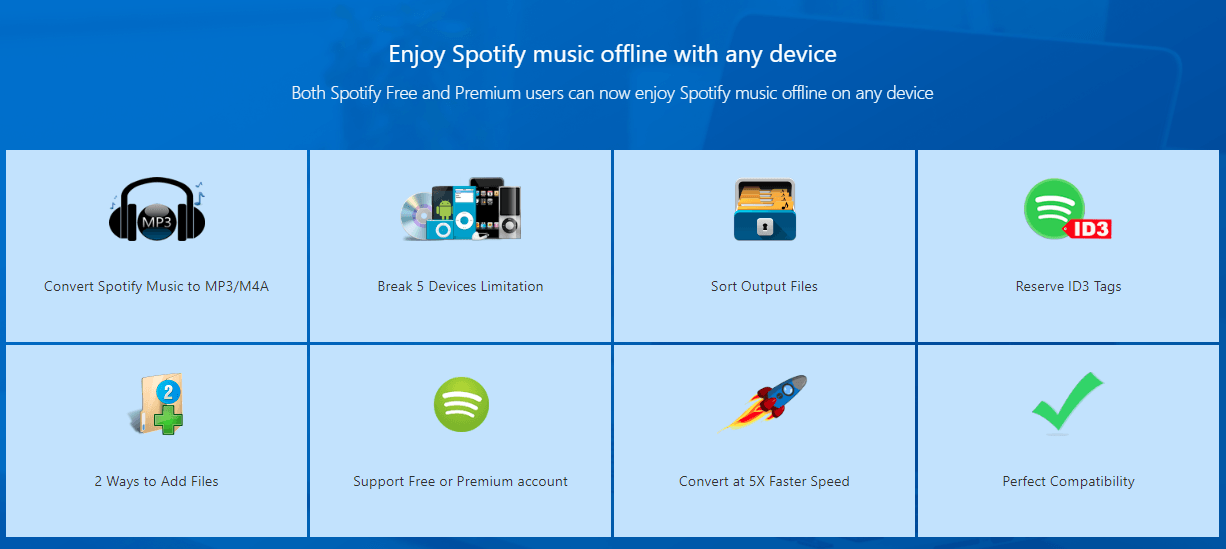
- Sort all your songs into folders and keep them organized into the album, artists, genre, etc. depending on your preference.
- A simple interface lets beginners manage their downloads without much setup.
- Conversion speed: the 2019 version advertised 5X speed; as of October 2026, TuneKeep advertises up to 10X speed. Both are the vendor’s own figures, not independent benchmarks.
- Output settings let users choose the format, bit rate, sample rate, file names and folder layout.
- Converted files are ordinary audio files, so they are not tied to Spotify’s own limit of offline downloads on 5 devices and can be copied to players such as an iPhone, iPod, Surface, Sony Walkman or Samsung smartphone. Spotify’s own terms, however, prohibit ripping or recording its content (see the section on legality below).
- You have the option to add files in 2 different ways; use the “drag and drop” option to copy your songs or copy the URLs of Spotify songs, albums, and playlist to add them to your TuneKeep Spotify Music Converter.
- When this article was first published in 2019, the Windows version worked with both the Microsoft Store and standalone Spotify apps on Windows 7/8/8.1/10 (32-bit and 64-bit). As of October 2026, TuneKeep’s store page lists Windows 8 to 11 (64-bit only) and macOS 11 or later on Intel and Apple M-series Macs.
How to use TuneKeep Spotify Music Converter step by step
The steps below describe the version covered when this article was first published in 2019. In the current version, as of October 2026, the program opens a built-in Spotify web player, you sign in with a Spotify Free or Premium account and add songs with a “+” button; the overall flow (add songs, choose a format, convert) is the same.
1] Launch TuneKeep Spotify Music Converter
Along with the TuneKeep Spotify Music Converter, Spotify is launched simultaneously. Before starting the conversion, you need to ensure that you have the latest version of Spotify installed and it is running during the conversion process.

2] Add your songs, playlist or album
You can either drag and drop your preferred songs or albums from Spotify to the TuneKeep Spotify Music Converter taskbar. Alternately, you can copy the link from Spotify and paste them on the converter. Many songs can be queued at once in the full version; the free trial converts only part of each song.
3] Choose tracks
Once you have added the desired songs from Spotify to the TuneKeep Spotify Music Converter, select those that you want to convert.
4] Choose the output folder and format
If your conversion list is ready and final, you need to select the output format which in the 2019 version defaulted to MP3 at 320 kbps and 44,100 Hz (44.1 kHz).
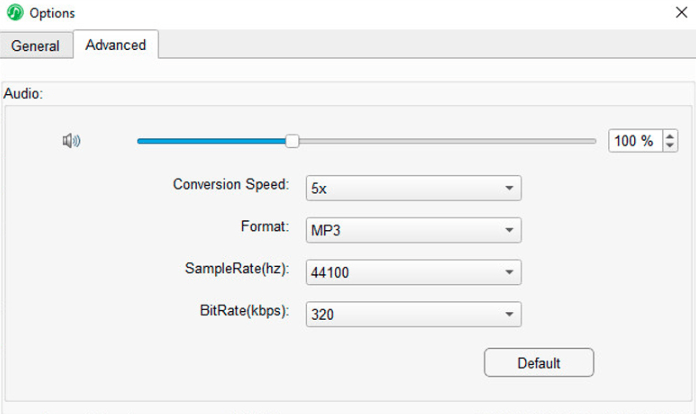
Even the output folder is automatically selected as “C:\Users\(Username)\Music\TuneKeep Spotify Music Converter\Converted”, but if you wish to make any changes in these settings you can do so by clicking on the “Options” button. This opens the dialog box. You can choose from MP3, M4A, WAV, and FLAC.
5] Download to convert Spotify music
You can begin the process by pressing the “Convert” button. This initiates the process of downloading music from Spotify, converting into your desired format and saving them in the chosen location.

How long a conversion takes depends on the computer, the internet connection and the mode used: TuneKeep says converting from the Spotify app gives the best sound quality, while the web player mode is faster. TuneKeep Spotify Music Converter is one of several similar tools, and there is no independent data showing it is the most popular one.
On why you would want one at all, the advantages of a music converter on Mac makes the case.
Is it legal to convert Spotify music?
Converting Spotify music breaks Spotify’s terms. Spotify’s User Guidelines, which form part of its Terms of Use (last updated September 4, 2026), list copying, reproducing, redistributing, “ripping,” recording and transferring content, and circumventing any technology used by Spotify, among the things users may not do. TuneKeep itself describes the program as a tool for DRM removal and says it is a home edition for personal use only.
What that means in practice:
- Account risk: Spotify’s guidelines say breaking its rules can lead to suspension or termination of an account.
- Copyright: whether a private copy is lawful depends on the country. Converted songs are still copyrighted, so sharing them, selling them or using them in videos is not covered by a Spotify subscription. Our guide to what music licensing is and why it matters explains the difference between listening rights and usage rights.
- Videos and vlogs: TuneKeep’s site shows users adding converted Spotify songs to vlogs. That use needs a license from the rights holders; royalty-free stock music sites are the safer source for background tracks.
How much does TuneKeep Spotify Music Converter cost?
As of October 2026, TuneKeep’s official store lists the same three plans for the Windows and Mac versions (prices in US dollars, tax not included):
| Plan | Price | Free updates | Money-back period |
|---|---|---|---|
| 3-month subscription (auto-renews) | $29.95 | 3 months | 5 days |
| 1-year subscription (auto-renews) | $44.95 | 1 year | 5 days |
| Lifetime license (one-time) | $89.90 | Lifetime | 30 days |
Subscriptions renew automatically until cancelled; TuneKeep says cancellation is done by contacting its support team by email. Prices can change, so check the store page before paying.
What does the free trial do?
The TuneKeep free trial converts only part of each song, so it is meant for testing, not for keeping music. TuneKeep’s own pages disagree on the exact limit: the Windows user guide says the trial converts 1 minute of each song, while the store FAQ says 3 minutes of each song and 3 files at a time.
System requirements: original version vs. current version
| Item | 2019 version (original article) | Current version (October 2026) |
|---|---|---|
| Windows | Windows 7/8/8.1/10, 32-bit and 64-bit | Windows 8 to 11, 64-bit |
| Mac | Mac version available | macOS 11 or later, Intel and Apple M-series |
| Output formats | MP3, M4A, WAV, FLAC | MP3, AAC, WAV, FLAC, AIFF, ALAC |
| Content | Songs, albums, playlists | Tracks, albums, playlists, podcasts, audiobooks, music videos |
| Source | Spotify desktop app | Spotify app or built-in web player |
| Advertised speed | 5X | Up to 10X |
TuneKeep also sells TuneKeep Music One, a broader converter that the company says handles Spotify, Apple Music, Amazon Music, YouTube Music, Tidal and other services.
What is the official way to listen to Spotify offline?
Spotify Premium is the official way to listen offline. As of October 2026, Spotify’s Premium page lists offline downloads and lossless sound quality up to 24-bit/44.1 kHz. According to Spotify’s support pages:
- Downloads work on up to 5 devices; downloading to more than 5 removes downloads from the device used least recently.
- You must go online at least once every 30 days or downloads are removed.
- On desktop, individual songs cannot be downloaded on their own; you add them to a playlist and download the playlist.
- Downloads must be downloaded again after reinstalling the Spotify app.
If you need music files you own outright, buying tracks from a store that sells DRM-free downloads avoids the terms-of-use problem. For more options, compare the popular music streaming apps or read about streaming audio recorders, which carry the same terms-of-use caveats.
TuneKeep Spotify Music Converter: pros and cons
| Pros | Cons |
|---|---|
| Works with Spotify Free and Premium accounts | Breaks Spotify’s terms of use, which risks the account |
| Several output formats with ID3 tags and artwork kept | Paid: $29.95 to $89.90 as of October 2026 |
| Windows and Mac versions | Subscriptions auto-renew and their money-back window is only 5 days |
| Extra tools listed by the vendor (CD burner, tag editor, format converter) | Speed and quality claims come from the vendor, not independent tests |
Similar programs exist, such as the TunesKit Spotify Music Converter for Windows; the same legal points apply to all of them. For background on Spotify’s business model, see how Spotify reinvented the music industry.
Frequently Asked Questions
Is TuneKeep Spotify Music Converter free?
No. TuneKeep Spotify Music Converter has a free trial that converts only part of each song. As of October 2026, the full version costs $29.95 for 3 months, $44.95 for 1 year or $89.90 for a lifetime license, according to TuneKeep’s store.
Does TuneKeep work with Spotify Free?
Yes. TuneKeep says the converter works with both Spotify Free and Spotify Premium accounts; you sign in to your account inside the program.
Can Spotify ban you for using a converter?
Spotify’s User Guidelines prohibit ripping, recording and circumventing its technology, and Spotify says breaking its rules can lead to account suspension or termination. Spotify does not publish how often it enforces this against converter users.
Does TuneKeep Spotify Music Converter work on Mac?
Yes. As of October 2026, the Mac version supports macOS 11 or later on both Intel and Apple M-series Macs. The Windows version needs 64-bit Windows 8 to 11.
What formats can TuneKeep convert Spotify songs to?
The current version of TuneKeep Spotify Music Converter outputs MP3, AAC, WAV, FLAC, AIFF and ALAC, and keeps ID3 tags such as title, artist, album, track number and artwork.
Can I use converted Spotify songs in YouTube videos?
Not without permission. Converting a song does not give you the right to publish it; using music in a video needs a license from the rights holders or a royalty-free track.