Traveling to the United States is a dream come true for many Indians- whether it be for higher studies, work opportunities, business, or tourism. Then, before you can ever see the beautiful skyline of New York City, the tech landscape of Silicon Valley, or the magnificence of the Great Canyon, you will need a USA Visa for Indians and go through the application process.
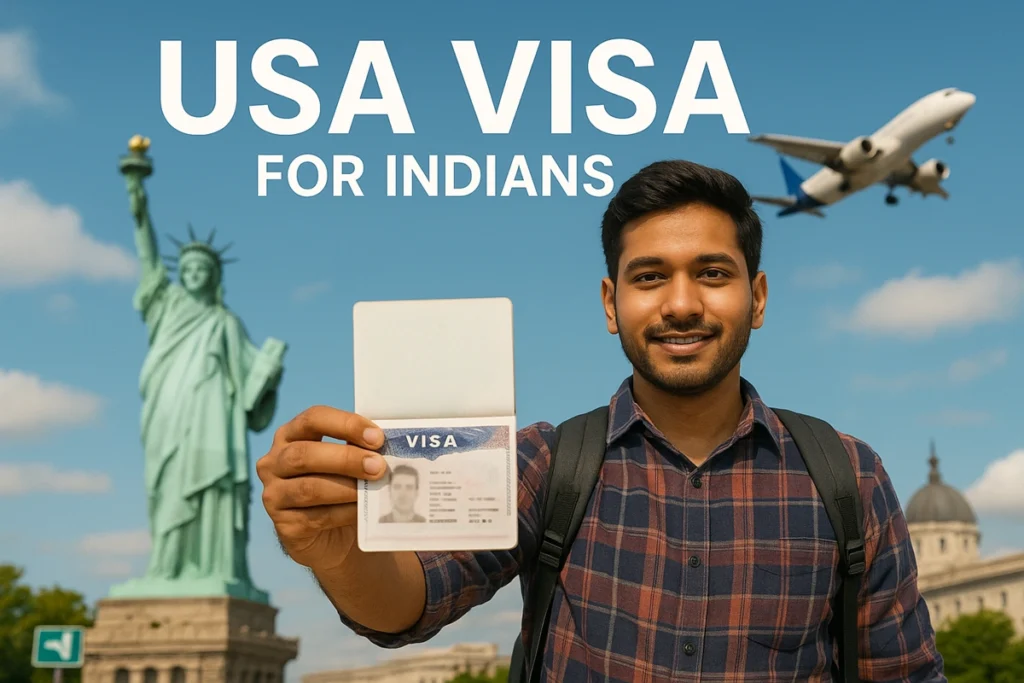
The USA Visa Process can be overwhelming for Indian applicants, especially for first-timers, but many Indians apply and get their visas approved in one attempt. This guide will be the road map to show you the steps in the application process, mistakes you can avoid, and tips you can use to increase your chances of being approved.
Understanding US Visa Categories
The first and most important step in the US Visa application process is to decide which type of visa is aligned with your travel intention. The United States classifies its visas into 2 major categories:
1. Non-Immigrant Visas (for temporary travel):
- B1/B2 Visa: For business travel or tourism.
- F-1 Visa: For students studying higher education.
- H-1B Visa: For skilled workers in specialized fields.
- J-1 Visa: For cultural exchange or research.
2. Immigrant Visa (for permanent residence/Green Card):
These are typically acquired through family sponsorships, employment, and various other categories aiming for long-term residency.
For the majority of visiting Indian travelers, the most commonly applied visa is the B1/B2 tourist/business visa. Selecting the correct visa type is imperative – applying under the incorrect category can cause delays and/or denial.

Step-by-Step Guide to Applying for a US Visa
1. Fill Out the DS-160 Form Online
The DS-160 is the heart and soul of your visa application. You must be sure to be accurate and honest when answering every question on this form.
- Be sure that your details (name, passport number, travel history…) all match your official documents exactly.
- Save your application often. Even small errors can raise a red flag at the interview.
- Upload a passport-size photo that meets the US passport photo requirements.
2. Pay the Visa Application Fee
After you submit the DS-160, you must pay the non-refundable visa application fee. Currently, the fee is $185. (approximately ₹15,000) for most non-immigrant visas (This may be different depending on the type of visa). You can pay this fee online or through designated banks.
Keep your payment receipt. You will need this to schedule an interview.
3. Schedule Your Appointment
There are two main appointments in the US visa process:
VAC (Visa Application Centre) Appointment: In this appointment, your biometrics – fingerprints and photo – are taken.
US Embassy/Consulate Interview: This is the most important stage of the process, where a consular officer makes a final decision about your application.
In India, interviews are performed at the US embassies or consulates located in New Delhi, Mumbai, Chennai, Hyderabad, and Kolkata.
4. Prepare Important Documents
Documents are the basis of your application. They prove the legitimacy of your purpose of travelling to the US and demonstrate strong ties to India. If you have a complete and well-prepared file, your chance of being able to finish your visa interview process smoothly has greatly improved.
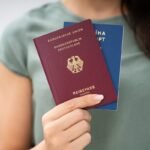
Here’s a normal checklist:
Valid Passport (it should be at least six months beyond your intended time of journey).
- DS-160 Confirmation Page.
- Appointment Confirmation Letter.
- Visa Fee Payment Receipt.
- Passport-sized photographs.
- Proof of Financial Means (e.g., bank statements, income tax returns, salary slips).
- Proof of Employment (e.g, job letter, leave approval, or business registration if self-employed).
- Travel Plans (e.g., flight bookings, hotel reservations, or an invitation letter if necessary).
- For Students: I-20 form, acceptance letter/admission letter, and proof of funding.
Common Mistakes to Avoid
Even strong candidates can get turned away if they miss some small but important details. By remaining vigilant, you can enhance your chances of success by avoiding some common mistakes:
Missing or Incorrect DS-160 Form – Review all fields before submission, because even the smallest error can cause delays or a denial.
Insufficient Financial Documentation – If you plan on using financial documentation through updated bank statements, currently filed income tax returns, or salary slips, please provide clear evidence of being financially secure.
Inconsistent Responses – Make sure your answers during the interview are consistent with what is listed on your DS-160 and the accompanying documentation.
Poor Interview Attitude – If you are overenthusiastic or anxious, this will bring a bad impression. You want to calmly and respectfully communicate.
Unclear Travel Purpose – Clearly state your purpose of travel to the U.S. If you provide vague or unsure explanations, most of the time would raise concerning behavior for consular officers.
Establishing Strong Ties to India
A primary reason for visa refusals under Section 214(b) is that the consular officials are concerned that the applicants will not return to their home country after coming to the United States. The key to these defects is clearly demonstrating that you have strong personal, professional, and financial ties to India. Some examples of personal and professional or financial ties may include:

- Adequate Employment or Business Ownership- Having a job or owning a business signifies a longstanding commitment to your profession.
- Child Responsibilities- Having dependents that can fall under family responsibilities may include as children, a spouse, or elder parents, may demonstrate that you have personal roots.
- Property or Assets in India- Owning land or a home, or having material assets in India, signifies financial stability.
- Educational Ties (for Students)- A student may demonstrate an educational tie by having proof that he/she is enrolled as a student in an Indian institution, or proof that he/she returned to India after having completed a study program in a foreign country.
The clearer and stronger the set of ties to India, the more likely a consular officer will be willing to trust that you intend to return to whichever country you were visiting.
Final Thoughts
It is feasible for Indians to obtain a US visa during their first attempt if they come prepared, are honest about their travel and intentions, and have confidence in front of the person conducting the interview. The key is choosing the appropriate visa, completing forms correctly, preparing all documents, and demonstrating strong ties to India.
The visa interview should not be viewed as an interrogation but rather as an opportunity for you to explain to them the legitimate reasons you want to travel. If you show them you are financially stable and responsible, and that you know, with certainty, your reasons to travel, you should feel confident that you will come out of that interview room with your approved visa stamp.
With the right approach, proper preparation, and good advice from people you trust, like OneVasco, you will be holding your visa and be ready to check in for your American trip.