

Warning (September 2026): An earlier version of this article wrongly suggested that breath-test readings between 0.1% and 0.2% cannot lead to a drunk-driving conviction. They can: 0.08% is the legal limit in every US state except Utah, where it is 0.05%, and 0.04% for commercial drivers. Breath tests can be challenged in court, but never drive after drinking on the assumption that a test will not hold up.
If you have been subjected to a roadside breath test by a cop to find out if you are driving under influence, then you are familiar with the breathalyzer test. This is one major way of finding out drunk drivers and charging them.

1) How does a breathalyzer work?
The word ‘breathalyzer’ is formed of two words – breath and analyzer. Breathalyzer is the name given to a handheld device, invented by Robert Frank Borkenstein, that is used by the law enforcement agencies for finding out the concentration of alcohol in the drivers’ blood.
The driver is supposed to blow into a tube that is then analyzed by the device to estimate the blood alcohol concentration (BAC)level. This is calculated by applying a standard formula.
In the US states the legal limit for driving under the influence of alcohol is 0.08 percent in every US state except Utah, where it has been 0.05 percent since December 2018. For commercial drivers, this is further reduced to 0.04 percent.
2) Can you beat a breathalyzer device?
Many people think that they can cover their BAC by using breath fresheners, like gums or sprays or even by gargling with mouthwashes. Unfortunately, the amount of alcohol present in the breath just cannot be concealed. This is because BAC above the legal limit of 0.08 percent takes over five-and-a-half hours to be eliminated from the system.
So, no amount of breath fresheners and mouthwashes can hide the BAC. On the contrary, some mouthwashes contain alcohol and may actually inflate the BAC readings!
3) Is a breathalyzer test foolproof?
Over the years, breathalyzer tests have been successfully used in detecting the BAC of drivers. That this process is scientific, foolproof and fair is a foregone conclusion. Right? Wrong!
The reality is that a breathalyzer test is neither scientific nor fair. In actuality, this test is not based on any accepted science, since it displays a wide variation in results from person to person.
There have been cases where perfectly sober drivers have been accused and arrested for drunk driving. In other cases, the BAC of drivers driving over the limit have failed to register on the device.
It can be argued that a high BAC is not an accurate indicator of impairment, since alcohol tolerance varies greatly from person to person. This may be true, butis not the subject of this article. This article focuses on the accuracy of a breathalyzer in giving the correct reading of BAC.
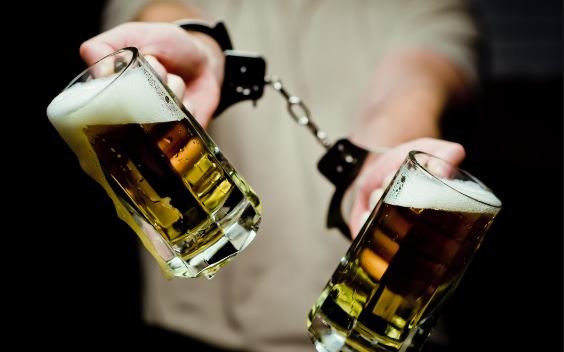
4) Are breathalyzer test results reliable?
Unfortunately, no. A number of comparative studies have found a margin of error in breathalyzer tests to as much as 50 percent, when compared to actual blood alcohol content! This means that a breathalyzer reading of 0.1 percent BAC, that is above the permissible limit, may actually be ranging between 0.05 to 0.15 percent, when tested in the lab. Defence lawyers use this kind of research to challenge individual results, but a reading above the limit is normally enough for an arrest and a charge.
The argument that a breathalyzer test is a reliable indicator of BAC is flawed. This is because BAC detected by this test only indicates the alcohol content in the sample of breath it measures.
It is not an accurate indicator of the alcohol that is actually present in the blood content. And, therefore, it fails to prove alcohol related impairment.
Courts decide case by case how much weight to give a breath-test result, and many states also rely on blood tests.
A reading of 0.1 percent or more is above the legal limit in every state, so a driver can be charged; any challenge to the test is a matter for the court.
Thus, it proves that BAC, detected by a breathalyzer, is not an accurate indicator of the degree of impairment and should not be used for charging drivers of drunk driving, until further tests are conducted.
Conclusion
Although drunk driving is a menace that results in the injuries and deaths of thousands of people, not to mention the damage and destruction caused to property, the BAC detection of such driversby breathalyzer tests needs to be fair.
In case anyone feels that he or she has been unreasonably charged and arrested for driving under influence due to inflated BAC, approaching a DUI/DWI lawyer will be the best course of action.

Justwebworld has published guides since 2012. How we write and update articles Report an error
