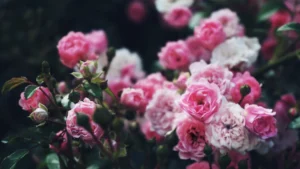
Flowers that start with B include some of the most recognisable plants in cultivation — bluebells, begonias, bougainvillea, bird of paradise, black-eyed Susan and buttercups — alongside three US state flowers and a handful of species that are genuinely toxic.
This guide covers 29 flowers beginning with B, with botanical names, plant type, bloom season and what distinguishes each one. Toxic species are flagged.

Flowers Starting With B: Quick Reference
| Flower | Botanical Name | Type | Blooms | Notes |
|---|---|---|---|---|
| Bachelor’s Button | Centaurea cyanus | Annual | Late spring–summer | Cornflower; once a cornfield weed, now scarce in the wild |
| Baby Blue Eyes | Nemophila menziesii | Annual | Spring | Californian native; sky-blue with a pale centre |
| Balloon Flower | Platycodon grandiflorus | Perennial | Summer | Buds inflate like balloons before opening |
| Balsam | Impatiens balsamina | Annual | Summer | Seed pods burst on touch — hence Impatiens |
| Barberton Daisy | Gerbera jamesonii | Tender perennial | Summer | The florist’s gerbera; South African native |
| Basketflower | Centaurea americana | Annual | Summer | Bud bracts have a woven, basket-like pattern |
| Bearded Iris | Iris germanica | Rhizome | Late spring | Fuzzy “beard” guides pollinators to the nectar |
| Begonia | Begonia spp. | Tender perennial | Summer–autumn | Over 2,000 species; separate male and female flowers |
| Bellflower | Campanula spp. | Perennial | Summer | Bell-shaped blooms; some species spread aggressively |
| Bergamot | Monarda spp. | Perennial | Mid–late summer | Bee balm; aromatic, heavily used by pollinators |
| Bird of Paradise | Strelitzia reginae | Tender perennial | Autumn–spring | Crane-like flower; pollinated by sunbirds perching on it |
| Bitter Melon Flower | Momordica charantia | Annual vine | Summer | Small yellow flowers preceding the edible gourd |
| Bitterroot | Lewisia rediviva | Perennial | Spring | Montana’s state flower; survives extreme drought |
| Black-eyed Susan | Rudbeckia hirta | Biennial / perennial | Summer–autumn | Dark central cone; Maryland’s state flower |
| Black Hollyhock | Alcea rosea ‘Nigra’ | Biennial / perennial | Summer | Near-black cultivars: Nigra, Jet Black, Blacknight |
| Black Locust | Robinia pseudoacacia | Tree | Late spring | Fragrant white racemes — bark and seeds toxic |
| Blanket Flower | Gaillardia spp. | Perennial | Summer–frost | Red-and-yellow banding; thrives on poor soil |
| Bleeding Heart | Lamprocapnos spectabilis | Perennial | Spring | Arching sprays of pendant hearts — toxic |
| Bletilla Orchid | Bletilla spp. | Terrestrial orchid | Late spring | Hardy ground orchid; unusually easy to grow |
| Bluebell | Hyacinthoides non-scripta | Bulb | Spring | Carpets ancient woodland — bulbs toxic |
| Bluebonnet | Lupinus texensis | Annual | Spring | Texas state flower; needs scarified seed |
| Blue Columbine | Aquilegia caerulea | Perennial | Late spring | Colorado state flower; long nectar spurs |
| Borage | Borago officinalis | Annual | Summer | Star-shaped blue flowers; edible but see note |
| Bottlebrush | Callistemon spp. | Shrub | Spring–summer | Australian; flower spikes are mostly stamens |
| Bougainvillea | Bougainvillea spp. | Climber | Warm months | Colour comes from bracts, not petals |
| Bromeliad | Bromeliaceae family | Tender perennial | Varies | Many hold water in a central cup; pineapple is one |
| Bugleweed | Ajuga reptans | Perennial | Spring | Fast-spreading blue-flowered ground cover |
| Butterfly Bush | Buddleja davidii | Shrub | Summer–autumn | Magnet for butterflies; invasive in many regions |
| Buttercup | Ranunculus spp. | Perennial | Spring–summer | Glossy petals reflect UV — toxic |
Garden Favourites
Begonia
One of the largest genera of flowering plants, with well over 2,000 species and countless hybrids split into fibrous, tuberous and rhizomatous types. Begonias carry separate male and female flowers on the same plant — the male ones are showier, the female ones sit behind a winged ovary. Most tolerate shade better than almost any other bedding plant, which is why they dominate north-facing borders.
Bougainvillea
The blaze of magenta, orange or white is not petals. Those are papery bracts — modified leaves — surrounding three tiny cream tubular flowers at the centre. Bougainvillea flowers hardest when slightly stressed: too much water and feed produces a vigorous green climber and almost no colour. It needs full sun and sharp drainage.
Bird of Paradise
Strelitzia reginae is built for a bird. The horizontal blue arrow of fused petals acts as a perch, and when a sunbird lands the structure splits open and deposits pollen on its feet. It takes several years to flower from seed and does so more reliably when slightly pot-bound.
Black-eyed Susan
Rudbeckia hirta, Maryland’s state flower, is a prairie native that self-seeds freely and flowers from midsummer well into autumn. The dark central cone is a mass of disc florets; leaving the seedheads standing over winter feeds goldfinches and other seed-eaters.
Blanket Flower
Gaillardia earns its name from the banded red-and-yellow colouring. It is one of the most reliable performers on thin, dry, poor soil — rich ground makes it floppy and short-lived. Deadheading keeps it flowering from early summer until frost.
Balloon Flower
Platycodon grandiflorus is named for the buds, which inflate into papery balloons before splitting into five-pointed stars. It is long-lived and needs almost no attention, but it emerges very late in spring — gardeners regularly dig it up assuming it has died.
Bearded Iris
The “beard” is a strip of fuzzy hairs on each falling petal that guides pollinators toward the nectar. Bearded iris rhizomes must sit at the soil surface and bake in sun; planting them too deep is the single most common reason they produce leaves but no flowers.
Wildflowers and Meadow Plants
Bachelor’s Button
The cornflower, Centaurea cyanus, reaching 40–90 cm with crown-like heads of intensely blue florets. It was once so common a weed of cornfields that it gave itself the name — and modern herbicides have made it genuinely scarce in the wild across much of Europe, even as it remains a garden staple.
Bluebell
The English bluebell, Hyacinthoides non-scripta, carpets ancient woodland in spring and is a recognised indicator of undisturbed woodland habitat. It is distinguished from the invasive Spanish bluebell by its one-sided nodding stem, strong scent and cream pollen — the Spanish species stands upright, barely smells and has blue pollen. All parts are toxic.
Bluebonnet
Lupinus texensis, the Texas state flower, blankets roadsides in spring following decades of deliberate highway sowing. The seed has a hard coat and germinates poorly unless scarified, which is why established colonies persist while new sowings often fail.
Blue Columbine
Aquilegia caerulea, Colorado’s state flower, is a member of the buttercup family despite far more elaborate blooms. Five rounded petals and five pointed sepals surround a boss of yellow stamens, and each petal extends backwards into a long nectar spur that only long-tongued moths and hummingbirds can reach.
Baby Blue Eyes
Nemophila menziesii, a low Californian annual with sky-blue bowl-shaped flowers and a pale centre. It is a cool-season plant that germinates in autumn rain and flowers in spring, then dies as the dry season begins.
Bitterroot
Lewisia rediviva, Montana’s state flower. The species name means “brought back to life” — dried herbarium specimens have reportedly resumed growth after months. The root was an important traditional food for Indigenous peoples of the Northwest Plateau, though it requires careful preparation.
Basketflower
Centaurea americana reaches nearly two metres with blooms around ten centimetres across. The common name comes from the woven, basket-like patterning on the bud bracts beneath each flower head.
Balsam
Impatiens balsamina produces cup-shaped flowers tucked along the stem among the foliage. Like all impatiens, the ripe seed capsules burst explosively at a touch, flinging seed several feet — the origin of both Impatiens and the common name touch-me-not.
Shrubs, Climbers and Trees
Butterfly Bush
Buddleja davidii produces long panicles of nectar-rich flowers that draw butterflies in remarkable numbers. That value comes with a real cost: it seeds prolifically, colonises railway lines, walls and waste ground, and is classed as invasive across much of North America, Europe and New Zealand. Sterile cultivars exist and are the responsible choice.
Bottlebrush
Callistemon is Australian, and the cylindrical flower spike is composed almost entirely of long stamens — the petals are tiny and drop early. Many species need fire or heat for the woody seed capsules to open, and they regenerate from lignotubers after burning.
Black Locust
Robinia pseudoacacia bears heavily scented white pea-flower racemes in late spring and produces exceptionally rot-resistant timber. The flowers are used in fritters in parts of Europe, but the bark, leaves and seeds contain toxic lectins and should not be eaten.
Bromeliad
A family rather than a genus, containing over 3,000 species — including the pineapple. Many are epiphytes that hold water in a central rosette “tank,” which supports its own miniature ecosystem of insects and amphibians. Most bromeliads flower once, then die slowly while producing offsets.
Barberton Daisy
Gerbera jamesonii, native to South Africa and the ancestor of the florist’s gerbera. It is among the most popular cut flowers in the world, valued for saturated colour and long vase life. Cut stems benefit from shallow water, as they rot easily if submerged deeply.
Herbs, Ground Cover and Orchids
Bergamot
Monarda, also called bee balm, produces shaggy whorls of tubular flowers and aromatic foliage used in tea. It is heavily worked by bees, hummingbirds and moths. The name causes confusion — it is unrelated to the bergamot orange that flavours Earl Grey, and simply shares a similar scent.
Borage
Star-shaped blue flowers with black anther cones, and one of the best bee plants that can be grown from seed. Flowers and young leaves are edible with a cucumber-like flavour, traditionally floated in summer drinks.
Note: borage leaves contain small amounts of pyrrolizidine alkaloids, which can affect the liver with sustained heavy intake. Occasional culinary use of the flowers and young leaves is the traditional practice; it is not a plant for large daily quantities or long-term medicinal use.
Bellflower
Campanula covers everything from alpine cushions to metre-tall border perennials, all sharing the bell-shaped bloom. Worth checking the species before planting: some, notably creeping bellflower, spread by deep rhizome and are extremely difficult to remove once established.
Bugleweed
Ajuga reptans forms dense mats of glossy foliage topped with short blue flower spikes in spring. It roots as it runs, which makes it excellent for suppressing weeds in shade and a nuisance if it reaches a lawn.
Bletilla Orchid
A small genus of about six species of hardy terrestrial orchid, sometimes called the Chinese ground orchid. Unusually for orchids, bletilla grows in ordinary garden soil, survives frost and multiplies steadily — making it the most approachable hardy orchid for a beginner.
Bitter Melon Flower
A vine in the gourd family, grown for its ridged fruit but producing delicate yellow flowers along the way. Male and female flowers are separate, and only the female ones — recognisable by the small swelling behind the bloom — develop into fruit.
Toxic B Flowers
Buttercup
Ranunculus petals have a glossy, almost lacquered surface produced by a layer of air beneath the cells, which reflects ultraviolet light strongly and signals to pollinators — the same effect behind the childhood trick of holding one under a chin.
Warning: buttercups contain ranunculin, which converts to the irritant protoanemonin when the plant is crushed or chewed. It blisters skin and mucous membranes and causes digestive upset if eaten. Livestock avoid it in pasture, but it is a hazard in hay only when fresh — drying breaks the compound down.
Bleeding Heart
Lamprocapnos spectabilis hangs rows of pink or white heart-shaped blooms along arching stems in spring, then dies back entirely by midsummer. All parts contain isoquinoline alkaloids that are toxic if eaten and can irritate skin on handling.
Black Hollyhock
Tall spires of near-black blooms — the cultivars Nigra, Jet Black and Blacknight are the darkest available. Hollyhocks are biennial or short-lived perennials that self-seed readily, and they are best planted at the back of a border or against a fence for support.
Growing Notes
Easiest from seed: bachelor’s button, borage, blanket flower, black-eyed Susan, baby blue eyes and balsam all germinate readily and several self-seed thereafter. Best for pollinators: borage, bergamot, butterfly bush and bluebell — borage in particular refills its nectar within minutes of being visited. For shade: begonia, bleeding heart, bugleweed, bluebell and bletilla orchid. Frost-tender: bougainvillea, bird of paradise, bromeliad and Barberton daisy need protection or indoor growing outside warm climates.
Three of these are US state flowers — bitterroot for Montana, bluebonnet for Texas and blue columbine for Colorado — and black-eyed Susan is Maryland’s, making B unusually well represented.
Frequently Asked Questions
What flowers start with the letter B?
Twenty-nine are covered here, including begonia, bluebell, bougainvillea, bird of paradise, black-eyed Susan, buttercup, bachelor’s button, bleeding heart, blanket flower, bergamot, borage, bottlebrush, butterfly bush, balloon flower, bearded iris, bluebonnet, blue columbine, bitterroot, bromeliad, bugleweed and bletilla orchid.
Which B flower is best for attracting bees?
Borage, by a clear margin — it refills its nectar within minutes of being emptied, so bees return to the same plant repeatedly through the day. Bergamot (bee balm) and butterfly bush are also heavily worked, though butterfly bush is invasive in many regions and a sterile cultivar is the better choice.
Are any flowers starting with B poisonous?
Yes. Buttercups contain ranunculin, which converts to blistering protoanemonin when crushed. Bleeding heart contains isoquinoline alkaloids. Bluebell bulbs are toxic, and black locust bark and seeds contain toxic lectins. Borage is edible but its leaves carry pyrrolizidine alkaloids, so it is for occasional use rather than daily consumption.
Why does my bougainvillea have no colour?
Usually too much water and fertiliser. Bougainvillea produces bracts most freely under mild stress — full sun, sharp drainage and restrained watering. Rich conditions give vigorous green growth instead. Note also that the colour comes from bracts, not petals; the true flowers are the tiny cream tubes at the centre.
How do I tell an English bluebell from a Spanish one?
The English bluebell nods to one side, is strongly scented and has cream pollen. The Spanish bluebell stands upright with flowers all round the stem, has little scent and blue pollen. The Spanish species and its hybrids readily displace native English bluebells, which is why it is discouraged near woodland.
Which B flowers are state flowers?
Four. Bitterroot is Montana’s, bluebonnet is Texas’s, blue columbine is Colorado’s, and black-eyed Susan is Maryland’s.
Sources
Buttercup ranunculin and protoanemonin chemistry, and bleeding heart alkaloid content: standard toxicological plant references. Borage pyrrolizidine alkaloid guidance: European Food Safety Authority opinion on pyrrolizidine alkaloids in food. Bluebell identification criteria: UK Botanical Society and Wildlife Trusts guidance.
This article is for general information. Never eat any flower, bulb or berry unless you are certain of its identification — several species listed here are toxic.