

The best way to store most fresh herbs is like flowers: stems in a jar of water, in the fridge. Oregon State University Extension says herbs such as parsley, cilantro, mint, oregano and sage can last up to several weeks this way. Basil is the big exception. It gets damaged by cold, so keep it in water on the kitchen counter instead.
To keep herbs for months, freeze or dry them. This guide shows you which method suits each herb, how to set up the water jar, three ways to freeze herbs, how to dry them, and one safety rule you should never skip: herbs packed in oil must be kept cold.

- Parsley, cilantro, mint: jar of water in the fridge
- Basil: jar of water on the counter, out of direct sun. Not in the fridge
- Rosemary, thyme, sage, oregano: jar of water, or a damp paper towel in a mesh bag, in the fridge
- For months: freeze them, or dry them and keep them up to a year
- Herbs in oil: fridge for up to 4 days, or freeze
How to store fresh herbs in the fridge (the jar method)
This is the method Oregon State University Extension describes for herbs such as parsley, cilantro, mint, oregano and sage.
- Trim the stem ends so they can drink water.
- Pull off any leaves that would sit below the water line. Leaves under water rot.
- Stand the herbs upright in a glass or jar with a little water.
- Don’t pack the jar too tightly. The extension warns that cramming in too many stems makes them decay sooner, because leaves and stems need room to breathe.
- Put the jar in the fridge and change the water when it looks cloudy.
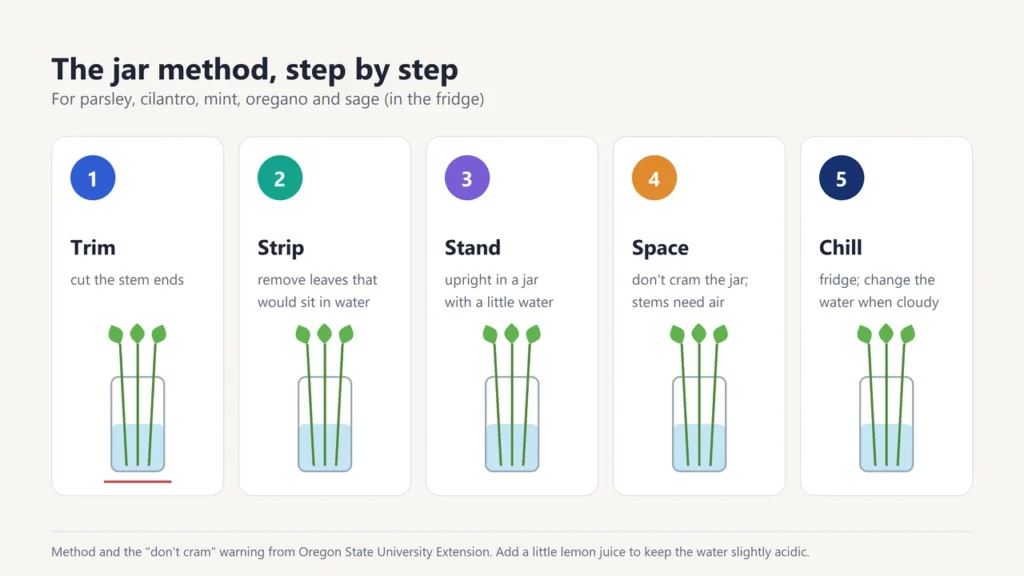
A small tip from the same guide: add a little lemon juice or a vitamin C tablet to the water. It keeps the water slightly acidic, which slows the growth of bacteria.
No room for a jar? Wrap the herbs loosely in a damp paper towel and put them in a mesh produce bag. Avoid sealing wet herbs in a normal plastic grocery bag. The extension notes that these bags trap moisture and cause decay.
Why basil should not go in the fridge
Basil is very sensitive to cold. Researchers at the University of California, Davis, writing in Frontiers in Plant Science in 2023, explain that storing basil below 12°C (54°F) causes “chilling injury”. The leaves turn brown between the veins, the stems brown and collapse, the leaves lose their shine and wilt, and the basil loses its smell. In their tests, leaves kept at 5°C suffered severe chilling injury and lost more of their aroma than leaves kept at 10°C or 15°C.
A home fridge is much colder than that. The US Food and Drug Administration (FDA) tells you to keep your fridge at or below 4°C (40°F). That is why basil turns black in the fridge so quickly.
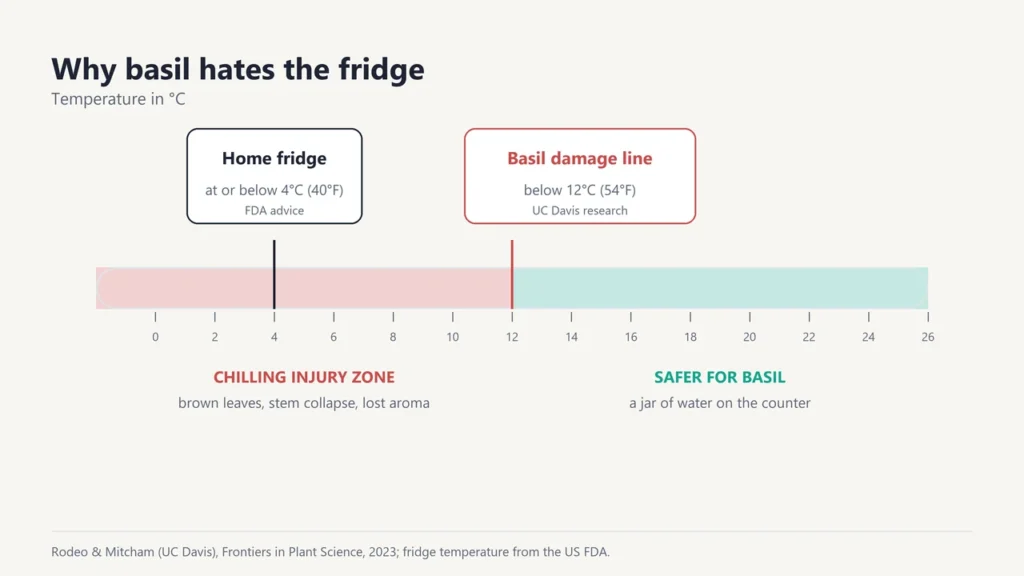
What to do instead: trim the stems, stand the basil in a glass of water like a bunch of flowers, and keep it on the counter away from direct sun. Change the water when it looks cloudy. Use it soon, or freeze it for later.
Which storage method suits each herb?
| Herb | Short term | Long term |
|---|---|---|
| Basil | Jar of water on the counter (not the fridge) | Freeze (tray or in oil), or dry in a dehydrator |
| Parsley | Jar of water in the fridge | Herb ice cubes or tray-freeze |
| Cilantro (coriander leaves) | Jar of water in the fridge | Freeze (it tastes milder when dried) |
| Mint | Jar of water in the fridge | Ice cubes (good for drinks and tea) or dry |
| Oregano, sage | Jar of water or damp towel in the fridge | Dry, or ice cubes |
| Rosemary, thyme | Damp paper towel in a mesh bag, in the fridge | Dry, or ice cubes for thyme |
| Chives | Damp paper towel in a mesh bag, in the fridge | Chopped into ice cubes, or a dehydrator |
How to freeze fresh herbs
Freezing keeps the flavor of soft herbs better than drying does. Colorado State University Extension says properly packed frozen herbs keep for up to a year. The leaves go limp when they thaw, so frozen herbs work best in cooked food like soups, sauces and stews, not as a fresh garnish.
Method 1: Herb ice cubes (with water)
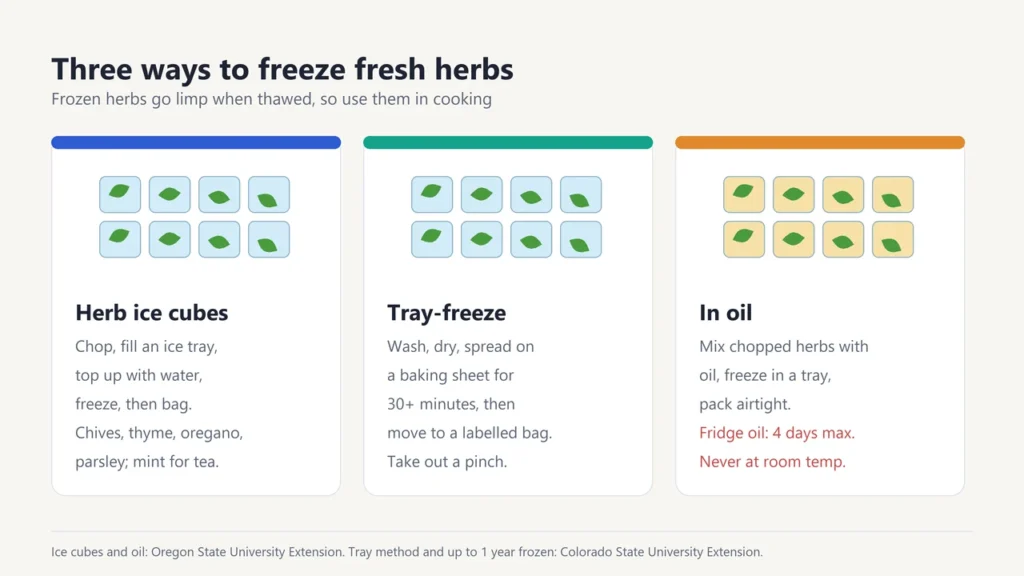
Chop the leaves small and put them in an ice cube tray. Top up with water and freeze. Once the cubes are solid, move them to a freezer bag or box. Drop a cube straight into a soup or sauce. Oregon State University Extension suggests this for chives, thyme, oregano, savory and parsley, and says mint and lemon balm cubes work well for tea.
Method 2: Tray-freeze the leaves
Colorado State University Extension’s method: wash the herbs, drain them and pat them dry. Spread the leaves on a baking sheet and freeze for at least 30 minutes. Then move them to a labelled freezer bag. Because the leaves froze separately, you can take out just a pinch at a time.
Method 3: Freeze herbs in oil
Chopped herbs mixed with oil can be frozen in ice cube trays, then packed into an airtight container. This works well for basil you plan to use in cooking or pesto.
Safety rule: herbs in oil must stay cold
Never keep homemade herbs in oil at room temperature. Oregon State University Extension explains that herbs can carry Clostridium botulinum bacteria from soil. Covering them in oil cuts off the oxygen, which is exactly what these bacteria need to grow and make the toxin that causes botulism.
- Keep homemade herb oils and pesto in the fridge and use them within 4 days, or freeze them.
- Label the jar with the date you made it.
- Shop-bought garlic or herbs in oil are different. Oregon State University Extension notes that these products are acidified, which is why they can be sold at room temperature. Follow the label.
How to dry fresh herbs
Drying makes herbs last longest in the cupboard. It also changes the taste. Oregon State University Extension says drying makes most herbs stronger, but dill, cilantro and parsley turn milder.
- Air drying: tie small bunches tightly (stems shrink as they dry) and hang them out of direct sunlight, with air around them. Pull the leaves off once they are fully dry.
- Food dehydrator: Colorado State University Extension suggests 95°F to 115°F (about 35°C to 46°C), or up to 125°F (about 52°C) in humid places. Oregon State says a dehydrator works better than air drying for basil, which tends to turn dark when air dried, and for chives and sage.
- Don’t over-dry. Leaves that shatter when you touch them have lost flavor.
Store dried herbs in airtight, dark containers in a cool, dry place. Colorado State says most keep well for up to a year.
How long do fresh herbs last?
| Storage method | How long | Source |
|---|---|---|
| Jar of water in the fridge (parsley, cilantro, mint, oregano, sage) | Up to several weeks | Oregon State University Extension |
| Homemade herbs in oil, in the fridge | Up to 4 days | Oregon State University Extension |
| Frozen, properly packed | Up to 1 year | Colorado State University Extension |
| Dried, airtight and dark | Up to 1 year for most herbs | Colorado State University Extension |
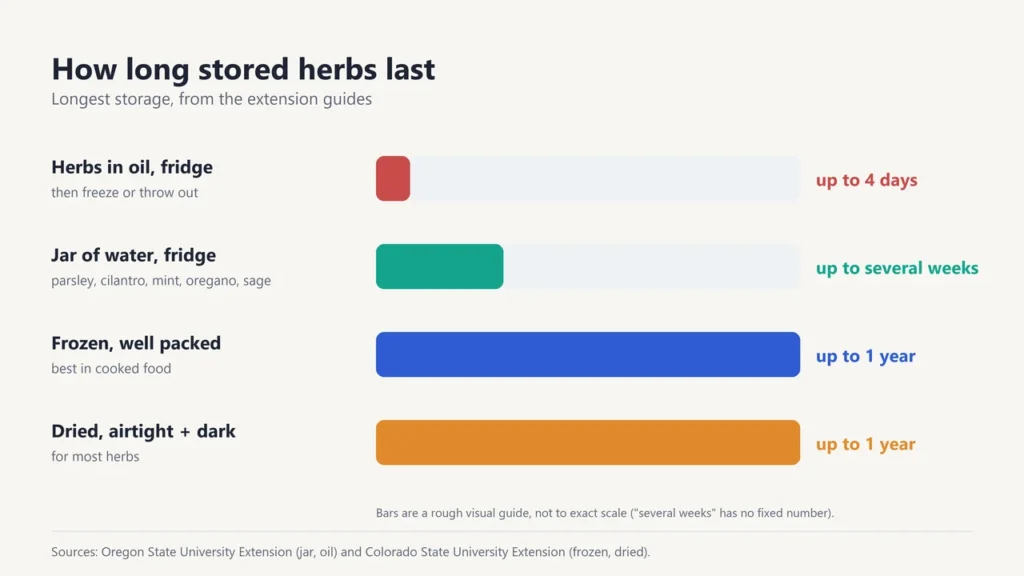
Real results depend on how fresh the herbs were when you bought or picked them. Check them every few days and remove any yellow or slimy stems so they don’t spoil the rest.
Common herb storage mistakes
- Putting basil in the fridge. The cold damages it and turns it black.
- Storing herbs wet in a sealed plastic bag. The trapped moisture makes them rot.
- Leaving leaves under the water line. They go slimy and spoil the water.
- Keeping homemade herb oil on the counter. It is a botulism risk. Fridge it (4 days at most) or freeze it.
- Using as much dried herb as fresh. Dried herbs are stronger. Colorado State says to use 1/4 to 1/3 as much dried herb as fresh.
Fresh herbs are one of the easiest ways to lift a simple meal. For more ideas, see our quick tips to make your food more delicious.
Storing cooked food too? See our guide to how long leftovers last in the fridge.
The same botulism rule applies to garlic. See how to store garlic, including the 4-day limit for homemade garlic in oil.
For the root that often goes into the same dishes, see how to store ginger.
Frequently asked questions
Should fresh herbs be stored in the fridge?
Most should, standing in a jar of water. Basil is the main exception. It gets chilling injury below 12°C (54°F), so keep it in water on the counter.
How do you store cilantro so it lasts longer?
Trim the stems, take off any leaves that would sit in the water, and stand the bunch in a jar with a little water in the fridge. Change the water when it turns cloudy.
Should I wash herbs before storing them?
If you do, dry them well with paper towels first, because trapped moisture makes herbs decay. Many cooks wait and wash herbs just before using them.
Can you freeze fresh basil?
Yes. Tray-freeze the leaves or freeze chopped basil in oil in an ice cube tray. Thawed basil is limp, so use it in cooked dishes or pesto rather than as a garnish.
How long do frozen herbs last?
Up to a year when they are properly packed, according to Colorado State University Extension.
How much dried herb equals fresh?
Use 1/4 to 1/3 as much dried herb as fresh. For example, 1 tablespoon of fresh herb is roughly 1 teaspoon of dried, since a tablespoon is 3 teaspoons.
Is it safe to keep homemade pesto or herb oil at room temperature?
No. Homemade herbs in oil, including pesto, must go in the fridge and be used within 4 days, or be frozen, because of the risk of botulism.

Justwebworld has published guides since 2012. How we write and update articles Report an error
