

To wear dhoti pants as a woman, balance their loose, draped legs and dropped crotch with a more fitted or structured top: a crop top, a peplum top, a short or asymmetrical kurti, a tucked shirt or a jacket. Choose cotton or linen for daily wear and silk or embellished fabrics for festive events, and finish with flats, juttis or block heels.
Key Takeaways
- Dhoti pants are a ready-to-wear, stitched take on the traditional dhoti, an unstitched cloth of about 4 yards (3.7 m) that is wrapped and tucked.
- The gathered seat and draped legs are already voluminous, so a fitted or cropped top usually gives the best balance.
- A kurti, crop top, peplum, jacket or white shirt each moves the look between casual, festive and office wear.
- Fabric sets the occasion: cotton and linen for everyday wear, silk and brocade for weddings and festivals.
- Get the rise and length right first; ankle-length hems that clear the floor look neatest with flats or block heels.
Dhoti pants are versatile bottom wear, but they only look their best when the top, footwear and fabric are chosen with care. This post explains what dhoti pants are, how to choose a pair, and six practical ways to style them for work, casual days and festive occasions.
Hearing the name ‘Dhoti Pants’, one would instantly picture a breathable, comfortable bottom-wear garment. The traditional dhoti is worn by men in the Indian subcontinent; according to Wikipedia, it is an unstitched rectangle of cloth, usually around 4 yards (3.7 m) long, wrapped around the waist and legs.
Simple Style Tricks To Wear Dhoti Pants
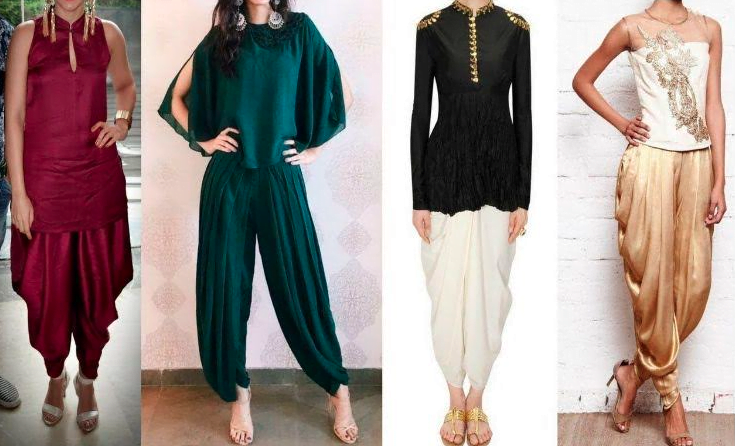
As fashion evolved, a ready-to-wear version entered women’s wardrobes. Wikipedia notes that “dhoti pants” are a newer ready-to-wear trend, popular among women, and should not be confused with the traditional wrapped dhoti. Readymade dhoti pants are now sold by many retailers, both in stores and online.
To see how versatile they are, shop for women’s dhoti pants online to compare the different styles available, from casual cotton pairs to festive silk ones.
This post shows how dhoti pants can replace other bottom wear and work as travel wear, casual wear, formal wear, and even semi-formal wear.
Dhoti Pants with designer tops
To make it simple yet stylish, one can pair these pre-stitched pants with designer tops or crop tops. To give it a casual look, pairing the dhoti pants with solid coloured crop tops work wonders. For those edgy looks, an embellished cape top will instantly add the right bling to the entire ensemble.
If you want to make it look dressy and classic, try pairing dhoti pants with peplum top to give that elevated look to the complete personality.
Pants with maxi/long top
To show off the drape of dhoti pants, pair them with a long tunic or a maxi top. A longer top lets the folds fall freely below the hem and gives the outfit a balanced, elongated line.
Pant with kurta/ asymmetrical Kurti
Whether you want to keep it casual or add the right drama to your outfit, a kurta paired with dhoti pants will do the incredible.
A simple short or long Kurti when paired with these versatile pants will flaunt your casual look like no other. To add the right drama element, a kurta with an asymmetrical hemline is the right pick to give you that distinctive voguish look.
Pair Dhoti Pants with jacket
Combining two statement pieces creates a striking outfit. The fancy embroidered jacket has a style statement and when paired in contrast with the dhoti pants, they will make you the center of attraction of any occasion you wear them in. Trust these two fashion pairs and enjoy the stylish outcome at the party.
Twist pant with a crop top & draped dupatta
Adding a twist to a simple outfit is an easy way to experiment. Women’s dhoti pants leave plenty of room for that, because the gathered seat and draped legs already look styled.
Pair them with a crop top and drape a contrasting dupatta (a long scarf traditionally worn with South Asian outfits) over one shoulder for a look that resembles a fusion saree.
Dhoti Pants with the white shirt
For the people who never imagined picking this bottom wear as their work attire, it is time for some transformations and addition to your wardrobe.
A white shirt with a solid color dhoti pants or the same color shirt with these pants will not just win the tag of the most comfortable outfit but will also grab its top place in fusion wear. To finish the look, a pair of formal footwear will do the rest.
Because they pair with so many tops and suit many occasions, dhoti pants are a useful piece to own, and the right cut, rise and fabric can make them work for a wide range of body types. Without a doubt, own these comfortable pants and create your own style from above for the ever-lasting fashion statement.
What Are Dhoti Pants?
Dhoti pants are stitched trousers with a low, gathered seat and draped, pleated legs that narrow toward the ankle, cut to imitate the look of a wrapped dhoti without any wrapping. They usually have an elastic or drawstring waist, so they can be pulled on like regular pants.
The traditional dhoti is different. According to Wikipedia, the dhoti is an ankle-length garment of ethnic wear for men in the Indian subcontinent, made from a rectangular piece of unstitched cloth usually around 4 yards (3.7 m) long. It evolved from the ancient antariya, and its earliest depictions in inscriptions date from the Mauryan Empire. In 1921, during the swadeshi movement, Mahatma Gandhi championed the dhoti to promote cloth handmade by India’s rural poor.
Wikipedia also notes that the dhoti is known as the panchakacham in South India, and that “dhoti pants” are a separate, newer ready-to-wear trend that is popular among women.
Dhoti Pants vs. Patiala Salwar vs. Regular Salwar
Dhoti pants are often confused with other gathered South Asian bottoms. The table below summarizes the main differences, using the definitions in Wikipedia’s articles on each garment.
| Garment | Construction | Shape | Typical top |
|---|---|---|---|
| Traditional dhoti | Unstitched cloth, about 4 yards (3.7 m), wrapped and tucked | Loose, trouser-like drape with front pleats | Kurta or shirt (men) |
| Dhoti pants | Ready-to-wear, stitched, elastic or drawstring waist | Low gathered seat, draped legs, narrow at the ankle | Crop top, kurti, peplum, shirt, jacket |
| Patiala salwar | Heavily pleated, stitched to a waistband; needs about double the usual fabric, generally around 4 m | Deep folds that meet at the bottom | Short kameez or kurti |
| Salwar | Stitched trousers held up by a drawstring or elastic | Wide at the top, narrow at a cuffed ankle | Kameez with a dupatta |
The Patiala salwar takes its name from the city of Patiala in the Indian state of Punjab. The salwar is worn with a kameez, a long tunic whose side seams are left open below the waist for ease of movement. A kurti is a short, hip-length kurta.
How to Choose the Right Dhoti Pants
A good fit matters more than the trend. Check these points before buying:
- Rise and drop: A moderate drop at the seat is easier to wear every day; a very low drop looks more dramatic and suits festive outfits.
- Length: The hem should end at or just above the ankle so it does not drag. Measure your inseam and compare it with the size chart; our guide to taking leggings measurements for your body type explains how to measure waist, hip and inseam.
- Waistband: An elastic waist with a drawstring gives the most adjustable fit; a flat front waistband looks neater under tucked shirts.
- Fabric: Cotton, rayon and linen are light and breathable for daily wear; silk, satin and brocade hold pleats well and suit evenings and weddings.
- Color: Solid neutrals (black, white, beige, navy) pair with the widest range of tops; prints and metallics work best with a plain top.
What to Wear With Dhoti Pants by Occasion
| Occasion | Top | Fabric | Footwear |
|---|---|---|---|
| Office | White or solid shirt, tucked in or knotted | Cotton, linen, crepe | Loafers, pointed flats, block heels |
| Casual day out | Solid crop top, T-shirt, short kurti | Cotton, rayon | Sneakers, slides, sandals |
| Travel | Long tunic or relaxed kurta | Cotton, linen | Slip-ons, sandals |
| Festive or wedding | Embroidered crop top or cape top with a dupatta, or an asymmetrical kurta | Silk, satin, brocade | Juttis, kolhapuris, heels |
| Party | Embellished top with an embroidered jacket | Satin, georgette | Heels, embellished flats |
Slides are an easy match for casual dhoti pants; see how to style slides with different styled pants for more combinations.
How to Style Dhoti Pants Step by Step
- Start with the pants: Decide the occasion first, then pick the fabric and color of the dhoti pants to suit it.
- Balance the volume: Pair the loose bottom with a fitted, cropped or tucked top so the outfit keeps a visible waistline.
- Choose the top length deliberately: Go either short (crop top, peplum) or long (tunic, kurta, jacket); mid-hip tops can hide the drape.
- Add one statement piece: A dupatta, an embroidered jacket or bold earrings is usually enough.
- Finish with footwear: Flats and juttis keep the look traditional; block heels or heels add height and make the hem look neater.
For office looks, the same pared-back approach in our fashion tips for a minimalist look at work applies: one neutral color story and simple accessories.
Common Mistakes to Avoid
- Too much volume: A loose top over loose dhoti pants hides the shape of both garments.
- Wrong length: Hems that pool on the floor look untidy and wear out quickly.
- Competing prints: If the pants are printed, keep the top plain, and the other way round.
- Mismatched fabric: Casual cotton pants with a heavily embellished festive top can look unbalanced.
Caring for Dhoti Pants
Always follow the care label first. Cotton and linen pairs can usually be machine washed on a gentle cycle; silk, satin and embellished pairs are safer hand washed or dry cleaned. Steaming or ironing the pleats helps them hang well, and buying fewer, better-made pieces also reduces the environmental costs of fast fashion.
For festive inspiration, our list of top fashion designers in India is a useful starting point for Indian and fusion wear.
Frequently Asked Questions
What is the difference between a dhoti and dhoti pants?
A traditional dhoti is an unstitched rectangle of cloth, usually around 4 yards (3.7 m) long, that is wrapped and tucked around the waist and legs. Dhoti pants are stitched, ready-to-wear trousers, usually with an elastic or drawstring waist, that imitate the dhoti’s drape.
What top goes best with dhoti pants?
Fitted or cropped tops balance dhoti pants best: crop tops, peplum tops, short kurtis and tucked shirts. Long tunics, kurtas and jackets also work because they let the drape show below the hem.
Can women wear dhoti pants to the office?
Dhoti pants can work as office wear in a solid color such as black, navy or beige, paired with a tucked white or solid shirt and formal footwear. Check your workplace dress code first.
Are dhoti pants the same as a Patiala salwar?
No. A Patiala salwar is a heavily pleated salwar stitched to a waistband that generally needs about 4 m of fabric, with folds that meet at the bottom. Dhoti pants have a gathered seat and draped legs that imitate a wrapped dhoti.
Which footwear suits dhoti pants?
Juttis, kolhapuris and flats suit traditional looks; block heels and heels suit parties and the office; sneakers and slides suit casual outfits.

Justwebworld has published guides since 2012. How we write and update articles Report an error
