
Note (October 2026): An earlier version called the Bhagavad Gita the oldest religious book and described moksha as a state of mind. Scholars generally date the Gita to the second or first century BCE, after older texts such as the Rigveda, and moksha means liberation from the cycle of rebirth.
Why read the Bhagavad Gita? The Bhagavad Gita is a 700-verse Sanskrit dialogue between Krishna and the warrior Arjuna, set in the Mahabharata epic. People read it for practical guidance on duty (dharma), acting without attachment to results, dealing with doubt, and understanding the self, the soul and God, through the paths of action, knowledge and devotion.
Key Takeaways
- The Bhagavad Gita has 700 verses in 18 chapters and forms chapters 23-40 of the Bhishma Parva, the sixth book of the Mahabharata.
- Scholars generally date the text to the second or first century BCE; tradition attributes it to the sage Vyasa.
- Its central teaching is to do one’s duty without attachment to the fruits of action, and it brings together the paths of karma (action), jnana (knowledge) and bhakti (devotion).
- Chapter 2 gives an overview of the remaining chapters, which makes it a good place for beginners to start.
- The first English translation, by Charles Wilkins, was published in 1785.
Do you know that Shrimad Bhagavad Gita is one of the most influential spiritual texts in the world? Yes.
The Bhagavad Gita is an ancient Indian Sanskrit text, also called Gita or bhagwat geeta, and many readers regard it as a universal teaching that has influenced people around the world.
In the title, Bhagavad is usually read as God and Gita means a song so the title is commonly translated as “The song of God”. The Gita forms part of the epic Mahabharata and is traditionally attributed to the sage Ved Vyasa.
Reasons to Read Shrimad Bhagavad Gita

Srimad Bhagavad Gita Summary
The Bhagavad Gita was originally spoken by Lord Krishna to Pandava prince Arjuna on the battlefield of Kurukshetra, just before the war began, when Arjuna lost heart at the thought of fighting the Kaurava army, which included his own relatives, friends and teachers.
At this particular moment, Lord Krishna taught the knowledge of the Gita (Gita Gyan) to Arjuna. The text has since been treated as a holy book that helps readers think about the self, God, the soul, liberation, yoga, dharma and much more.

Here are 12 major reasons to read the Bhagavad Gita.
Clear Self-Doubts

The Bhagavad Gita helps readers work through the self-doubt most people face from time to time. It does not hand out a ready-made answer for every situation, but it offers a clear framework for deciding how to act.
Arjuna faced exactly this kind of doubt before the Kurukshetra War of the Mahabharata, and the whole Gita is Lord Krishna’s answer to his questions. By the end of the dialogue, Arjuna’s doubts are resolved and he agrees to fight.
Dharma

The Gita explains dharma, a word that fundamentally means what is right or just and, in the Gita’s context, one’s duty. Anyone unsure what dharma means or how to follow it will find it discussed throughout the text.
The Gita looks at dharma from several angles, including sva-dharma, the duty that belongs to a particular person. Readers with questions about their own duty can use it as a starting point for reflection.
Yoga

The Gita describes several kinds of yoga, such as Karma yoga (selfless action), Gyan or Jnana yoga (knowledge), Sankhya yoga and Buddhi yoga, which the text uses as another name for the path of knowledge, alongside Bhakti yoga (devotion).
In the Gita, yoga means much more than physical postures: it is a discipline of action, knowledge and devotion. Many people today know yoga mainly as exercise, so reading the Gita is a useful way to learn these different types of yoga.
Path towards Aim

Readers who are unsure of their aim in life can turn to the Gita. It will not name a goal for anyone, but it offers a way of thinking that helps people recognize their own aim.
Its teaching of doing one’s duty without craving the results is meant to quiet distracting thoughts, so that the reader can focus on the aim itself.
Get to know more about Yourself

According to scholars Gavin Flood and Charles Martin, the Gita wrestles with questions about who we are, how we should live our lives and how we should act in the world. That makes it a guide for anyone who wants to understand themselves and live more meaningfully.
Knowledge about Soul

Science does not set out to answer questions about the soul. The Gita, by contrast, discusses the soul (atman) at length, especially in Chapter 2, where Krishna teaches the eternal nature of the soul and the temporary nature of the body.
Purpose of our Body

The Gita also discusses the body and its use in this world. In Hindu thought, the body is made of the five elements (Pancha Bhuta): earth, water, fire, air and aether, and Chapter 13 of the Gita distinguishes the perishable body, called the field (kshetra), from the eternal Self that knows it (kshetrajna).
Most importantly, it tells about the purpose of having a body when the soul is already indestructible.
Path to get closer to God

The Bhagavad Gita describes paths for drawing closer to God, and Chapter 12, Bhakti Yoga, praises the path of love and devotion. Followers believe that practicing its teachings leads toward union with the divine.
Purpose of Birth and Soul

The Gita also explains why the soul is held to be indestructible and why, in the Hindu idea of samsara, it is reborn again and again in different bodies. It also discusses what a person’s purpose should be within a particular life.
Attain Moksha
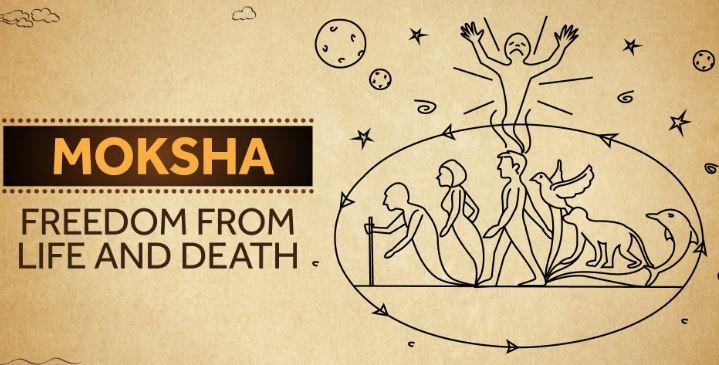
The Gita shows different ways to attain moksha, which means liberation from the cycle of rebirth. One route it stresses is acting without attachment to the results: the Gita calls this karma-phala-tyaga, renunciation of the fruits of action, and later writers call it nishkama karma.
Attachment with God

The Gita shows how to live without attachment to material things and to direct devotion toward God instead. Chapter 7 describes attachment to the impermanent as a cause of evil, which those who rely on Krishna can overcome.
Universe- A part of God

The Bhagavad Gita (also spelled Bhagavath Geetha) teaches that everything in this universe is a part of God. In Chapter 8, Krishna says that he lives within every creature, so human beings are part of the divine too; by this view, no matter how much we learn or succeed, what matters is what we did for the good of everyone.
These are some of the major reasons to read the Bhagwat Geeta and to try to apply its teachings in daily life.
Many readers find that the text helps them think about the purpose of life and about everyday choices, whether that means clearing doubts or knowing what is right or wrong.
Best Things Only Book Lovers Will Understand
When are you planning to read Bhagavad Gita? If you have already read it, what have you learned from it? 😀
What Is the Bhagavad Gita? Key Facts
The Bhagavad Gita, often written Shrimad Bhagavad Gita, is a Hindu scripture in Sanskrit that forms part of the Mahabharata. The prefix “Shrimad” denotes a high degree of respect. The table below summarizes the basic facts, as given in the Wikipedia article on the Bhagavad Gita and the scholarship it cites.
| Feature | Details |
|---|---|
| Language | Sanskrit, mainly in the Anushtubh meter |
| Length | 700 verses (about 1,400 lines) in 18 chapters |
| Place in the Mahabharata | Bhishma Parva (book 6), chapters 23-40 |
| Setting | The battlefield of Kurukshetra, just before the war |
| Speakers | Krishna, Arjuna, Sanjaya and King Dhritarashtra |
| Traditional author | The sage Vyasa (scholars see it as the work of several authors) |
| Probable date | Second or first century BCE (estimates range from about 500 BCE to the first century CE) |
| Commentaries | Some 227 surviving commentaries in Sanskrit alone; Adi Shankara’s (c. 800 CE) is the oldest surviving |
The Gita should not be confused with the Bhagavata Purana, a separate text that is one of the eighteen major Puranas and deals with the life of Krishna. Fans of the epic on screen can read about the cast and story of the 1988 Mahabharat TV series and the 2013 Mahabharat serial on StarPlus.
The 18 Chapters of the Bhagavad Gita at a Glance
Each chapter of the Gita is traditionally called a “yoga”. The chapter names and verse counts below follow the standard 700-verse text.
| Chapter | Name | Verses | Main theme |
|---|---|---|---|
| 1 | Arjuna Vishada Yoga | 46 | Arjuna’s despair on the battlefield |
| 2 | Samkhya Yoga | 72 | The eternal soul; overview of the whole text |
| 3 | Karma Yoga | 43 | Selfless action |
| 4 | Jnana Karma Sanyasa Yoga | 42 | Knowledge and renunciation of action |
| 5 | Karma Sanyasa Yoga | 29 | Renunciation and action |
| 6 | Atma Samyama Yoga | 47 | Self-control and meditation |
| 7 | Jnana Vijnana Yoga | 30 | Knowledge and realization |
| 8 | Akshara Brahma Yoga | 28 | The imperishable Brahman, death and rebirth |
| 9 | Raja Vidya Raja Guhya Yoga | 34 | The royal knowledge and royal secret |
| 10 | Vibhuti Yoga | 42 | Krishna’s divine manifestations |
| 11 | Vishvarupa Darshana Yoga | 55 | Arjuna’s vision of the universal form |
| 12 | Bhakti Yoga | 20 | Love and devotion to God |
| 13 | Kshetra Kshetrajna Vibhaga Yoga | 34 | The body (field) and the Self (knower) |
| 14 | Gunatraya Vibhaga Yoga | 27 | The three gunas: sattva, rajas and tamas |
| 15 | Purushottama Yoga | 20 | The supreme person |
| 16 | Daivasura Sampad Vibhaga Yoga | 24 | Divine and demonic qualities |
| 17 | Shraddhatraya Vibhaga Yoga | 28 | Three kinds of faith |
| 18 | Moksha Sanyasa Yoga | 78 | Liberation and renunciation; summary of the teachings |
Karma, Jnana and Bhakti: The Three Paths Compared
The Bhagavad Gita presents three main paths to the divine. According to the scholar Jeaneane Fowler, the Gita does not raise any one of them to a status that excludes the others; what unites them is inner renunciation, being unattached to personal rewards.
| Path | Meaning | Key chapter | Core idea |
|---|---|---|---|
| Karma yoga | Path of action | Chapter 3 | Act rightly, without attachment to the fruits of action |
| Jnana yoga (also buddhi yoga) | Path of knowledge | Chapter 7 (and Chapter 2) | Discern the true self through wisdom |
| Bhakti yoga | Path of devotion | Chapter 12 | Love of and devotion to God |
The Gita’s devotion to Krishna, an avatar of Vishnu, connects it to temple traditions across India, including the famous Lord Vishnu temples of South India.
How to Start Reading the Bhagavad Gita
- Choose a translation with commentary. The Gita is famously hard to interpret, and classical commentators such as Adi Shankara, Ramanuja and Madhvacharya read it differently. A translation with notes helps beginners follow the Sanskrit concepts.
- Start with Chapter 2. Chapter 2 introduces the eternal soul, rebirth and the types of yoga, and serves as an overview of the remaining sixteen chapters.
- Read Chapters 3 and 12 next. These cover two practical paths: selfless action (Karma yoga) and devotion (Bhakti yoga).
- Finish with Chapter 18. The final and longest chapter, with 78 verses, summarizes the whole teaching.
- Read slowly and return often. At 700 verses the text is short enough to read in full, and readers can return to individual chapters as questions arise. For a summary of its practical lessons, see these important life lessons from the Bhagavad Gita.
Why the Bhagavad Gita Is Read Around the World
The Bhagavad Gita has reached readers far beyond India. Charles Wilkins published the first English translation in 1785, with an introduction by Warren Hastings, and a French translation followed in 1787. Regional commentaries also have a long history, such as Sant Dnyaneshwar’s Marathi commentary from the 13th century.
Mahatma Gandhi memorized the last 19 verses of Chapter 2 and treated them as a companion in his non-violent movement. The physicist J. Robert Oppenheimer recited part of a verse from Chapter 11 in a 1965 television documentary about the atomic bomb.
Hindus mark the day of the Krishna-Arjuna dialogue as Gita Jayanti, also called Mokshada Ekadashi, on the 11th day of the waxing moon in the Hindu month of Margashirsha. Readers interested in other devotional texts can also explore the meaning and structure of the Hanuman Chalisa.
Frequently Asked Questions
How many chapters and verses are in the Bhagavad Gita?
The Bhagavad Gita has 18 chapters and 700 verses. The figure of 700 verses has been the accepted standard since Adi Shankara’s 8th-century commentary; some versions mention 745 verses, but no authentic 745-verse manuscript has been found.
Who wrote the Bhagavad Gita?
Indian tradition attributes the Bhagavad Gita, like the rest of the Mahabharata, to the sage Vyasa. Many modern scholars regard it as a composite work by several authors or compilers.
How old is the Bhagavad Gita?
The Bhagavad Gita is generally dated to the second or first century BCE, although estimates range from about 500 BCE to the first century CE. It is not the oldest Hindu scripture: the Rigveda was most likely composed between about 1500 and 1000 BCE.
What is the main message of the Bhagavad Gita?
The main message of the Bhagavad Gita is to perform one’s duty (dharma) without attachment to its results, while attributing one’s actions to God. The text combines this with the paths of knowledge and devotion as routes to liberation (moksha).
Is the Bhagavad Gita the same as the Bhagavata Purana?
No. The Bhagavad Gita is a 700-verse section of the Mahabharata, while the Bhagavata Purana is a separate text, one of the eighteen major Puranas, that deals with the life of Krishna and various avatars of Vishnu.
Which chapter of the Bhagavad Gita should a beginner read first?
Chapter 2 (Samkhya Yoga) is a good first chapter for beginners because it gives an overview of the ideas developed in the remaining sixteen chapters. Chapters 3, 12 and 18 are common next steps.




5 Comments
Priya, I have read the benefits of studying Bhagwad Gita written by you. You have covered all the aspects. It shows that you have a deep study of Gita. I am sure by refering the benefits , the desire will be definitely created for Gita study in the minds of all readers. Thank you very much.
Thanks for appreciating!
Yes, absolutely true. I do agree with you. Gita helps us in achieving peace and success in life.
Thanks for appreciating!
Nice article.. I love bhagavad Gita.. 🙂
Great Post priya. Gita helps you to identify yourself and empowers your self actualization. it helps you to boost your spiritual and self confidence level. It also helps you to get success in your life and also help you to fit mentally.