

An electric generator is a device that converts mechanical energy into electrical energy. It works by electromagnetic induction: when a magnetic field and coils of wire move relative to each other, a current flows in the wire. Michael Faraday built the first one, the Faraday disk, in 1831. Today, generators produce nearly all of the electricity on power grids and supply backup power during outages.
Key Takeaways
- An electric generator turns motion into electricity through electromagnetic induction, a principle Michael Faraday discovered in 1831.
- Large grid generators, such as the 17 main units at Hoover Dam, and small home backup units work on the same principle.
- Home backup generators come in three main types: portable, inverter, and permanently installed standby units with an automatic transfer switch.
- According to the U.S. Energy Information Administration, U.S. customers averaged 11 hours without power in 2024, the most in 10 years.
- The U.S. Consumer Product Safety Commission says to run a portable generator outdoors only, at least 20 feet from the house, because its exhaust contains deadly carbon monoxide.
Did you know that the first generator was invented back in 1831? Have you ever had your electricity go out during extreme weather or during a storm? If you answered yes, then you are all too familiar with the terrible feeling of not being able to use all of our modern conveniences.
This is why learning what is an electric generator and what are the benefits will help you prepare for the next time you have a power outage.
Keep reading to understand more in-depth about electric generators.
What Is an Electric Generator?
An electric generator like the ones found on Krugerpower.com.au is a device that transforms mechanical force into electrical current. This process is known as electromagnetic induction.
You might not realize that generators are all around you, from the Hoover Dam to the alternator in your car.
1] How It Works
Before looking at the benefits, it helps to understand how an electric generator works. A generator converts motion energy into electricity. Relative motion between a magnetic field and coils of wire produces the current. In large AC generators, the rotor (the rotating part) usually carries the field magnets or field coils, while the stator (the stationary part) holds the armature windings in which the current is generated.
A simple visual to give you a clearer picture of generators in action: think about moving paper clips with a magnet. The magnet’s invisible field is what pulls the paper clips; in a generator, a changing magnetic field pushes electrons along a wire instead. With a generator think about it as a device that moves a magnet near a wire to create a flow of electrons.
It’s almost like pushing water through a pipe but instead of a pipe, the generator uses a magnet to push electrons.
2] Benefits
Modern life depends on electricity to work from home, travel, charge phones, play video games, and stream shows. When the power goes out, normal routines can be disrupted quickly.
Here are a few benefits of having an electric powered generator as a backup.
3] Medical Equipment
If someone in your home relies on electrically powered medical equipment, such as an oxygen concentrator, a backup generator adds a layer of protection. If the power goes out, a correctly sized generator can keep that equipment running; Ready.gov also advises talking to your healthcare provider about backup power for electricity-dependent medical devices before an outage.
If you have someone at home that needs the air conditioner due to breathing problems or someone elderly, not able to tolerate the heat your generator will be able to run the air conditioning.
Keep in mind that when you are shopping for a generator you want to choose one that is large enough to handle all of your electrical needs.
4] Sump Pump
Do you tend to have flooding issues in your home? If so, a backup generator will make sure that your sump pump still works and does what it has to do while there are heavy downpours or inches of snow melting.
5] Storms
Whether you deal with hurricanes, blizzards, or hail storms, a permanently installed standby generator with an automatic transfer switch can detect when utility power goes out. This will give it a signal to turn on without you having to deal with going outside to manually start up your generator.
6] Businesses
If you own a small business like a small restaurant or a deli and can’t afford to lose money from issues like the power going out, you will love having a generator. A correctly sized generator can keep essential equipment such as refrigeration and lighting running during an outage, as long as it has fuel.
7] Appliances
If you were to lose power at home this will leave you with a short window before things in the refrigerator start to go bad. A backup generator placed outdoors can keep your fridge running, and a large enough unit can also power an electric stove or dishwasher.
Smaller appliances like your coffee pot and television will also work making you feel like your power never went out.
8] Increase Home Value
A whole-home standby generator may make a house more appealing to buyers if you sell it in the future, although how much value it adds varies by market and has not been reliably measured. Buyers will see this as a valuable upgrade and perk in case something were to happen to the power while they are living in the house.
On top of increasing your home value, it might also lower your home insurance bill. Some insurance companies offer a discount for a permanently installed whole-home generator while others do not, so ask your insurer before counting on one.
9] Peace of Mind
One of the best benefits is that you can have peace of mind that you are covered when it comes to power in case something were to happen. If you have kids, you want to make sure they do not suffer because you were not prepared.
Peace of mind is probably one of the biggest benefits on this list. You will have peace of mind that during a blackout while all the other homes in your neighborhood are without power your home is just fine. You can continue operating and living as if nothing happened while your loved ones are safe.
10] Ready to Choose Your Own Generator?
Now that you know the answer to “what is an electric generator?” and the benefits of having one, are you ready to shop around for your own generator? Their convenience and ability to power up our homes or business in an emergency can truly give us peace of mind.
Did you learn something new today? Please browse the rest of our site to catch up on all our latest.
How Does an Electric Generator Work, Step by Step?
An electric generator works by moving a magnetic field and a conductor relative to each other. The sequence is the same in a power station and in a portable unit:
- A prime mover supplies motion. A turbine driven by water, steam, wind, or gas, or an engine running on gasoline, diesel, propane, or natural gas, turns the generator shaft.
- The rotor spins. In most large AC generators, the rotor carries the magnets or field coils.
- The changing magnetic field induces a voltage in the stationary armature windings of the stator. This is electromagnetic induction.
- Current flows out to the external circuit, whether that is the grid or the outlets on a home generator.
An alternator produces alternating current (AC) without a commutator. A dynamo uses a commutator to produce pulsing direct current (DC). For more on the magnets used in modern machines, see this guide to strong neodymium magnets and their uses.
A Short History of the Electric Generator
- 1831: Michael Faraday discovered the operating principle and built the Faraday disk, a copper disc rotating between the poles of a horseshoe magnet.
- 1832: Hippolyte Pixii built one of the first dynamos, using a commutator to turn alternating current into direct current.
- 1866-1867: Charles Wheatstone, Werner von Siemens, and Samuel Alfred Varley independently invented the modern dynamo. Varley patented his on December 24, 1866; Siemens and Wheatstone announced theirs on January 17, 1867.
Today, generators produce nearly all of the electric power on the world’s power grids. Hoover Dam on the Colorado River, for example, has 17 main generators and an installed capacity of 2,078.8 megawatts. Once the power leaves the generator, equipment such as current transformers in power distribution helps measure and protect the network.
What Are the Main Types of Home Generators?
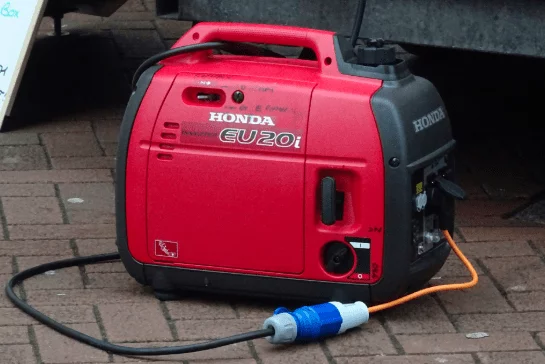
Home backup generators are engine-generators: an engine and a generator combined in one unit. The three common types differ in how they are installed and started.
| Type | How it is used | Starting | Typical fuels | Best for |
|---|---|---|---|---|
| Portable generator | Moved outdoors when needed; appliances connect by heavy-duty cords or a transfer switch | Manual | Usually gasoline | Short outages and a few essential appliances |
| Inverter generator | Portable unit that can run at lower engine speed when demand is low | Manual | Usually gasoline | Quieter, more fuel-efficient power for smaller loads |
| Standby generator | Permanently installed outside the home | Automatic, through an automatic transfer switch | Diesel or natural gas for larger units; propane is also used | Whole-home or critical-circuit backup, medical needs, small businesses |
Inverter models can run at slower engine speeds to produce only the power that is needed, which reduces noise and improves fuel efficiency. Standby generators are permanently installed and supply critical loads soon after utility power fails. If you are weighing a budget unit, read about the advantages and disadvantages of buying a cheap power generator first.
How Do You Choose the Right Size Generator?
Generator size is measured in watts. Most units list two figures: running watts, which the generator can supply continuously, and starting (surge) watts, the short burst needed when a motor such as a refrigerator compressor, sump pump, or air conditioner starts up.
- List every appliance you want to run at the same time during an outage.
- Find each appliance’s running watts on its label or in its manual.
- Add up the running watts.
- Add the extra starting watts of the single largest motor-driven appliance.
- Choose a generator whose running and starting ratings both exceed those totals, with some headroom.
For whole-home systems, a licensed electrician should size and connect the unit. A home that passes a proper electrical safety inspection is also better prepared for a generator connection.
How Often Does the Power Go Out?
According to the U.S. Energy Information Administration (EIA), U.S. electricity customers experienced an average of 11 hours of interruptions in 2024, the most in 10 years. That was the newest annual figure the EIA had published as of October 2026. Interruptions linked to major events averaged nearly nine hours in 2024, compared with nearly four hours a year from 2014 through 2023, and Hurricanes Beryl, Helene, and Milton accounted for 80% of the hours without power.
Ready.gov notes that a refrigerator keeps food cold for about four hours without power, and a full freezer holds its temperature for about 48 hours, which is why a fridge is often the first appliance people connect to a backup generator.
Is It Safe to Use an Electric Generator at Home?
A fuel-burning generator is safe only when it is used correctly. Engine exhaust contains carbon monoxide (CO), an odorless, colorless gas. The U.S. Consumer Product Safety Commission (CPSC) said in March 2026 that an average of nearly 100 people die in the U.S. each year from CO poisoning caused by portable generators.
- Outdoors only: CPSC advises operating portable generators outside only, at least 20 feet from the house. Ready.gov gives the same 20-foot distance from windows, doors, and attached garages.
- Never in enclosed spaces: do not run a generator inside a home, garage, basement, crawlspace, or shed.
- Install CO alarms: Ready.gov recommends working carbon monoxide detectors on every level of the home, and CPSC says interconnected alarms are best.
- No backfeeding: feeding generator power into home wiring without a proper transfer switch can send power back into utility lines, which can harm utility workers and is illegal. Use a transfer switch installed by an electrician.
Are There Alternatives to a Fuel Generator?
Battery backup systems store electricity rather than generate it, so they produce no exhaust, but they run only until the battery is drained. In regions with frequent short outages, an inverter with a battery bank is a common choice; see this guide to the best inverter battery for home use. Pairing batteries with rooftop solar panels is another option, covered in this guide on how to choose a solar inverter for your home.
Frequently Asked Questions
What is an electric generator in simple words?
An electric generator is a machine that turns movement into electricity. Moving a magnetic field past coils of wire makes electric current flow in the wire, a process called electromagnetic induction.
Who invented the electric generator?
Michael Faraday built the first electromagnetic generator, the Faraday disk, in 1831. The modern dynamo was invented independently by Charles Wheatstone, Werner von Siemens, and Samuel Alfred Varley in 1866-1867.
What is the difference between a generator and an alternator?
An alternator is a type of generator that produces alternating current without a commutator. A dynamo is a generator that uses a commutator to deliver pulsing direct current. Both convert mechanical energy into electricity.
Does a generator create energy?
No. An electric generator does not create energy; it converts mechanical energy from an engine or turbine into electrical energy. The fuel, falling water, steam, or wind that drives the prime mover is the real energy source.
How far from the house should a portable generator be?
The U.S. Consumer Product Safety Commission advises running a portable generator outdoors only, at least 20 feet from the house. Ready.gov applies the same distance to windows, doors, and attached garages.
Can a generator run a whole house?
A permanently installed standby generator sized for the home’s load can run a whole house through an automatic transfer switch. Most portable generators can run only selected appliances at once, so size the unit by adding up running watts plus the largest starting load.

Justwebworld has published guides since 2012. How we write and update articles Report an error
