

To become a crypto market maker, you quote both a buy (bid) and a sell (ask) price on an exchange and earn the gap between them. In practice that means learning order-book mechanics, building or licensing a quoting bot, holding inventory in both assets, meeting an exchange program’s volume thresholds, managing inventory risk and following market-abuse rules such as the EU’s MiCA regulation.
Key Takeaways
- A crypto market maker earns the bid-ask spread (plus any exchange maker rebates) and carries the risk of holding inventory while prices move.
- Exchange programs set entry thresholds based on trading volume: Binance’s Market Maker Program (announced September 2019) asked for 30-day volume above 1,000 BTC, and its Altcoin LiquidityBoost Program (June 2025) asked for more than 20 million USDT.
- Individuals can take a smaller role by running open-source software such as Hummingbot or by supplying liquidity to decentralized exchange pools such as Uniswap.
- Wash trading is illegal market manipulation: in October 2024 the SEC charged three self-described market makers, and Gotbit’s founder was later sentenced to eight months in prison.
- In the EU, MiCA Article 91 bans trades that give false or misleading signals about a crypto-asset’s supply, demand or price.
The world of cryptocurrencies is constantly changing, and the role of a crypto market maker in it becomes crucial for maintaining smooth and liquid transaction processes. This article explains the role of market making, providing actionable steps for those interested in becoming a market maker in the digital asset space.
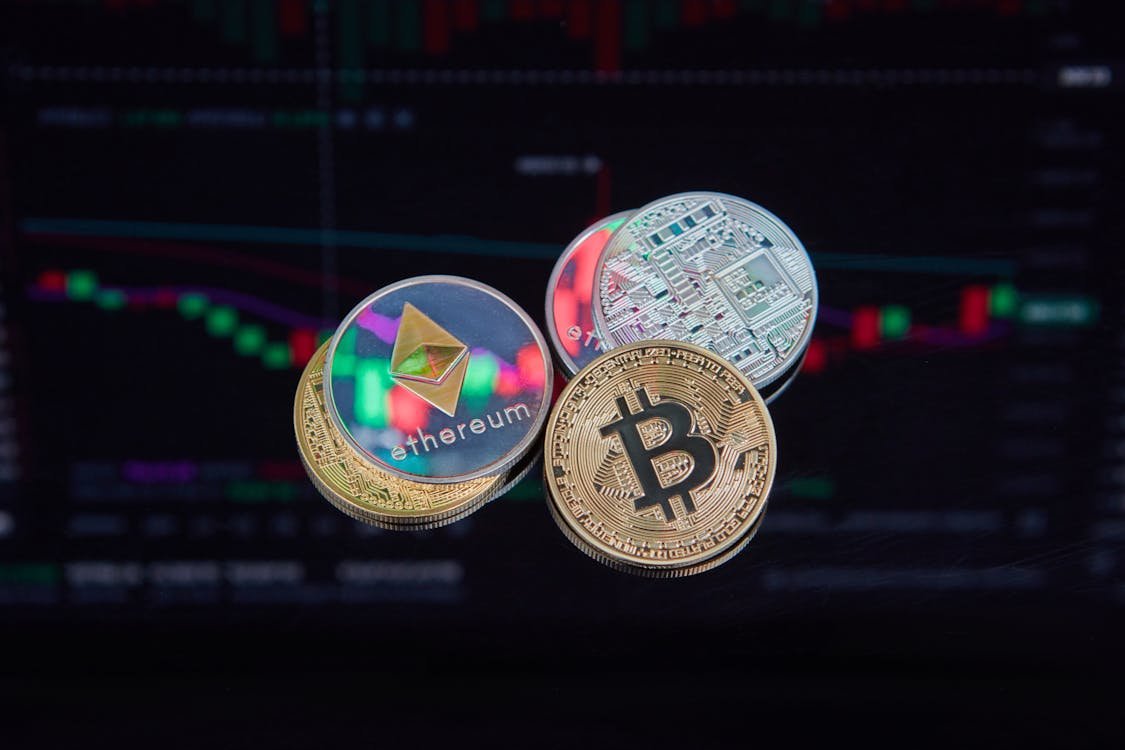
Who are Crypto Market Makers, and What Do They Do?
Crypto market makers are individuals or entities that buy and sell cryptocurrencies on exchanges to provide necessary market liquidity. These actors play a central role by placing buy and sell orders for cryptocurrencies, thus facilitating the execution of trades without significant delays. Their activities help stabilize the market by reducing the spread between buying and selling prices and ensuring that orders are executed more reliably and swiftly.
Steps into Becoming a Crypto Market Maker
To become a market maker, a trader should complete these steps:
- Educate yourself. Understand the mechanics of the crypto markets and the specific requirements of being a market maker.
- Partner with exchanges. Apply to exchange market maker or liquidity provider programs, which often come with benefits like reduced fees, maker rebates or higher API limits.
- Acquire the right tools. Invest in advanced trading software that supports automated market making, allowing for efficient order placement and management.
- Develop a robust strategy. Create a sophisticated crypto market making strategy that can adapt to different market conditions. This strategy should include defined tactics for managing assets and spreads effectively.
- Meet program thresholds and fund your inventory. Exchanges usually set entry criteria based on 30-day trading volume or share of maker volume rather than a published capital minimum, and you need enough capital to hold both assets on each side of the order book.
- Ongoing learning and adaptation. Stay updated with market changes and continuously refine your approach.
Types of Crypto Market Makers
Crypto market makers can generally be categorized into two main types:
- Profit-driven market makers. These market makers operate on their own capital and aim to make money from the spread between buy and sell orders.
- Designated crypto market makers. Often hired by exchanges or token projects, these market makers provide liquidity under specific contractual conditions, either with inventory and a monthly fee from the project (retainer model) or with borrowed tokens plus a call option (loan/call option model).
Becoming a crypto market maker is complex and capital-intensive, and profits are not guaranteed, but it gives individuals and companies a way to play a real part in the crypto trading ecosystem. By following the outlined steps, managing risk carefully and committing to continuous learning, market makers can contribute to the liquidity and efficiency of crypto markets. Engaging with reputable crypto market-maker exchanges, vetting any market-making service provider carefully (US regulators have charged some self-described market makers with wash trading), and securing funds in the best crypto wallet can provide the necessary support and infrastructure to thrive in this dynamic field.
How Does a Crypto Market Maker Make Money?
A crypto market maker makes money mainly from the bid-ask spread. Wikipedia defines a market maker as a company or individual that quotes both a buy and a sell price in an asset held in inventory, hoping to profit on the difference. The second source of income is exchange incentives such as maker fee rebates.
A simple hypothetical example shows the mechanics. If a market maker bids $60,000 and offers $60,010 for bitcoin, and both orders fill for 0.1 BTC, the gross profit is $1 before fees. The profit disappears if the price moves sharply between the two fills, which is why inventory management matters more than the headline spread.
New traders who want the underlying concepts first can start with this guide to cryptocurrency market basics.
What Do Exchange Market Maker Programs Require?
Exchange market maker programs set measurable thresholds, and most are based on trading volume rather than a fixed capital deposit. The examples below come from the exchanges’ own published pages; terms change, so check the current page before applying.
| Program | Published entry criteria | Published benefits |
|---|---|---|
| Binance Market Maker Program (announced September 2019) | 30-day trading volume above 1,000 BTC, or the ability to reach it, plus quality market-making strategies | Reduced trading fees and higher API limits; performance scored on maker volume, spreads, order size and order duration |
| Binance Altcoin LiquidityBoost Program (launched June 2025) | 30-day volume above 20,000,000 USDT equivalent; Tier 1 needs a 0.5% and Tier 2 a 1% maker volume share on selected altcoins | Maker rebates of 0.5 basis points (Tier 1) and 1 basis point (Tier 2); 18 altcoins covered at launch |
| Kraken Market Participation Program (program page, accessed September 2026) | At least 1% of Kraken spot volume or 2% of futures volume; stablecoin volume excluded | A 5 bps spot fee tier, equity-linked incentive warrants, FIX API and co-location options |
Binance says applicants should email its market maker team with proof of market-making volume on other exchanges, or contact their key account manager. A new applicant therefore usually needs a track record elsewhere before a large exchange will admit it.
What Tools Does a Crypto Market Maker Need?
A crypto market maker needs quoting software, exchange API access, reliable infrastructure and risk controls. Professional firms build their own systems, while individuals often start with open-source tools.
- Quoting bot: Hummingbot is an open-source Python framework for market-making bots on centralized and decentralized exchanges. It is released under the Apache 2.0 license and maintained by the Hummingbot Foundation, and its website listed 318 connectors as of September 2026.
- Pricing model: A widely cited academic model is Avellaneda and Stoikov’s paper “High-frequency trading in a limit order book” (Quantitative Finance, 2008), which sets bid and ask quotes around a reservation price that shifts with the market maker’s inventory.
- Uptime and latency: Flowdesk, a crypto market-making firm, says market makers should have infrastructure for more than 95% uptime and names a tight bid-ask spread and order-book depth as the primary metrics clients monitor.
- Risk limits: Maximum inventory per asset, maximum loss per day and an automatic kill switch that cancels all orders if the bot or exchange connection fails.
How Do Token Projects Pay Market Makers?
Token projects usually pay market makers under one of two models, according to Flowdesk’s published comparison. Understanding them helps both firms offering the service and projects hiring one, for example around an exchange coin listing.
- Retainer model: The token issuer lends tokens and a quote currency such as USDC, pays a monthly fee, and defines the trading strategy with the market maker. The issuer bears the capital risk, and the loan is returned at the end of the contract.
- Loan/call option model: The issuer lends tokens and grants a call option. The market maker sets its own strategy, takes the capital risk, and can either return the tokens or exercise the option if the market price is above the agreed strike price.
Centralized vs Decentralized Market Making
Crypto market making happens on two kinds of venue. On centralized exchanges, market makers place limit orders in an order book. On decentralized exchanges, liquidity providers deposit two assets into a smart-contract pool, and a formula sets the price.
| Feature | Centralized exchange (order book) | Decentralized exchange (AMM pool) |
|---|---|---|
| How prices are set | The market maker chooses its own bid and ask quotes | A trading function, such as Uniswap v2’s constant product x × y = k, sets the price from the pool balances |
| How you earn | Bid-ask spread plus any maker rebates | A share of the pool’s trading fees |
| Entry barrier | Exchange account, API access, program thresholds for the best terms | A crypto wallet and two tokens; no approval from a central operator |
| Main risks | Inventory risk, exchange counterparty risk, bot failure | Impermanent (divergence) loss, smart-contract risk |
Wikipedia notes that decentralized markets have no official market makers; anyone who provides liquidity to a pool takes on that role. With Uniswap v3’s concentrated liquidity, providers choose a price range, and Uniswap’s documentation states that a position whose range the price has left is no longer active and no longer earns fees. Impermanent loss compares a provider’s pool holdings with simply holding the same starting tokens. For background, see this overview of decentralized finance (DeFi) and this guide to choosing a crypto liquidity provider.
Is Crypto Market Making Legal?
Crypto market making is legal in most major markets, but manipulating prices or volume is not. The rules below apply as of September 2026.
- European Union: The Markets in Crypto-Assets Regulation, Regulation (EU) 2023/1114 (MiCA), applied to crypto-asset service providers from 30 December 2024, and its transitional period expired on 1 July 2026. Article 91 prohibits market manipulation, including transactions or orders that give false or misleading signals about a crypto-asset’s supply, demand or price, unless carried out for legitimate reasons.
- United States: The SEC’s 2024 Dealer Rule (Exchange Act Rules 3a5-4 and 3a44-2) would have required certain liquidity providers to register as dealers. The US District Court for the Northern District of Texas vacated it in November 2024, and the SEC dropped its appeal on 19 February 2025.
- Enforcement: On 9 October 2024 the SEC charged three self-described market makers, ZM Quant, Gotbit and CLS Global, with offering what it called market-manipulation-as-a-service through wash trading, alongside parallel criminal charges in Massachusetts. Gotbit’s founder, Aleksei Andriunin, pleaded guilty in March 2025 and in June 2025 was sentenced to eight months in prison, and Gotbit agreed to forfeit about $23 million, as reported by The Block.
Whether a specific market-making business needs a license depends on the country, the assets and the services offered, so firms should take legal advice before trading client money. Investors can read more on legal safeguards for crypto investors.
What Are the Main Risks of Crypto Market Making?
- Inventory risk: A sharp price move can leave the market maker holding a falling asset, wiping out many days of spread income.
- Adverse selection: Better-informed traders tend to fill quotes just before prices move against the market maker.
- Exchange counterparty risk: Funds held on an exchange can be lost if it fails. Alameda Research, a trading firm that acted as a market maker for FTX, filed for Chapter 11 bankruptcy in November 2022 when FTX collapsed.
- Technology risk: A bug, a stale price feed or a dropped API connection can leave orders mispriced.
- Regulatory risk: Wash trading or quoting for a client who wants fake volume can lead to civil and criminal charges, as the 2024 US cases show.
Who Are the Established Crypto Market Makers?
Established crypto market makers include proprietary trading firms that also trade traditional markets. Flow Traders, for example, was founded in 2004 in Amsterdam, listed on Euronext Amsterdam in July 2015 and announced its expansion into cryptocurrency trading in 2019. A newcomer competes with firms like this on speed, pricing models and capital, which is why many start small on less liquid pairs or in DeFi pools.
Frequently Asked Questions
Can an individual become a crypto market maker?
Yes, an individual can act as a crypto market maker by placing both buy and sell limit orders, often with open-source software such as Hummingbot, or by supplying liquidity to a decentralized exchange pool. Formal exchange programs are usually out of reach at first because their thresholds, such as Binance’s 1,000 BTC in 30-day volume, suit professional firms.
How much capital do you need to be a crypto market maker?
There is no universal minimum. Exchange programs publish volume thresholds rather than capital minimums, but a market maker must fund both sides of the order book and absorb inventory losses, so capital needs grow with the number of pairs and the order sizes quoted.
What is the difference between a market maker and a liquidity provider?
The terms are often used interchangeably. On an order-book exchange, a market maker actively sets bid and ask quotes; on a decentralized exchange, a liquidity provider deposits tokens into a pool and a formula sets the price.
Is wash trading by a market maker illegal?
Yes. Wash trading creates fake volume and is treated as market manipulation. MiCA Article 91 prohibits it in the EU, and in October 2024 US authorities charged three self-described crypto market makers over wash-trading schemes.
Do crypto market makers always make a profit?
No. Spread income is small per trade, and a single sharp price move, an exchange failure or a software error can cause losses larger than months of spread earnings.

Justwebworld has published guides since 2012. How we write and update articles Report an error
