

Note (September 2026): the original text said Goldendoodles do not shed. Shedding varies by coat type and generation, and according to the American Kennel Club there is no such thing as a 100% hypoallergenic breed. Those statements have been corrected below.
A Goldendoodle coat is best cared for with a slicker brush and a metal greyhound comb, used together in a technique called line brushing. Veterinary guidance (VCA Animal Hospitals) says long, silky or curly coats need daily brushing to prevent mats, and most Goldendoodles also need a professional groom every four to eight weeks.
Key Takeaways
- The Goldendoodle Association of North America recognizes three coat types: curly, wavy and straight. Wavy is the most common, and the coat type decides which brush you need.
- A slicker brush plus a metal comb is the core kit. The comb is the test: if it cannot glide to the skin, the section is not finished.
- Brush daily or at least several times a week, and book a professional groom every four to eight weeks (PetMD; the same interval Wikipedia gives for the Poodle parent).
- Goldendoodles shed less than Golden Retrievers, but they do shed, and no dog is 100% hypoallergenic according to the American Kennel Club.
- Never cut a mat out with scissors. VCA advises clippers or a professional groomer for severe matting.
Goldendoodles are an increasingly popular crossbreed of dog. A Goldendoodle is a cross between a Golden Retriever and a Poodle, first widely bred in the 1990s in Australia and the United States according to Wikipedia. Given their look, friendly temperament and trainability, they have become one of the most popular designer breeds, although the Goldendoodle is not recognized as a breed by any major kennel club.
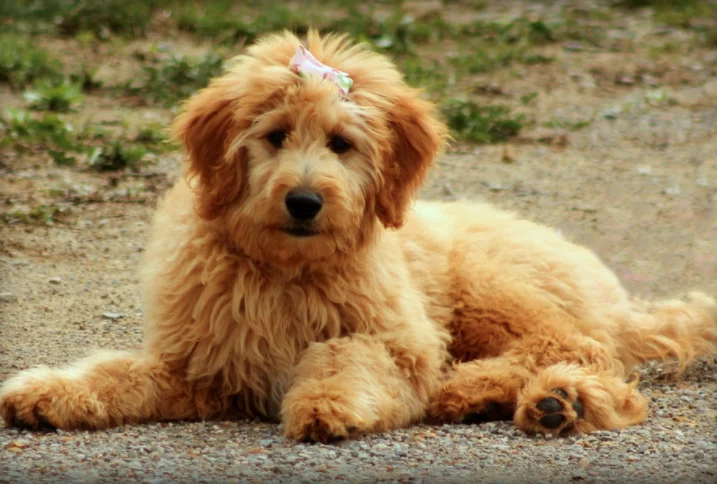
Their temperament and trainability are just a few of the things that make Goldendoodles popular family pets. That being said, owning a Goldendoodle is a lot of work, especially when it comes to the coat. The Poodle side contributes a curly coat that traps dead hair instead of dropping it, so tangles and mats form quickly unless the coat is brushed regularly.
Understanding The Options Available To You
The very first thing that you must know is that there are a variety of brushes made for the Goldendoodle breed. In fact, given its unique nature and coat, there is an entire market built around Goldendoodle brushes.
This, of course, makes finding the best one all that much more difficult. In order to get past this step, you’ll need to know and understand the different types available to you and what each can do for your dog.
Slicker Brush
You ask most professionals or Goldendoodle breed masters and they’ll tell you that the slicker brush is easily the best brush for a Goldendoodle. This is because it is made up of a plethora of wire teeth located on the brush head.
These teeth can be stiff or flexible, but either will gently work their way through your dog’s hair, reducing the tangles and matting.
This is one of the things that make the brush a top pick for many because this specific crossbreed is prone to knots. VCA Animal Hospitals notes that slicker brushes work well for dogs with curly, non-shedding coats like Poodles. Combine this with the fact that a slicker brush causes little discomfort when it is used correctly, and it’s easy to see why most owners and groomers start with one.
The Dog Comb
The dog comb is another type of brush available for the Goldendoodle breed, but it is nowhere as near as popular as the slicker brush. This doesn’t mean that it isn’t as effective. It just means that the slicker brush is hard to beat. That being said, the dog comb does have some qualities that make it stand in its own class.
One of these qualities would be the teeth. The teeth are made of metal or durable plastic and are spread wide apart. This in combination with the thickness and the brush will make quick work of some of the thickest and coarsest coats. These brushes are especially perfect for breeds that are prone to tangles and holding debris after being in nature.
The Undercoat Rake
One of the first things that you’ll learn about the Goldendoodle breed is that they are not notorious shedders. Most shed lightly, far less than a Golden Retriever, but the amount depends on the individual coat type and generation.
This is why most people overlook the undercoat rake. Despite this, the undercoat rake is a type of brush that’ll come in extremely handy when caring for your dog’s coat.
The Shedding Brush
Because most Goldendoodles shed only lightly, the shedding brush is not a popular option amongst pet owners. That being said, some Goldendoodles, especially straight-coated dogs and those without facial furnishings, do shed noticeably. If this is the case with your pet, you’ll find that the shedding brush can be immensely helpful.
In fact, most professionals will likely tell you that it is a must. And, this is because it’ll help gather any loose fur in the undercoat that will eventually be shed. It does this with the long, rounded teeth that are also handy for tangles and coarse hairs.
The Pin Brush
When most people look at the pin brush they mistake it for a human brush. And, this is completely understandable as that’s what it closely resembles.
That being said, it is the furthest thing from a human brush. Not only this, but it is immensely helpful for minimizing tangles and clearing out dirt that might get trapped in the fur.
Conclusion
There is a lot to consider when it comes to a Goldendoodle. The first is the coat type. The coat type will play a major role in a lot of decisions that you end up making for your pet.
You can clearly see already how big of a role it will play when it comes to choosing the right brush. While there are many available, it is pertinent to remember that choosing the right brush for your dog’s coat will come down to the type of coat that he or she has. The sections below explain the three coat types, a step-by-step brushing routine and what to do about mats.
What Are the Three Goldendoodle Coat Types?
The Goldendoodle Association of North America (GANA) breed standard lists three approved coat types: curly, wavy and straight. Wikipedia describes the wavy coat as the most common among Goldendoodles. GANA also describes an incorrect coat, one with no facial furnishings (the longer hair on the muzzle and eyebrows) that sheds like a Golden Retriever.
The coat type matters because it changes how the coat tangles. A curly coat behaves like the Poodle parent: Wikipedia notes that the Poodle’s curly coat traps dander and dead hair rather than releasing it, which is why it mats. A straight coat behaves more like the Golden Retriever parent, which Wikipedia describes as a double coat with a long, flat or wavy outer coat and a dense undercoat.
| Coat type | What it looks like | Typical shedding | Best brush combination |
|---|---|---|---|
| Curly | Tight Poodle-like curls | Very little | Slicker brush plus metal greyhound comb; line brushing |
| Wavy (most common) | Loose waves, shaggy look | Little to light | Slicker brush plus comb; pin brush for finishing |
| Straight | Flat coat, more like a Golden Retriever | Light to moderate | Pin brush plus comb; undercoat rake or shedding brush in shedding seasons |
Shedding amounts in the table are general guidance from the sources cited on this page; individual dogs vary, and a groomer can usually confirm the coat type once the adult coat comes in.
How Does Generation Affect the Coat?
Goldendoodles are labelled by generation. An F1 Goldendoodle is a first cross of a Golden Retriever and a Poodle. According to PetMD, an F1B Goldendoodle is bred back to a Poodle, making it about 75% Poodle and 25% Golden Retriever, and F1B dogs tend to have curlier Poodle coats that suit allergy-sensitive households better. Multigenerational (multigen) Goldendoodles come from two Goldendoodle parents.
The more Poodle in the pedigree, the curlier and lower-shedding the coat tends to be, but also the more brushing it needs. If you are choosing a puppy for a family member with allergies, keep the American Kennel Club’s position in mind: there is no such thing as a 100% hypoallergenic breed, because dander, which clings to hair, causes most pet allergies in people.
How Often Should You Brush a Goldendoodle?
Brush a Goldendoodle daily if you can, and at least a few times a week at minimum. VCA Animal Hospitals states that dogs with long, silky or curly coats require daily brushing to keep the hair from becoming tangled or matted, especially around the ears, in the armpits and along the back of the legs. PetMD’s Goldendoodle care guide says to brush at least a few times a week to prevent matting.
The longer the coat is kept, the more often it needs brushing. A Goldendoodle clipped short all over can get by with a light brush every couple of days, while a dog kept in a long, fluffy teddy-bear trim needs a full brush and comb-through every day.
How to Brush a Goldendoodle Step by Step (Line Brushing)
Line brushing is the technique professional groomers use on doodle coats. It works section by section so the brush reaches the skin, where mats start. You need two tools: a slicker brush and a metal greyhound comb.
- Start with a dry dog. Brushing a wet coat tightens tangles. If the coat is dry and full of static, a light mist of dog-safe conditioning spray helps the brush glide.
- Begin at a back leg or the chest. Use your free hand to lift the hair up and away so you can see a thin horizontal line of hair near the skin.
- Brush that exposed line with the slicker brush, stroking outward from the skin in the direction the hair grows. Use light pressure so the wire pins do not scratch the skin.
- Release a little more hair, expose the next line about a finger-width higher, and repeat. Work upward and across the body in rows.
- Check each finished section with the greyhound comb. If the comb travels from skin to tip without snagging, the section is done. If it catches, go back to the slicker brush on that spot.
- Pay extra attention to the places VCA and the AKC name as mat hotspots: behind and under the ears, the armpits, the belly, the inside of the back legs, under the collar or harness, and the tail base.
- Finish the head with the comb only, gently, and check the beard and eyebrows where food and water collect.
A full line-brushing session on an adult Goldendoodle in a longer trim usually takes 20 to 40 minutes. Short daily sessions are easier on the dog than one long weekly battle.
Which Brush Should You Buy for Each Job?
The old advice on this page about brush types still holds. Here is how each tool fits into a routine:
- Slicker brush: the everyday tool. VCA lists it as the brush that works well for curly, non-shedding coats such as Poodles, and the AKC lists it for removing mats and dead hair. Choose one with long, flexible pins for a long coat and a soft-grip handle.
- Greyhound comb (metal comb): the quality check after brushing and the tool for the face, ears and feet. VCA notes that long-toothed combs also lift out clumps of loose undercoat.
- Pin brush: gentle finishing and fluffing on wavy or straight coats. It does not reach the skin through a dense curly coat, so it cannot replace the slicker brush.
- Undercoat rake and shedding brush: useful only on straight-coated Goldendoodles that carry a Golden Retriever-style undercoat and shed seasonally. On a curly coat they do little.
- Dematting comb or mat splitter: for isolated small mats. It has blades, so use it only in the direction of hair growth, and never near the skin.
A basic slicker brush and metal comb last for years if the pins are kept straight and the comb is cleaned after each use.
How Do You Remove Mats Safely?
Small, loose tangles can be worked apart with your fingers and the end of the comb, starting at the tip of the hair and moving toward the skin. A detangling spray makes this easier.
Tight mats are a different matter. VCA Animal Hospitals strongly recommends professional care from a dog groomer or veterinarian when tangles are severe or extensive, and advises using clippers, never scissors, to remove a mat. Scissors easily cut the skin because the mat pulls it up. Mats that sit against the skin trap moisture and can cause sores or infections underneath, so a badly matted Goldendoodle often has to be shaved short and grown out again. Regular line brushing is the only way to avoid that.
How Often Does a Goldendoodle Need Professional Grooming?
Plan on a professional groom every four to eight weeks. PetMD warns Goldendoodle owners to be prepared to spend a good deal of money on grooming every four to eight weeks, and Wikipedia gives the same four-to-eight-week interval for the Poodle parent. VCA adds that non-shedding breeds with no health issues typically need a bath about every six to eight weeks, and that bathing too often strips the natural oils from the skin and coat.
Grooming prices vary widely by region, dog size and coat condition, and a matted dog costs more because it takes longer. Ask the groomer for the price up front and for a trim length you can maintain at home between visits. Brush and comb the coat out fully before any home bath, because water tightens tangles already there.
Coat Care Beyond Brushing
- Ears: Goldendoodles have drop ears with hair inside. PetMD advises keeping the ears clean and dry, especially after a bath or a swim, and asking your veterinarian about routine cleaning.
- Face: comb the beard after meals and wipe the corners of the eyes daily so tear staining and food do not glue the hair together.
- Collar and harness: friction under a collar or harness mats the neck and chest. Brush those spots after every walk and consider taking the harness off indoors. Our guide to dog harness materials and designs covers which fabrics are gentlest on a long coat.
- Diet: a dull, brittle coat is sometimes a feeding problem rather than a brushing problem. See the pet parent’s guide to healthier feeding choices and, if you are considering a change, how to start raw feeding a dog the right way. Talk to your veterinarian before changing a dog’s diet.
- Puppy coats: the soft puppy coat changes to the adult coat during the first year, and the coat mats badly during that transition. Start short, positive brushing sessions in puppyhood so the adult dog accepts daily grooming.
Goldendoodle Sizes and What They Mean for Grooming
Size does not change the brushing method, but it changes the time and cost. The GANA breed standard defines four sizes by height at the withers: petite mini (below 14 inches, about 25 pounds or less), mini (over 14 to under 17 inches, about 26 to 35 pounds), medium (over 17 to under 21 inches, about 36 to 50 pounds) and standard (over 21 inches, about 51 pounds or more). Wikipedia gives slightly different ranges, with standard Goldendoodles at 20 to 25 inches and 51 to 80 pounds. A standard Goldendoodle in a long trim takes far longer to line brush than a mini, and groomers price accordingly. PetMD gives the average Goldendoodle lifespan as 10 to 15 years, so the grooming routine is a long-term commitment. For purchase-price context, see the 12 most expensive dog breeds in the world; grooming supplies are sold by retailers such as Chewy.
Frequently Asked Questions
What is the best brush for a Goldendoodle?
A slicker brush used together with a metal greyhound comb is the best combination for a Goldendoodle. The slicker brush works through curly and wavy hair to the skin, and the comb confirms that no tangles remain. Pin brushes and rakes are secondary tools for straight coats.
How often should a Goldendoodle be brushed?
Daily brushing is the goal for a Goldendoodle in a longer trim. VCA Animal Hospitals says long, silky or curly coats require daily brushing to prevent mats, and PetMD advises at least a few times a week as a minimum. Dogs clipped short can go a little longer between sessions.
Do Goldendoodles shed?
Yes, Goldendoodles shed, but usually far less than a Golden Retriever. Curly and wavy coats trap loose hair instead of dropping it, which is why the crossbreed is often called low-shedding. Straight-coated dogs and dogs without facial furnishings shed more. According to the American Kennel Club, no breed is 100% hypoallergenic.
How often should a Goldendoodle go to the groomer?
Every four to eight weeks is the interval PetMD gives for Goldendoodles, and Wikipedia gives the same interval for Poodles. Dogs kept in a very short clip can sometimes stretch to eight weeks; dogs in a long teddy-bear trim usually need the shorter end of that range.
Can I shave my Goldendoodle to avoid brushing?
A short clip greatly reduces brushing time and is a sensible choice for owners who cannot brush daily. A groomer will often recommend shaving a badly matted coat because removing mats with clippers is safer than combing them out. Ask your groomer or veterinarian before shaving very short in hot or cold weather.
How do I get mats out of a Goldendoodle without hurting the dog?
Loosen small tangles from the tip toward the skin with your fingers and the end of a comb, using a detangling spray. For tight or widespread mats, VCA Animal Hospitals recommends a professional groomer or veterinarian and advises clippers, never scissors, because the skin lifts into the mat and is easily cut.

Justwebworld has published guides since 2012. How we write and update articles Report an error
