

To choose an electronic dartboard, decide first between a soft-tip electronic board (automatic scoring, plastic-tip darts) and a steel-tip bristle board with a camera scorer. Then pick a 15.5-inch regulation target if space allows, check the game count and player limit, power source, cabinet, warranty, and room for an 8-foot throw line.
Key Takeaways
- Electronic dartboards are soft-tip boards: the National Dart Association (NDA) requires plastic-tip darts weighing no more than 20 grams in total.
- The regulation soft-tip target area is 15.5 inches; 13-inch boards are a compact home option with smaller segments.
- Hang any dartboard with the center of the bullseye 5 ft 8 in (1.73 m) from the floor.
- The soft-tip throw line is 8 ft (2.44 m) from the board face; the steel-tip line is 7 ft 9 1/4 in (2.37 m).
- Steel-tip players who want automatic scoring can add a camera system such as Scolia to a standard bristle board.
The introduction of electronic dartboards has made the popular game of darts more accessible and exciting for a wider audience. The computerized scoring and adaptable game settings of today’s dartboards make them suitable for players of all skill levels.
It might be difficult to know what to look for in an electronic dartboard. With the information provided in this article, you’ll be able to make a well-informed selection and improve your play experience.
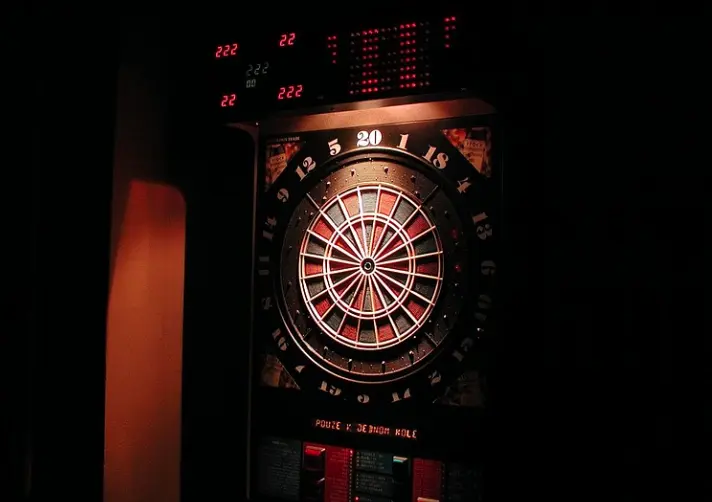
Types of electronic dartboards
Dartboards for home play come in two primary varieties: soft-tip electronic boards, which score automatically, and steel-tip bristle boards, which are scored by hand or with an add-on camera system. Steel tip dartboards are intended to be used with conventional metal-tipped darts, while soft tip dartboards are made to be used with plastic-tipped darts. Steel-tip bristle boards are used in most professional competitions, including PDC events, whereas soft-tip electronic boards are more frequently encountered in homes, bars and leagues; soft-tip darts has its own governing body, the World Soft Darts Association.
The variety of games and features that the best electronic dartboard offers is a crucial consideration when making your choice. While some dartboards provide a wide range of game modes, scoring systems, and difficulty settings, others have a more restricted selection.
Tips for choosing an electronic dartboard
Take into account the following elements while choosing an electronic dartboard:
- Skill level. Take into account the level of expertise of the dartboard users. If novice or casual players will be using the dartboard, a simpler model with minimal functionality is adequate. On the other hand, a dartboard with a variety of games and customization options may be desirable for more skilled players or those seeking a more difficult game.
- Price. Electronic dartboards vary in price, so you need to set a budget before buying. Think about how frequently you’ll use the dartboard and how important the features are to your enjoyment of the game; prices vary widely by size, features and whether a cabinet is included.
- Size. Electronic dartboards come in different sizes, so measure the space available for installation first, including room for the throw line. Electronic boards are usually sold with either a 13-inch or a 15.5-inch target area: the 15.5-inch size is the regulation size for soft-tip play, while a 13-inch board is a compact option for small rooms and offices. Most electronic dartboards are designed for indoor use, so check the manufacturer’s guidance before using one outdoors.
- Brand reputation. Search for trustworthy companies that provide high-quality goods and provide friendly customer service. To assist you in making a wise choice, read customer testimonials and ratings.
- Warranty. Make sure the dartboard comes with a warranty to protect against defects and other issues. A solid warranty gives you recourse if the board develops a fault, so check how long it lasts and whether it covers the sensors and the display.
Conclusion
An entertaining and enjoyable method to play the game of darts is using an electronic dartboard. The players’ skill level, the features that are offered, and the budget should all be taken into account when selecting an electronic dartboard. The two major varieties of dartboards are soft tip and steel tip, and choosing a reliable brand with a solid guarantee may help you make an informed decision. With these pointers in mind, you may locate the ideal electronic dartboard for your requirements and take pleasure in hours of entertaining and competitive play.
What Is an Electronic Dartboard and How Does It Score?
An electronic dartboard is a soft-tip dartboard with a plastic face made of segments perforated with small holes. The plastic tip of the dart lodges in a hole, the board registers which segment was hit, and the built-in display calculates the score automatically.
Because each segment needs its own holes, electronic boards have larger segments than steel-tip boards, which is why the regulation soft-tip target area (15.5 inches) is bigger than the playing area of a bristle board (about 13.5 inches). Tournament-size boards typically have six holes across a treble segment, while 13-inch boards have about two, so a smaller board leaves less room for error and produces more bounce-outs.
In soft-tip play, a dart that falls out still counts as long as the board registered its impact first. On a traditional steel-tip board, a dart has to stay in the board to score.
Soft-Tip vs Steel-Tip: Comparison Table
| Feature | Soft-tip (electronic) | Steel-tip (bristle) |
|---|---|---|
| Dart tip | Plastic tip (required by NDA rules) | Metal point |
| Maximum dart weight | 20 g in total (NDA) | 50 g including shaft and flight (competition standard) |
| Maximum dart length | 8 in from tip to end of flight (NDA) | 300 mm (about 12 in) |
| Bullseye height | 5 ft 8 in (1.73 m) | 5 ft 8 in (1.73 m) |
| Throw line (horizontal) | 8 ft (2.44 m) | 7 ft 9 1/4 in (2.37 m) |
| Diagonal, bullseye to throw line | 9 ft 9 1/2 in (2.98 m) | 9 ft 7 3/8 in (2.93 m) |
| Board size | 15.5 in regulation target area; 13 in compact boards | 451 mm (17.8 in) overall diameter (Darts Regulation Authority) |
| Scoring | Automatic, on the board | Manual, or an add-on camera system |
| Governing bodies | World Soft Darts Association; NDA in the US | World Darts Federation standards |
Features to Compare Before You Buy
- Number of games and scoring options. Boards differ widely. For example, the Viper 800 is listed with 57 games and over 400 scoring options, while the Fat Cat Mercury is listed with 28 games and 150+ scoring options.
- Player limit. Some boards support up to 16 players and others up to 8, which matters for parties and league-style nights.
- Power source. Most electronic dartboards run on C or D batteries or an AC adapter; check which is included and whether the board will sit near an outlet.
- Cabinet or standalone. A cabinet model, such as the Fat Cat Electronx or the Viper Neptune, protects the wall and stores darts; a standalone board is cheaper and easier to mount.
- Target size. Choose the 15.5-inch regulation size if you plan to play in a soft-tip league or want fewer bounce-outs.
- Classic games built in. Look for 301 and 501 (each player counts down from that score), Cricket (a race to control the numbers 15 to 20 and the bullseye) and Round the Clock (hitting the numbers 1 to 20 in order).
How to Set Up an Electronic Dartboard at Home
- Pick a wall with clear floor space in front of it: you need at least 8 ft (2.44 m) to the throw line plus room to stand behind it.
- Mark the bullseye height at 5 ft 8 in (1.73 m) from the floor and mount the board or cabinet level on that mark.
- Measure 8 ft (2.44 m) horizontally from the face of the board, not the wall, and mark the throw line on the floor. As a check, the diagonal from the bullseye to the throw line should be 9 ft 9 1/2 in (2.98 m).
- If your household also plays steel-tip on a separate bristle board, use 7 ft 9 1/4 in (2.37 m) and a 9 ft 7 3/8 in (2.93 m) diagonal for that board.
- Use only plastic-tip darts on the electronic board, and replace broken tips rather than throwing darts with cut-off points.
To decide who throws first on a family games night, a random turn order generator keeps the order fair, and a sports team name generator helps when you split into teams.
Once the board is up, our guide to darts scoring explains how 501, doubles, busts and checkouts work.
Can You Get Automatic Scoring on a Steel-Tip Board?
Yes. Camera-based autoscoring systems mount around a standard bristle dartboard and score each throw automatically. Scolia, for example, uses a camera system with a companion app and supports all standard-size dartboards with traditional white metal number rings; its range includes Scolia Home, Scolia Home 2 and Scolia Pro, the last aimed at bars and venues. This route suits players who want steel-tip darts and competition-style boards without scoring by hand.
If darts is one part of a wider games room, the board games guide and this list of board games with high replay value cover the tabletop side.
Frequently Asked Questions
How high should an electronic dartboard be hung?
An electronic dartboard should be hung so the center of the bullseye is 5 ft 8 in (1.73 m) from the floor. This is the same height used for steel-tip boards and is listed in the National Dart Association’s dart machine specifications.
How far away do you stand from an electronic dartboard?
For soft-tip electronic dartboards, the throw line is 8 ft (2.44 m) from the face of the board, as set by the National Dart Association. Steel-tip players stand 7 ft 9 1/4 in (2.37 m) away under World Darts Federation standards.
Can you use steel-tip darts on an electronic dartboard?
No. Electronic dartboards are made for plastic-tip darts, and NDA rules require plastic-tip darts that are standard factory issue for electronic darting. Metal points can damage the segments and holes of the board.
What weight of dart should you use on an electronic dartboard?
Under NDA rules, a complete soft-tip dart, including flight, tip, shaft and barrel, may not exceed 20 grams. Steel-tip competition darts can weigh up to 50 grams, so steel-tip weights are not a guide for soft-tip boards.
Is a 13-inch or 15.5-inch electronic dartboard better?
A 15.5-inch electronic dartboard is the regulation soft-tip size and has larger segments, so it produces fewer bounce-outs. A 13-inch board saves space and suits casual play in small rooms, but its smaller segments make it harder to hit targets.

Justwebworld has published guides since 2012. How we write and update articles Report an error
