

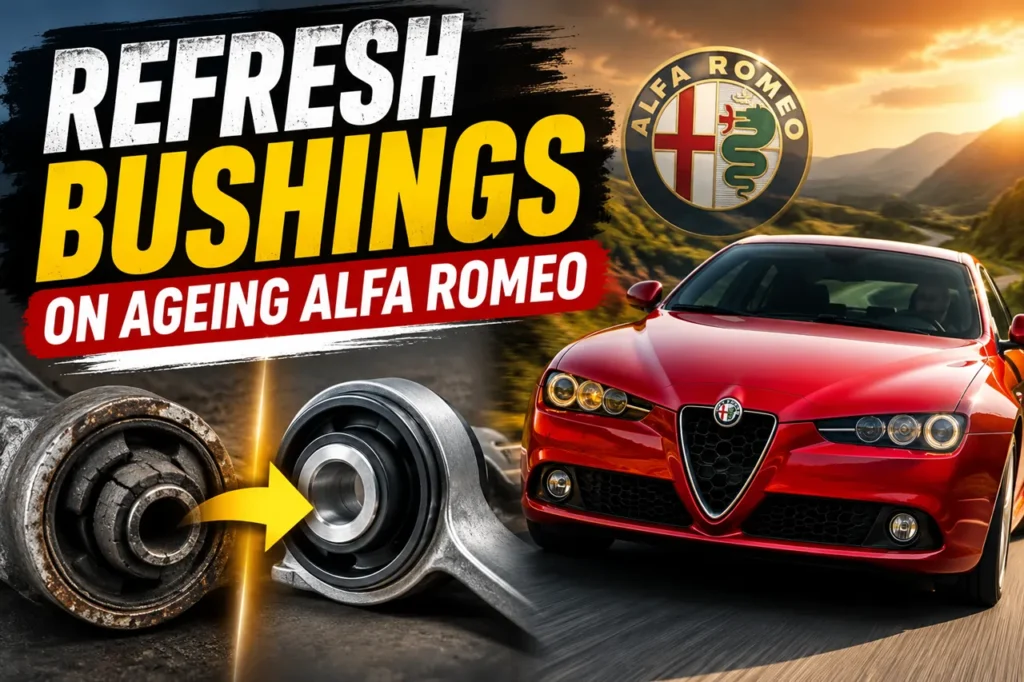
Bushings rarely get the same attention as shocks, tyres or brakes, yet they have a huge effect on how an older Alfa Romeo feels on the road. As rubber ages, it hardens, cracks and loses its ability to absorb movement properly. On ageing models, especially, worn suspension and drivetrain bushings can quietly change steering response, ride quality and tyre wear long before a major part fails.
Handling Starts to Loosen
One of the clearest signs it is time to refresh bushings is a noticeable drop in precision. If the car feels less settled through bends, wanders slightly at speed, or no longer tracks cleanly over uneven roads, the rubber components may be allowing too much unwanted movement. On older Alfa Romeo models, that extra play can make an otherwise engaging chassis feel vague.
This is often the point where owners begin looking more closely at suspension condition and seeking specialist alfa auto repair for Alfa Romeo vehicles, particularly when no single component appears obviously broken. Bushings can deteriorate gradually, so the change in feel is often easy to miss until the car no longer drives as it should.
Rubber Shows Age Cracking
Time alone is enough to wear out many factory rubber bushings. Even if mileage is relatively low, years of heat cycles, road grime, oil exposure and general ageing can dry the material out. Once cracking appears on the surface, the bushing is already losing elasticity and may no longer control movement properly under load.
This matters because bushings are designed to manage compliance in the suspension and mounting points. When the rubber hardens or splits, the car can become harsher over bumps while also feeling less stable. A visual inspection during routine servicing often reveals whether age has caught up with these parts.
You Hear Clunks or Creaks
Strange noises over speed humps, rough bitumen or driveway entries are another strong indicator. A dull clunk, light knock or persistent creak can point to worn control arm, anti-roll bar or subframe bushings. These sounds usually happen because the component is no longer holding its position firmly enough.
Older Alfa Romeos can be especially sensitive to this because the chassis is designed to communicate a lot through the steering and suspension. Once the rubber mounts start to degrade, those unwanted noises are often paired with small but meaningful changes in steering sharpness and cabin refinement.
Tyre Wear Looks Uneven
Bushings do more than soften vibration. They also help keep suspension geometry stable while the car is braking, cornering and accelerating. When they wear out, alignment settings may shift dynamically, even if the car appears correct on a workshop alignment rack. That can lead to irregular tyre wear, feathering or a car that seems to need repeated alignment correction.
If new tyres are wearing faster than expected, or if the steering wheel no longer sits consistently straight, it is worth looking beyond the obvious culprits. Worn bushings can allow excess movement in key suspension points, affecting toe and camber behaviour under real driving conditions.
Suspension Parts Are Already Being Replaced
Bushings are best dealt with before they become the final weak link in an otherwise renewed suspension setup. If shocks, springs, arms or mounts are already being replaced, it often makes sense to inspect and deal with ageing bushings at the same time. Replacing only the headline parts while leaving old rubber in place can limit the improvement.
This is especially true on enthusiast-owned Alfa Romeos, where balance and feel matter. Fresh bushings help restore the intended relationship between the chassis, steering and road surface. The result is not simply a quieter car, but one that feels more faithful to how it was meant to drive.
The Right Time Is Usually Earlier Than Expected
Bushings usually do not fail in a dramatic way. Instead, they slowly chip away at the character of the car through noise, looseness, harshness and poor tyre behaviour. For ageing Alfa Romeo models, the right time to replace them is often when those early signs appear, not when the deterioration becomes impossible to ignore. Catching the issue early helps preserve ride quality, steering accuracy, and the distinctly connected feel that makes these cars worth maintaining properly.

Justwebworld has published guides since 2012. How we write and update articles Report an error
