

Car brands that start with C span two of America’s biggest names, one of France’s most inventive, and China’s largest vehicle exporter. Chevrolet, Chrysler, Cadillac, Citroën, Chery and Cupra are the volume players — alongside a long list of coachbuilders and defunct pioneers that shaped the industry before disappearing.
This guide covers 26 car brands beginning with C, with country of origin, founding year, current ownership and what each is known for.
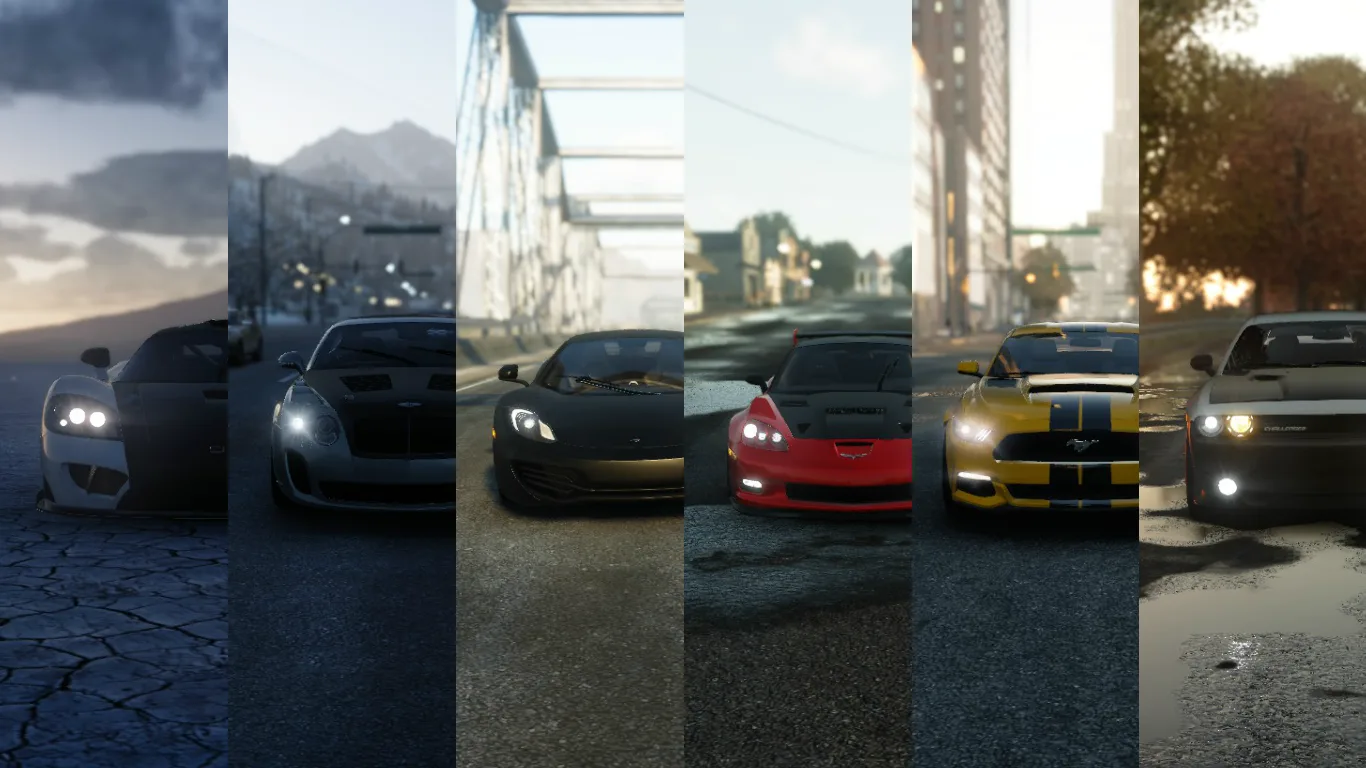
Car Brands Starting With C: Complete List
| Brand | Country | Founded | Status / Owner | Known For |
|---|---|---|---|---|
| Cadillac | United States | 1902 | General Motors | GM’s luxury division; now EV-led |
| Callaway | United States | 1977 | Independent | Tuner best known for modified Corvettes |
| Calcott Brothers | United Kingdom | 1886 | Defunct (1926) | Coventry cycle maker turned carmaker |
| Caparo Vehicle Technologies | United Kingdom | 2006 | Defunct | Built the track-focused Caparo T1 |
| Carbon Motors Corporation | United States | 2003 | Defunct (2013) | Purpose-built police car; never mass-produced |
| Carlsson Autotechnik | Germany | 1989 | Independent | Mercedes-Benz tuning house |
| Carrozzeria Castagna | Italy | 1849 | Independent | Coachbuilder; among the oldest in Italy |
| Casalini | Italy | 1939 | Independent | Microcars drivable without a full licence |
| Caterham | United Kingdom | 1973 | VT Holdings | Continues the Lotus Seven design |
| Chadwick Engineering Works | United States | 1903 | Defunct (1916) | Pioneered the automotive supercharger |
| Chalmers Motor Company | United States | 1908 | Defunct (1923) | Merged into what became Chrysler |
| Chevrolet | United States | 1911 | General Motors | GM’s volume brand; Corvette and Silverado |
| Chrysler | United States | 1925 | Stellantis | Now a two-model brand within Stellantis |
| Citroën | France | 1919 | Stellantis | First European mass production line |
| Chery | China | 1997 | State-linked | China’s largest vehicle exporter |
| Changan | China | 1862 (origins) | State-owned | One of China’s “big four” automakers |
| Cupra | Spain | 2018 | Volkswagen Group | Spun out of SEAT as a performance brand |
| Cizeta | Italy | 1988 | Defunct | V16-engined Cizeta-Moroder V16T |
| Checker | United States | 1922 | Defunct (1982) | Built the classic American taxicab |
| Chenard-Walcker | France | 1898 | Defunct | Won the first Le Mans, 1923 |
| Cord | United States | 1929 | Defunct (1937) | Front-wheel drive and hidden headlamps |
| Crosley | United States | 1939 | Defunct (1952) | American subcompact pioneer |
| Continental | United States | 1956 | Defunct as a marque | Briefly separate from Lincoln |
| Coda | United States | 2009 | Defunct (2013) | Early EV startup; sold few cars |
| Commuter Cars | United States | 1998 | Independent | Built the narrow tandem Tango |
| Coventry Climax | United Kingdom | 1903 | Defunct | Engines that won multiple F1 titles |
Major Manufacturers
Chevrolet
Founded in 1911 by Swiss racing driver Louis Chevrolet and ousted General Motors founder William C. Durant — Durant used Chevrolet’s success to buy back control of GM, which is one of the more remarkable reversals in industrial history. Chevrolet is now GM’s volume brand worldwide, anchored by the Silverado pickup and the Corvette, which moved to a mid-engine layout in 2020 after nearly seven decades front-engined.
Chrysler
Founded by Walter Chrysler in 1925 out of the remains of the Maxwell Motor Company. It was one of Detroit’s Big Three for most of the twentieth century and effectively invented the modern minivan segment in 1983. Today it sits within Stellantis, the group formed in 2021 from the merger of Fiat Chrysler and France’s PSA, and has been reduced to a very narrow model range — a striking contraction for a brand that once defined a market.
Citroën
André Citroën founded the company in 1919 and brought the first European mass-production assembly line to the industry, having studied Ford’s methods. Citroën has a long record of genuine engineering risk — the Traction Avant combined front-wheel drive with a monocoque body in 1934, and the DS introduced hydropneumatic self-levelling suspension in 1955. It is now part of Stellantis.
Cadillac
Founded in 1902 from the wreckage of Henry Ford’s second failed company, and named after the French officer who founded Detroit. Cadillac established interchangeable parts as a standard in 1908, introduced the electric starter in 1912 — ending the era of hand-cranking, which had been genuinely dangerous — and became the definition of American luxury. It is General Motors’ luxury division and is being repositioned around electric models.
Chery
Founded in 1997 in Anhui province and now China’s largest vehicle exporter by volume, selling heavily into Russia, South America and the Middle East. Its expansion into Europe has come partly through the Omoda and Jaecoo sub-brands rather than the Chery name itself, a common approach among Chinese manufacturers entering markets where the parent brand carries little recognition.
Changan
One of China’s “big four” state-owned automakers, and unusual for tracing its origins to an arms manufacturer established in 1862, which makes it one of the oldest continuously operating industrial enterprises in the country. It moved into vehicles in the 1950s and now produces both its own models and vehicles through long-standing joint ventures with Ford and Mazda.
Cupra
The newest brand on this list, spun out of SEAT in 2018 as a standalone performance marque within the Volkswagen Group. It was an unusual move — taking what had been a trim designation on hot SEATs and elevating it to its own brand — and it has worked commercially, with Cupra outselling SEAT in several markets.
Specialists and Coachbuilders
Caterham
When Lotus discontinued the Seven in 1973, Caterham bought the rights and has built essentially the same car ever since — a lightweight, minimal, aluminium-and-fibreglass sports car whose design dates to 1957. Very few vehicles have remained in continuous production in recognisably original form for that long. It is now owned by Japan’s VT Holdings.
Callaway
An American engineering firm founded in 1977 that has specialised in modified Corvettes to the point of near-institutional status — its cars have been offered through GM dealers with warranty support, which is rare for a tuner. It also built the Callaway Sledgehammer, which recorded 254.76 mph in 1988.
Carlsson Autotechnik
A German house specialising in Mercedes-Benz modification, founded in 1989 and named after Swedish rally driver Ingvar Carlsson. It occupies the same territory as Brabus and AMG did before AMG was absorbed by Mercedes outright.
Carrozzeria Castagna
Founded in Milan in 1849 — before the motor car existed — as a builder of horse-drawn carriages, and among the oldest coachbuilding names in Italy. It bodied chassis for Alfa Romeo, Isotta Fraschini and others in the coachbuilt era, and the revived company now produces low-volume custom bodies.
Caparo Vehicle Technologies
Built the Caparo T1, a road-legal car engineered to Formula One principles with an exceptional power-to-weight ratio. It was extreme to the point of impracticality, and the company did not survive long — a recurring pattern among track-focused startups.
Casalini
An Italian maker of microcars small enough to be driven without a full licence under Italian and French regulations, a category with no real equivalent in most other markets. It has been building them since 1939.
Commuter Cars
Produced the Tango, an extremely narrow tandem-seat electric car designed to occupy half a lane and park perpendicular to the kerb. George Clooney bought the first one, which is essentially the entire reason most people have heard of it.
Defunct Pioneers
Chalmers Motor Company
A Detroit manufacturer founded in 1908 that merged with Maxwell, which Walter Chrysler then reorganised into the Chrysler Corporation — so Chalmers is part of the direct corporate ancestry of Chrysler itself. It also had an odd cultural afterlife: the Chalmers Award for baseball’s most valuable player, sponsored by the company from 1911, is a forerunner of the modern MVP award.
Chadwick Engineering Works
A short-lived American firm that is credited with fitting a supercharger to a car for the first time, around 1907, decades before forced induction became widespread. The company built very few vehicles and closed in 1916.
Chenard-Walcker
A French manufacturer that won the very first 24 Hours of Le Mans in 1923 — a genuinely historic result now largely forgotten because the company itself faded and was eventually absorbed by Peugeot. It later moved into commercial vehicles.
Cord
Cord built two extraordinary cars in the 1930s: the L-29, one of the first American production cars with front-wheel drive, and the 810/812, with hidden headlamps and coffin-nose styling that still looks radical. Both were commercial failures — the engineering was ahead of what the market and the Depression could support — and the marque ended in 1937.
Cizeta
Built the Cizeta-Moroder V16T, backed partly by music producer Giorgio Moroder, with a transverse sixteen-cylinder engine. Its designer Marcello Gandini had originally intended the styling for the Lamborghini Diablo before Chrysler softened it, so the Cizeta shows what the Diablo was meant to look like. Almost none were built.
Checker
The Checker Marathon was the American taxi for decades — built deliberately upright, roomy and almost indestructible, with a body design left essentially unchanged from 1956 to 1982. Production ended because the design could not meet modern regulations or fuel-economy expectations.
Crosley
Powel Crosley Jr. made his money in radios and refrigerators and applied it to building genuinely small American cars from 1939 — a market that barely existed at the time. Crosley also produced the first American car with four-wheel disc brakes. Post-war prosperity killed demand for subcompacts and the company closed in 1952.
Coventry Climax
Not a car maker but a maker of engines, originally for fire pumps, whose lightweight racing units powered Formula One World Championship-winning cars for Cooper and Lotus. It is a reminder that some of the most consequential names in motoring never sold a vehicle of their own.
Carbon Motors
Attempted something no one else had: a car designed from scratch purely as a police vehicle, rather than adapting a civilian model. The E7 was widely praised in concept but the company could not secure federal loan funding and folded in 2013 without reaching production.
Coda
An American electric-vehicle startup that reached the market in 2012 with a sedan based on a Chinese platform, sold only a few hundred, and filed for bankruptcy within a year — an early illustration of how much harder EV manufacturing proved than the initial wave of startups expected.
Other Marques in This Group
Calcott Brothers
Calcott started out in 1886 as a tiny bicycle maker in England. The Calcott brothers, who created the brand, founded the business in Coventry. It initially produced bicycles before expanding to motorcycles in 1904 and then automobiles in 1913. James Calcott died in 1924, which led to the business’s demise and sale to Singer in 1926. The company built 2,500 automobiles during that time, the most well-known of which is a 1921 convertible with a ten-horsepower engine.
Carbon Motors Corporation
In order to create and produce a dedicated police automobile, Stacy Dean Stephens and William Santana Li established the car company Carbon Motors Corporation in Los Angeles, California, in 2003. A delay in decision-making and the inability to move forward with the work was caused by attempts to secure funds from government services for modern technology-based development. The plant’s deconstruction got underway in the spring of 2013, and production was stopped entirely. The company essentially disappeared in May 2013.
Caparo Vehicle Technologies (CVT)
In 2006, Caparo Vehicle Technologies (CVT), a leading provider of automotive and aerospace technology, was founded in Britain by Freestream. Graham Halstead and Ben Scott-Geddes, two McLaren F1 engineers, formed the main business. It received its present name after Caparo purchased it in 2006. The acquisition was funded by Sean Butcher. The Caparo T1 sports car was unveiled by the company in the same year. It was run and dissolved in 2015, which was already this year.
Chalmers Moto Company
Hugh Chalmers established the American automaker Chalmers Motor Company in Detroit, Michigan, in the year 1908. Up until the company’s 1923 merger with Chrysler, their product was the pricey luxury cars manufactured under this brand. The Chalmers 30, the brand’s initial model, was introduced in the year it was created and was based on the Chalmers-Detroit Motor Company. 3,047 automobiles were sold in the first year thanks to the car’s success. The business came in at number eight among US automakers in 1911. The business changed its name to Chalmers Motor Car Corporation in 1915. And the business merged with Maxwell Motor Company at the start of the 1920s.
Frequently Asked Questions
What car brands start with the letter C?
Twenty-six are covered here, including Chevrolet, Chrysler, Citroën, Cadillac, Chery, Changan, Cupra, Caterham, Callaway, Cizeta, Checker, Cord, Crosley, Continental, Coda, Chenard-Walcker, Chadwick, Chalmers, Coventry Climax, Commuter Cars, Casalini, Carlsson, Carbon Motors, Caparo, Carrozzeria Castagna and Calcott Brothers.
Who owns Chrysler and Citroën now?
Both belong to Stellantis, formed in 2021 by the merger of Fiat Chrysler Automobiles and the French PSA Group. Stellantis holds fourteen car brands in total, including Jeep, Fiat, Peugeot, Ram, Opel, Alfa Romeo, Maserati, Dodge, Lancia, DS, Vauxhall and Abarth.
What is the oldest car brand starting with C?
Carrozzeria Castagna, founded in Milan in 1849 as a horse-drawn carriage builder — predating the motor car itself. Among manufacturers of actual automobiles, Cadillac dates to 1902 and Chevrolet to 1911.
Is Cupra the same as SEAT?
Not any more. Cupra began as a performance trim on SEAT models and was spun out as a standalone brand in 2018. Both sit within the Volkswagen Group, and Cupra now outsells SEAT in several markets.
Which C brand invented the electric starter?
Cadillac, in 1912. Before that, cars were started by hand crank, which could break an arm if the engine kicked back — the electric starter is one of the changes that made driving broadly accessible.
Which C car brand won the first Le Mans?
Chenard-Walcker, at the inaugural 24 Hours of Le Mans in 1923. The French company later shifted to commercial vehicles and was eventually absorbed by Peugeot.
Sources
Stellantis brand portfolio and 2021 FCA–PSA merger: Stellantis corporate information. Founding dates and ownership follow manufacturer corporate histories and marque records. Where a company is defunct, the closure year given is the end of vehicle production.
Ownership in the motor industry changes frequently — check current corporate filings before relying on any ownership detail for business purposes.

Justwebworld has published guides since 2012. How we write and update articles Report an error
