

Note (October 2026): An earlier version said 4K content had not reached India and that LED TVs use up to 40 percent less power; 4K streaming is now widely available, and LED backlighting typically saves about 20-30 percent versus older CCFL-backlit LCDs. Both points are corrected below.
When buying an LED TV, check five things first: resolution (4K for living-room sizes, since 4K streaming is now common), backlight type (full-array with local dimming or Mini-LED beats basic edge-lit), panel type (IPS for wide viewing angles, VA for contrast), refresh rate and HDMI 2.1 for sports and gaming, and the BEE star label for running costs.
Key Takeaways
- An LED TV is an LCD TV that uses light-emitting diodes as its backlight instead of the older fluorescent (CCFL) tubes.
- Backlight design matters most for contrast: full-array local dimming and Mini-LED control dark scenes far better than basic edge-lit panels.
- 4K content is widely available in India; Netflix, for example, recommends 15 Mbps or faster for Ultra HD/4K streaming.
- HDMI 2.1 adds 4K at 120Hz, VRR, ALLM and eARC, which matter for consoles and soundbars.
- The Bureau of Energy Efficiency (BEE) star label shows how efficient a TV is: more stars means lower electricity use.
In 2009, Samsung was the first TV brand to launch LED TVs in India. Since then, this kind of TV with light emitting diodes (LED) has come a long way. The earliest high-definition LED TVs were a clear step up from the CRT and fluorescent-backlit LCD sets before them, with slimmer bodies, brighter pictures and lower power use. Samsung’s first Indian LED range in 2009 came in 40-, 46- and 55-inch sizes.
LED backlighting typically uses about 20-30 percent less power than the older CCFL (cold cathode fluorescent lamp) backlights it replaced. When LED TVs first came out, they were expensive; today budget LED models are widely available.
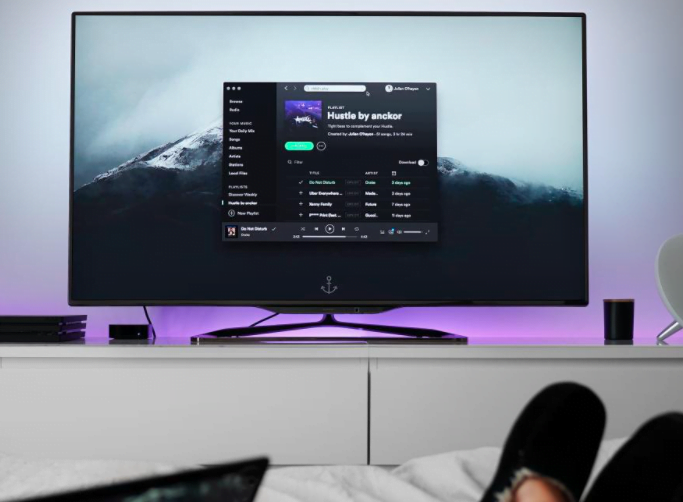
The LED TV makes use of light emitting diodes to backlight the display. The TV universe is a minefield of confusing buzzwords and acronyms that can boggle the brightest minds, making the choice of a new LED TV very tricky.
For instance, adding an “O” before “LED” changes the way TV technology works. After LED TVs came out, OLED TVs arrived as a premium alternative, offering more advanced technology.
OLED stands for “Organic light emitting diode”, and in an OLED display, a carbon-based film is placed between two current-passing conductors, causing the film to emit light.
The vital technology innovation comes with the fact that light can be emitted on a pixel by pixel basis. As a result, a bright white or coloured pixel may appear near a pixel of a different colour or black, and neither of them affects the other.
You get exceptional degrees of contrast that simple backlighting doesn’t give you. An LED TV, like the 32-inch LED TV, relies on backlighting purely. OLED TVs are more expensive than LED TVs, which remain the more affordable choice for most Indian buyers.
Why LED TVs are Popular
When brands started making LED TVs, they replaced older LCD TVs that used fluorescent (CCFL) backlights; an LED TV is itself an LCD TV with an LED backlight. An LED TV uses less power, provides a brighter and vivid display with better contrast levels, a panel that’s thinner, and a lower amount of heat dissipation.
Standard LED TVs sit below QLED (quantum-dot LED) and OLED models in price, and major brands still make inexpensive LED TVs today. You can get regular LED TVs, like the Samsung LED TV. Price is a major factor when an Indian consumer buys a TV.
LED TVs come with panels of full-array clustered LED lights, or edge-lit LED lights. Edge-lit models are common in budget and slim TVs because the LEDs sit around the edges and allow a thinner body. Full-array (direct-lit) models place LEDs behind the screen, and those with local dimming or Mini-LED backlights usually control contrast better. Colours are very bright and authentic, and you can get an LED TV in practically all sizes.
Brands come up with advertising innovations to sell more TVs, like LG’s announcement about “Nano Cell Technology” for instance. LED-backlit technology is here to stay, and it’s a sweet spot for many Indian consumers, whether they buy a smart LED TV or a regular one.
Features of LED TVs that Count
You will discover that the best LED TVs come with the following features.
Light Sources in Sleek TVs
LED TVs are sleeker nowadays, and more energy efficient. LED backlights are compact and efficient, and in full-array models with local dimming they can dim zones behind dark areas of the picture for deeper blacks. Shining light from behind the display, they illuminate pixels and make colour sharper.
LED and 4K TVs
You will find LED backlighting in most 4K TVs, and 4K content is now widely available in India: Netflix, for example, streams in Ultra HD/4K on its Premium plan and recommends an internet connection of 15 Mbps or faster. If you stream films and sport, or plan to, a 4K LED TV is the more future-ready choice.
Affordability
LED TVs come in a wide range of sizes and dimensions, and there is one to suit every pocket. Smaller TVs pack their pixels more densely, so a 32-inch LED TV can look sharp from a normal viewing distance, but many 32-inch models are HD rather than Full HD or 4K, so check the resolution on the spec sheet.
Energy Efficient
LED TVs are energy efficient, even if they are large in size. LED-backlit LCD TVs typically use about 20-30 percent less power than older CCFL-backlit LCD models. In India, the BEE star label on a TV shows its relative efficiency, with five stars the most efficient.
Better Image Quality
LED TVs light the picture from behind with a backlight, which keeps bright daytime scenes vivid. In dark scenes, models with local dimming switch down parts of the backlight to deepen blacks, while basic models can show greyish blacks. You get to see vibrant day colours and richer night shades. The saturation of colour occurs in a balanced way.
Better Viewing Angle
Viewing angles on an LED TV depend on the LCD panel type: IPS panels keep colour consistent from the side, while VA panels usually offer higher contrast but lose colour and contrast when viewed off-axis. Motion clarity depends on the refresh rate and response time: 100Hz or 120Hz panels handle fast sport and games more smoothly than 50Hz or 60Hz panels.
Shoppers who want to spread the cost of a 32 inch LED TV can buy from retailers such as the Bajaj Finserv EMI Store, where offers vary. The Bajaj Finserv EMI Network Card, which Bajaj Finance also calls the Insta EMI Card, converts the price into monthly EMIs; delivery times depend on the seller and city, so compare the total cost, any fees and the delivery date before ordering.
LED vs QLED vs Mini-LED vs OLED: What Is the Difference?
An LED TV, a QLED TV and a Mini-LED TV are all LCD TVs with an LED backlight; they differ in how the backlight is arranged and how colour is produced. An OLED TV has no backlight at all, because each pixel emits its own light.
| Type | How it makes light | Strengths | Trade-offs |
|---|---|---|---|
| LED (edge-lit) | LEDs around the screen edges light an LCD panel | Thin, cheapest, energy efficient | Weaker blacks and uneven dark scenes |
| LED (full-array, local dimming) | LEDs spread behind the panel in dimmable zones | Better contrast and HDR | Can show halos around bright objects on dark backgrounds |
| QLED (quantum dot) | LED backlight plus a quantum-dot layer | Wider colour range, high brightness | Contrast still depends on the backlight design |
| Mini-LED | Thousands of tiny LEDs with hundreds to thousands of dimming zones | Very bright, strong contrast for an LCD | Costs more than standard LED |
| OLED | Each pixel emits its own light; no backlight | True blacks, near-perfect contrast, wide viewing angles | Highest price; more susceptible to burn-in and brightness loss over time |
For most living rooms, a full-array or Mini-LED TV is the middle ground; an OLED TV suits dark rooms and film watching; a basic edge-lit LED TV suits bedrooms and tight budgets.
LED TV Buying Checklist
- Screen size: measure your wall and seating distance first. Our guide on choosing the right TV for your room size and usage covers this in detail.
- Resolution: HD suits small bedroom screens; 4K is the standard choice for larger living-room screens. Compare models in our list of the best 4K LED TVs in India.
- Backlight: look for “full-array local dimming” or “Mini-LED” if picture quality in dark scenes matters.
- Panel type: IPS for wide family seating; VA for deeper contrast when you sit straight in front.
- HDR: high dynamic range needs a bright screen with good dimming to show its benefit, so check brightness and local dimming rather than the HDR logo alone.
- Refresh rate and HDMI: a native 120Hz panel and HDMI 2.1 ports (4K at 120Hz, VRR, ALLM) matter for current game consoles and PC gaming.
- Audio: an HDMI eARC port lets a soundbar carry object-based formats such as Dolby Atmos.
- Smart platform: check that the apps you use are supported and that the brand still issues software updates. See the features to look for in an Android smart TV under Rs 30,000.
- Energy label: compare BEE star ratings; more stars means lower running costs. Our tips on cutting your electricity bill at home explain how appliance ratings add up.
- Mounting: check the VESA pattern if you plan to use a TV wall mount.
What Do You Need to Watch 4K on an LED TV?
Watching 4K needs every link in the chain to support it. According to Netflix’s Help Center, Ultra HD/4K streaming requires a plan that includes 4K (the Premium plan), an internet connection of 15 Mbps or faster, a 4K-capable device, and an HDMI port that supports HDCP 2.2 or later when an external player is used. Netflix also recommends Premium High Speed or Ultra High Speed HDMI cables. If any part falls short, the stream plays at the highest quality that part supports.
Common Mistakes When Buying an LED TV
- Judging by the showroom picture: store displays run in a bright “vivid” mode; check reviews of the picture in normal settings.
- Trusting “4K HDR” alone: a dim edge-lit panel can accept HDR signals without showing much HDR benefit; brightness and local dimming matter more.
- Ignoring ports: a console buyer who gets only HDMI 2.0 ports is limited to 4K at 60Hz.
- Skipping the total EMI cost: “no-cost” offers can carry processing fees, so add up the full amount before signing.
Frequently Asked Questions
Is an LED TV the same as an LCD TV?
Yes, an LED TV is an LCD TV that uses light-emitting diodes as its backlight. Older LCD TVs used cold cathode fluorescent lamps (CCFL); LED backlights replaced them because they are thinner and typically use about 20-30 percent less power.
Which is better, LED or OLED?
OLED offers true blacks, near-perfect contrast and wide viewing angles because each pixel makes its own light. LED TVs cost less, get brighter in sunny rooms and do not carry OLED’s burn-in risk, so the better choice depends on budget and room lighting.
Is a 4K LED TV worth it in India?
A 4K LED TV is worth it for larger living-room screens, because 4K streaming is now widely available. Netflix, for example, offers Ultra HD/4K on its Premium plan and recommends a 15 Mbps or faster connection.
What refresh rate should an LED TV have?
A 60Hz panel is fine for regular TV and streaming. For fast sport and gaming, a native 100Hz or 120Hz panel with HDMI 2.1 ports gives smoother motion and supports 4K at 120Hz on modern consoles.
What does the BEE star rating on a TV mean?
The BEE star rating is India’s energy label from the Bureau of Energy Efficiency, under the Ministry of Power. A five-star TV is the most efficient and a one-star TV the least, so more stars means lower electricity bills over the TV’s life.

Justwebworld has published guides since 2012. How we write and update articles Report an error
