

Note (September 2026): Earlier versions gave Bru’s launch year as 1969 (Hindustan Unilever says 1968), quoted market shares for Nescafé (58%) and Bru (53%) that add up to more than 100%, and overstated Café Coffee Day’s current size; these points have been corrected below.
The most popular coffee brands in India are the instant-coffee leaders Bru (Hindustan Unilever) and Nescafé (Nestlé), the cafe chains Starbucks (run by Tata Starbucks) and Café Coffee Day, and specialty roasters such as Blue Tokai, The Flying Squirrel, Seven Beans, The Coffee Co. and The Indian Bean. Davidoff is a popular imported premium instant coffee.
Key Takeaways
- Bru, launched in 1968, is described by Hindustan Unilever as India’s No. 1 instant coffee brand (Euromonitor, off-trade volume, 2023 data).
- Nescafé is Nestlé’s instant coffee, first launched in Switzerland on 1 April 1938; the market-share figures once quoted for Nescafé and Bru added up to more than 100% and have been corrected.
- Indian specialty roasters such as Blue Tokai (founded 2012), The Flying Squirrel (2013) and Seven Beans sell estate coffee online and, in some cases, through their own cafes.
- Café Coffee Day had 423 cafes as of 30 September 2025, far below its peak of nearly 1,700.
- Prices change often across brands and pack sizes, so compare current listings rather than relying on a fixed figure.
There are many among us who can’t think of a life without coffee and there’s no reason why we should think of it! Living in a country that has a rich tradition of growing coffee locally, we, the Indians have plenty of choice for coffee.
From premium instant coffees to single estate coffees, everything is available in online stores. In fact, there is a perfect coffee for all types of coffee lovers in India.
Top 10 Ultimate Coffee Brands In India
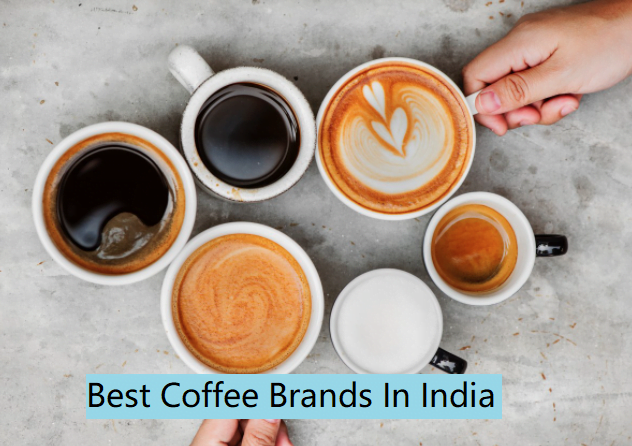
Not only are the big shot FMCG companies enjoying a fair share of the market but there are several organic boutique brands and cafe chains that are all fighting for gaining the attention of the consumers. So, if you’re a coffee lover, you must check out the most popular coffee brands in India.
Blue Tokai
The word ‘tokai’ means ‘tail of a peacock’ and hence the name Blue Tokai derives its meaning from this ancient word. This tail is present in the logo of this company, Blue Tokai, a Delhi-born artisanal coffee brand founded in 2012 by Matt Chitharanjan and Namrata Asthana and now headquartered in Gurugram, Haryana.
As there was a dearth of freshly ground coffee in Delhi, Namrata and Matt introduced Blue Tokai as a part of their attempt to welcome good coffee to North India. This is a company that roasts coffee twice in a week and sends custom ground coffee to clients all over India. Blue Tokai still sells coffee subscriptions and single orders through its website, and it now also runs a chain of cafes, so the estate coffees on offer change with each harvest.

Davidoff
Davidoff is one such luxury coffee brand that has grown in popularity in India, although it is an imported Swiss brand rather than an Indian one: Davidoff Café coffee is produced by the German coffee company Tchibo under licence from the Zino Davidoff Group. Davidoff Café Rich Aroma, the jar shown below, is listed on the official Davidoff site as 100% Arabica from South America with an intensity of 10 out of 12. Davidoff says Arabica is valued for its smoother, more refined taste, though which bean is “best” is a matter of personal preference.
This coffee is roasted in a perfectly balanced environment to preserve the best flavour of the beans during the procedure of roasting. There are several things that the company keeps in mind before roasting the beans. They do this only to best preserve the flavour of coffee.

Starbucks
Who hasn’t heard about Starbucks? Starbucks was founded in Seattle, Washington, in 1971. In India it operates through Tata Starbucks, a 50:50 joint venture with Tata Consumer Products that opened its first store in Mumbai on 19 October 2012.
For this company, quality has always been and is still the top priority. Starbucks is passionate about the ethical source of coffee and it uses the best Arabica coffee beans and roasts them with the utmost care.
They have a wide array of blends from medium roast to dark roast. Options have included the Italian Roast and the India Estates Blend, which Tata Starbucks launched in October 2013 using Arabica beans from Tata Coffee estates in Coorg and Chikmagalur. The packaged range changes over time, so check what is currently stocked.

The Indian Bean
This company called The Indian Bean is all set on its mission to enhance and boost access to premium quality Indian coffee. Their team has travelled from Coorg to Nepal to research on the best beans of the country and to bring them to their factory. You should try out the Bello blend if you love a strong and rich cup of coffee.

For getting a taste of South Indian coffee, you may taste the Melnad blend. They also offer you subscription packs that are delivered to you. As of September 2026, The Indian Bean describes itself as a Mumbai-based hub (with an office in Andheri West) that curates freshly roasted coffee from roasters across India, along with brewing equipment. The Bello and Melnad blends were not among its featured coffees when this page was checked, so confirm the current range before ordering.
The Coffee Co.
The Coffee Co. traces its start to 2003, when founder Gerson Aranha had his Southern Estate blend roasted for the first time, and it started off in a pretty modest way as a home-based business in Mumbai. They began with a very small offering of two blends, Southern Estate and the stronger Rea (added in June 2003). Today the range includes blends such as Southern Estate, Morning Dew and REA, Uravu filter coffee and Nespresso-compatible capsules, roasted at the company’s roastery in Mangalore.

You are also allowed to order your personal filter coffee makers, brewing machineries and accessories. An older claim that The Coffee Co. is the biggest exporter of shade-grown coffee could not be verified. The company’s own site describes a roastery in Mangalore, a head office in Mumbai, cafes in Mumbai, Goa and Ahmedabad, and a long record of supplying hotels and cafes, including Theobroma since 2009. That long record of supplying cafes and hotels is why the brand earns its place among the best coffee brands in India.
Seven Beans Co.
Seven Beans provides you with the seven most unique blends of coffee with Robusta and Arabica beans. Their roaster is an Italian-Indian venture where the roasters are both Italian and Indian.
They have both Italian and Indian blends to choose from. From Seven Beans Co., you can get the delicate caramel-flavored Mishta or the complex and strong Urja to start your day with.

The Flying Squirrel
This company with a strange name, The Flying Squirrel started in the year 2013 and currently it is one of the leading online coffee brands of India. Majority of their coffee is grown in Coorg where their estate is located. Their estate happens to be a 100-year old Nellikad Estate.
One of the main animal that you find in this area is the flying squirrel and this is where the coffee brand got its name. This small animal keeps gliding from one tree to another trying to feed on fruits and berries.
Today, this brand gives you 6 varieties of coffee and blends. Their Taster’s Whole Coffee Beans 6 pack is one of the best ways of exploring the best.

Nescafe
Nescafe is undoubtedly one of the most loved coffee brands in India. It was launched in Switzerland in the year 1938 and since then it started gaining popularity in several countries.
Nescafe is one of the oldest and most loved coffee brands in India. It has several manufacturing units and numerous coffee machines that are set up in public places. Its Indian range includes NESCAFÉ Classic, Gold Blend, Sunrise, Roastery, Allin1 and Ready to Drink coffee, according to the brand’s Indian website.
A widely repeated figure of “more than 700 million cups” could not be verified from Nestlé’s own published pages. The earlier claim of a 58% share of the Indian market could not be verified and cannot be reconciled with the Bru figure below. Nestlé’s own history page says Nescafé was launched on 1 April 1938 and was already sold in more than 30 countries, on every continent, by 1940.

Bru
Bru is known to be one of the best coffee brands of India. According to Hindustan Unilever Limited, Bru Instant was launched in 1968 (not 1969) as India’s first coffee-chicory mix instant coffee. Hindustan Unilever describes Bru as India’s No. 1 instant coffee brand, citing Euromonitor International off-trade volume data for 2023; the older “53% market share” figure could not be verified.
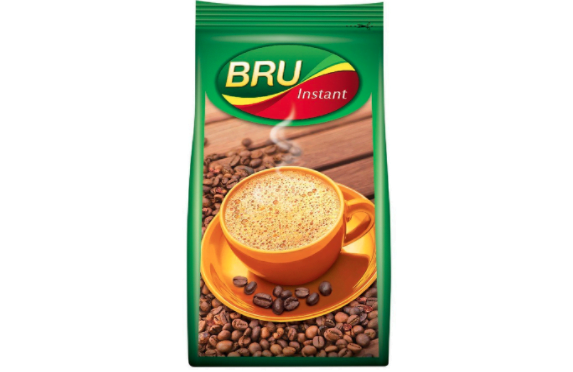
Bru and Nescafé are the two best-known instant coffee brands in India, and the ranking depends on the measure used; on Hindustan Unilever’s Euromonitor-based measure, Bru ranks first. Bru’s filter coffee range has included Bru Green Label roast-and-ground coffee and Bru Select (85% coffee, 15% chicory), while Hindustan Unilever’s current Bru line-up features Bru Instant, Bru Gold freeze-dried instant coffee, Bru Cold Coffee and Bru Southern Trails single-origin Arabica. Older variants such as BRU Exotic and BRU Roast were not listed on the company’s brand page when checked.
Cafe Coffee Day
Cafe Coffee Day or CCD is an Indian cafe chain that was founded in the year 1996. It happens to be a subsidiary of Coffee Day Enterprises. The chain has shrunk sharply since founder V. G. Siddhartha’s death in 2019, from nearly 1,700 cafes at its peak to 423 cafes as of 30 September 2025, and its international presence is listed as Austria, the Czech Republic, Malaysia, Nepal and Egypt. The older “2 billion cups a year” figure could not be verified.

They grow and process their own coffee and also makes machines and furniture for their outlets to reduce cost of operation. Coffee Day Mysore Royal Coffee Powder has the most exotic spicy notes and the best handpicked coffee.
How Do These Coffee Brands Compare?
The ten coffee brands in this list fall into three groups: mass-market instant coffee, imported premium coffee and Indian specialty roasters or cafe chains. The table below summarises each one, with details checked in September 2026.
| Brand | Type | Owner or base | Known for |
|---|---|---|---|
| Blue Tokai | Specialty roaster and cafes | Gurugram, founded 2012 | Single-estate Indian Arabica, subscriptions |
| Davidoff Café | Imported premium instant and ground | Made by Tchibo under Davidoff licence | Rich Aroma, 100% Arabica |
| Starbucks | Cafe chain and packaged coffee | Tata Starbucks (50:50 joint venture) | Cafes since October 2012, India Estates Blend |
| The Indian Bean | Online coffee hub | Mumbai | Curated coffees from Indian roasters, brewing gear |
| The Coffee Co. | Roaster and cafes | Mumbai head office, Mangalore roastery | Southern Estate, Morning Dew, REA blends |
| Seven Beans Co. | Specialty roaster | Indian-Italian venture | Mishta and Urja blends, filter coffee powders |
| The Flying Squirrel | Estate coffee brand | Bengaluru, estate in Coorg, founded 2013 | Coffee from the century-old Nellikad Estate |
| Nescafé | Mass-market instant | Nestlé | Classic, Gold Blend, Sunrise |
| Bru | Mass-market instant and filter | Hindustan Unilever | Coffee-chicory instant since 1968, Bru Gold |
| Café Coffee Day | Cafe chain and vending | Coffee Day Enterprises, Bengaluru | Cafes since 1996, office vending machines |
Instant, Filter or Specialty: Which Type of Coffee Should You Buy?
The right coffee brand in India depends mostly on how the coffee will be made. Instant coffee dissolves in hot water or milk, filter coffee needs a South Indian filter or other brewer, and specialty whole beans or grounds suit French presses, moka pots, pour-overs and espresso machines.
What is chicory, and why is it in Indian coffee?
Chicory is blended with coffee in many Indian instant and filter coffees; Hindustan Unilever describes Bru Instant as a coffee-chicory mix. The label shows the ratio: Hindustan Unilever describes Bru Select as 85% coffee and 15% chicory, and Seven Beans lists filter coffee powders at 80:20 (Urubage) and 70:30 (Agumbe). Pure coffee products, such as Bru Gold, Davidoff Café and single-estate beans, contain no chicory.
How to choose a coffee brand
- Pick the format first: instant for speed, filter powder for traditional South Indian coffee, or whole beans if you own a grinder.
- Read the blend label: check the coffee-to-chicory ratio and whether the beans are Arabica, Robusta or a mix.
- Match the grind to the brewer: specialty roasters such as Blue Tokai sell coffee ground for specific methods, so choose the grind that suits your equipment.
- Look for freshness on specialty coffee: check for a roast date on the pack; The Indian Bean notes that freshly roasted beans release more carbon dioxide, which affects how the coffee brews.
- Compare current prices: prices vary by pack size, seller and season, so compare live listings on the brand’s own site and on marketplaces.
If you drink coffee daily, these tips for enjoying your morning coffee without side effects are a useful next read.
Where Does Indian Coffee Come From?
Indian coffee is grown mainly in the hill tracts of South India. Karnataka accounts for about 71% of production, Kerala about 21% and Tamil Nadu about 5%, with newer growing areas in Andhra Pradesh, Odisha and the northeastern states. India grows both Arabica and Robusta, and Indian coffee is known for being grown in shade rather than direct sunlight.
Coffee cultivation in India is traditionally traced to the 17th century, when the saint Baba Budan is said to have brought seven coffee beans from Yemen and planted them in the Chikmagalur hills of Karnataka. The Coffee Board of India, which operates under the Ministry of Commerce and Industry, was established in 1942. India also produces “monsooned” coffee, unwashed beans exposed to the humid southwest monsoon in Mangalore warehouses, which gives them a distinctive flavour.
Several brands in this list source from these regions: Starbucks’ India Estates Blend used beans from Tata Coffee estates in Coorg and Chikmagalur, The Flying Squirrel grows most of its coffee on its own Coorg estate, and The Coffee Co. says its beans come from the hills of Chikmagalur.
What Happened to Café Coffee Day?
Café Coffee Day opened its first outlet on Brigade Road, Bengaluru, on 11 July 1996 and grew to more than 1,000 cafes across India by 2011. After founder V. G. Siddhartha died in July 2019, the parent company Coffee Day Enterprises sold assets to repay debt, and the cafe count fell to 450 by September 2024 and 423 by 30 September 2025. Its vending machine business had 55,733 machines at that date.
On 8 August 2024, the Bengaluru bench of the National Company Law Tribunal admitted an insolvency plea against Coffee Day Enterprises filed by IDBI Trusteeship Services over a claimed default of Rs 228.45 crore. The National Company Law Appellate Tribunal (NCLAT) stayed the process on 14 August 2024 and, on 27 February 2025, set aside the tribunal’s order, according to a Press Trust of India report. Café Coffee Day cafes continue to operate, but on a much smaller scale than before.
Who Owns the Big Coffee Brands in India?
- Bru is owned by Hindustan Unilever Limited.
- Nescafé is owned by Nestlé, which first launched it in Switzerland in 1938.
- Starbucks stores in India are run by Tata Starbucks, a 50:50 joint venture between Starbucks Corporation and Tata Consumer Products, with more than 500 stores by November 2025.
- Davidoff Café is a licensed brand of the Swiss Zino Davidoff Group, produced by Tchibo of Germany.
- Café Coffee Day belongs to Coffee Day Enterprises, based in Bengaluru.
- Blue Tokai, The Flying Squirrel, Seven Beans, The Coffee Co. and The Indian Bean are smaller Indian coffee businesses; Seven Beans describes itself as a venture between Indian coffee growers and Italian roasters.
For a look at the other end of the market, see our guide to the most expensive coffees in the world, including Black Ivory Coffee. If you prefer single-serve brewing, read why coffee pods are growing in popularity, and tea drinkers can compare the best green tea brands in India.
Frequently Asked Questions
Which is the No. 1 coffee brand in India?
Bru is described by Hindustan Unilever as India’s No. 1 instant coffee brand, based on Euromonitor International off-trade volume data for 2023. Nescafé is its closest instant-coffee rival, while Starbucks and Café Coffee Day are the best-known cafe chains.
Is Davidoff coffee an Indian brand?
No. Davidoff Café is a brand of the Swiss Zino Davidoff Group, and the coffee is produced under licence by Tchibo, a German coffee company. It is imported and sold in India as a premium instant and ground coffee.
Is Café Coffee Day still open?
Yes. Café Coffee Day still operates, but it had 423 cafes as of 30 September 2025, compared with nearly 1,700 at its peak. In February 2025 the NCLAT set aside an insolvency order that had been passed against its parent, Coffee Day Enterprises.
What is the difference between Bru and Nescafé?
Bru is Hindustan Unilever’s brand and is known for its coffee-chicory blends, first launched in 1968. Nescafé is Nestlé’s global instant coffee brand, launched in 1938, and its Indian range includes Nescafé Classic, Gold Blend and Sunrise. Both also sell pure coffee variants.
When did Blue Tokai start?
Blue Tokai Coffee Roasters was founded in 2012 by Matt Chitharanjan and Namrata Asthana. The company, now headquartered in Gurugram, roasts single-estate Indian coffee and sells it online and through its own cafes.
Which coffee brands in India sell 100% Arabica coffee?
Several do. Davidoff lists Café Rich Aroma as 100% Arabica, Hindustan Unilever describes Bru Southern Trails as 100% single-origin Arabica, and The Coffee Co. says its house blends use estate-sourced, shade-grown Arabica. Always check the pack, because many mass-market coffees blend Arabica with Robusta or chicory.

Justwebworld has published guides since 2012. How we write and update articles Report an error
