

Foods that start with I are dominated by two things: ice, and dishes from India, Ireland, Italy and Japan. Ice cream, iceberg lettuce and iced tea are the familiar ones — alongside idli, injera, Irish stew, Ibérico ham, inari sushi and instant noodles.
This guide lists 38 foods beginning with I, with what each one is, where it comes from and how it is used.
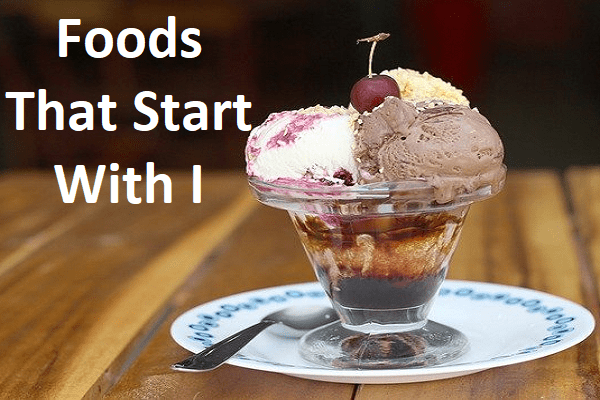
Foods Starting With I: Complete List
| Food | Type | Origin | What It Is |
|---|---|---|---|
| IBC Root Beer | Drink | United States | Bottled root beer brand, launched 1919 |
| Icaco | Fruit | Caribbean, W. Africa | Cocoplum; coastal shrub fruit made into jam |
| Ice | Ingredient | Worldwide | Chilling and texture in drinks and desserts |
| Icee | Drink | United States | Carbonated frozen slush drink |
| Ice Breakers | Confectionery | United States | Mints and sugar-free gum |
| Ice Cream | Dessert | Worldwide | Churned frozen dairy; air content is key |
| Ice Cream Cake | Dessert | Worldwide | Layered ice cream and sponge |
| Ice Cream Soda | Drink | United States | Ice cream floated in carbonated water |
| Iced Coffee | Drink | Worldwide | Chilled coffee; distinct from cold brew |
| Iced Tea | Drink | United States | Popularised at the 1904 World’s Fair |
| Iceberg Lettuce | Vegetable | Worldwide | Crisp, mild; named for rail shipping on ice |
| Ice Pop | Dessert | Worldwide | Frozen flavoured liquid on a stick |
| Ice Vegetable | Vegetable | South Africa | Ice plant; salty crystalline leaves |
| Icing | Topping | Worldwide | Sugar-based coating for cakes |
| Icy Cups | Dessert | Caribbean | Frozen fruit cup treat |
| Idaho Potatoes | Vegetable | Idaho, USA | Russet; high starch, low moisture |
| Idaho Spud | Confectionery | Idaho, USA | Cocoa marshmallow bar, made since 1918 |
| Idiyappam | Dish | South India, Sri Lanka | String hoppers steamed from rice flour |
| Idli | Dish | South India | Steamed cake of fermented rice and lentil |
| Injera | Bread | Ethiopia, Eritrea | Spongy teff flatbread; doubles as the plate |
| Irish Stew | Dish | Ireland | Mutton or lamb with potato and onion |
| Irish Coffee | Drink | Ireland | Coffee, whiskey, sugar and cream |
| Irish Soda Bread | Bread | Ireland | Leavened with bicarbonate, not yeast |
| Italian Sausage | Meat | Italy / US | Pork with fennel seed; sweet or hot |
| Israeli Couscous | Grain | Israel | Toasted pearl pasta, not true couscous |
| Instant Noodles | Dish | Japan | Flash-fried and dried; invented 1958 |
| Instant Coffee | Drink | Worldwide | Freeze- or spray-dried coffee solids |
| Imam Bayildi | Dish | Turkey | Aubergine stuffed with onion and tomato |
| Inari Sushi | Dish | Japan | Rice in sweet fried tofu pouches |
| Ikura | Seafood | Japan | Salmon roe, cured in brine or soy |
| Ibérico Ham | Meat | Spain | Acorn-fed black pig; aged for years |
| Indian Gooseberry | Fruit | India | Amla; exceptionally high in vitamin C |
| Ilama | Fruit | Central America | Custard apple relative, creamy flesh |
| Imbe | Fruit | East Africa | Small orange fruit, tart and resinous |
| Ivy Gourd | Vegetable | South Asia, Africa | Small cucumber-like fruit, cooked |
| Isomalt | Sweetener | Germany | Sugar alcohol used for showpiece work |
| Ice Wine | Drink | Germany, Canada | Pressed from grapes frozen on the vine |
| Italian Dressing | Condiment | United States | Vinaigrette with herbs and garlic |
Breads, Rice and Staples
Idli
A steamed savoury cake from South India made from a batter of rice and split black lentils, ground separately and left to ferment overnight. The fermentation is what makes it work — wild lactic acid bacteria and yeasts leaven the batter and pre-digest some of the starch, which is why idli is unusually easy to digest and is among the first solid foods given to children and to the unwell. It is steamed rather than fried, so it carries almost no fat.
Injera
The spongy, sour flatbread of Ethiopia and Eritrea, made from teff — a grain so small a handful can sow a field. The batter ferments for several days, producing lactic acid and carbon dioxide, and the bubbles rising through it on the griddle leave the characteristic honeycomb surface. Injera is plate, cutlery and food at once: stews are ladled onto it and torn pieces scoop.
Idiyappam
String hoppers — rice flour dough pressed through a fine mould into nests of thin noodles, then steamed. Eaten across South India and Sri Lanka, usually at breakfast with coconut milk and curry. The texture depends on getting the water temperature right when mixing the dough.
Irish Soda Bread
Leavened by bicarbonate of soda reacting with the acid in buttermilk rather than by yeast, so it goes from bowl to oven in minutes with no proving. That mattered in nineteenth-century Ireland, where soft wheat and scarce fuel made yeast baking impractical for most households. The cross cut in the top helps the dense loaf bake through.
Israeli Couscous
Not couscous at all but small toasted balls of wheat pasta, developed in Israel in the 1950s when rice was scarce. Toasting gives the nutty flavour and stops it going sticky. Also sold as ptitim or pearl couscous.
Instant Noodles
Invented by Momofuku Ando in Japan in 1958. The noodles are steamed then flash-fried, driving out moisture and leaving a porous structure that rehydrates in minutes. In a Japanese poll marking the millennium, instant noodles were voted the country’s most important twentieth-century invention.
Ice, Frozen Desserts and Drinks
Ice Cream
The critical variable is not fat but air — the “overrun” whipped in while churning. Cheap ice cream can be over half air by volume, which is why it feels light and melts fast; dense premium ice cream has far less and eats richer. Constant churning while freezing keeps the ice crystals too small to detect on the tongue.
Iced Tea
Popularised at the 1904 St Louis World’s Fair and now split into firm regional camps — sweet tea in the American South, sweetened while hot so the sugar dissolves, and unsweetened elsewhere. Cloudiness comes from tannins and caffeine binding as it cools, which brewing weaker or cooling gradually avoids.
Iced Coffee
Distinct from cold brew, though often confused. Iced coffee is brewed hot then chilled, keeping the acidity and brightness of hot coffee. Cold brew steeps in cold water for many hours, extracting fewer acids and giving something smoother, sweeter and considerably higher in caffeine.
Ice Wine
Made from grapes left on the vine until frozen solid, then pressed while still frozen. The water stays behind as ice and only a small quantity of concentrated sugary juice is extracted, which is why it is expensive. It needs a reliable hard frost, so Germany, Austria and Canada dominate production.
Ice Pop
Reportedly invented by accident in 1905 by an eleven-year-old who left a cup of soda powder and water outside overnight with the stirring stick in it. Whatever the truth of that story, the principle is unchanged: flavoured liquid frozen around a handle.
Meat, Fish and Dairy
Ibérico Ham
Dry-cured ham from black Iberian pigs. The top grade, jamón ibérico de bellota, comes from animals that spend their final months in oak pasture eating acorns — a diet that genuinely changes the fat composition, raising oleic acid so the fat melts at room temperature. The hams cure for three to four years.
Ikura
Salmon roe, separated from the membrane and cured briefly in brine or in soy and mirin. The eggs are large, translucent orange and burst distinctly. The name comes from the Russian word for fish roe, reflecting the trade routes that carried the preparation to Japan.
Inari Sushi
Sushi rice packed into pouches of aburaage — thin fried tofu simmered in dashi, soy and sugar until sweet and saturated. Named for Inari, the Shinto deity associated with rice and foxes, which are said to favour fried tofu. It travels well and is a standard lunchbox item.
Italian Sausage
The American supermarket version is a specific thing rather than a general Italian one: coarse pork seasoned prominently with fennel seed, sold sweet or hot depending on whether chilli flakes are added. Fennel is the defining flavour, and its absence is the giveaway that a sausage is something else.
Fruits and Vegetables
Iceberg Lettuce
Often dismissed as nutritionally empty, which undersells it — it is mostly water, but that is the point in a sandwich or a wedge salad, where crunch and coolness are the job. The name comes from shipping it packed in crushed ice by rail from California, so arriving wagons looked like icebergs.
Indian Gooseberry
Amla, one of the richest natural sources of vitamin C and startlingly sour and astringent raw. It is central to Ayurvedic practice and is usually taken as powder, juice, pickle or preserve rather than eaten fresh. Note that standard colorimetric tests overstate its ascorbic acid, and much of its antioxidant activity comes from tannins rather than vitamin C alone.
Icaco
The cocoplum, a coastal shrub of the Caribbean, Florida and West Africa producing small white-to-purple fruit with cottony, faintly sweet flesh around a large seed. It tolerates salt spray and is planted to stabilise dunes. The flesh is mild enough that it is usually stewed with sugar into jam.
Ilama
A Central American relative of the custard apple and cherimoya, with pink or green skin and creamy, mildly sweet flesh. Like its relatives it bruises easily and has a short shelf life, so it rarely travels far from where it grows.
Ivy Gourd
A vigorous climbing vine producing small fruit like miniature cucumbers, eaten green and cooked in South Asian and African dishes. The vine grows aggressively and is classed as invasive in Hawaii and parts of Australia, where it smothers native vegetation.
Idaho Potatoes
Russet potatoes grown in Idaho, where volcanic soil and cool nights suit them. The quality that matters is high starch and low moisture, which is why they bake fluffy and fry crisp while waxy potatoes turn gluey. “Idaho Potato” is a protected certification mark, not simply a description of origin.
Dishes and Confectionery
Irish Stew
Traditionally mutton or lamb with potato, onion and water — and traditionally nothing else. Carrots and barley are common modern additions and a matter of some argument. It works because long slow cooking breaks down tough cheap cuts while the potato partly dissolves and thickens the liquid.
Imam Bayildi
Turkish aubergine stuffed with onion, garlic and tomato and cooked slowly in a generous quantity of olive oil, served at room temperature. The name translates as “the imam fainted” — variously explained as delight at the taste or shock at how much oil it took.
Irish Coffee
Hot coffee, Irish whiskey and sugar with lightly whipped cream floated on top, drunk through the cream rather than stirred. It was created at the Foynes flying-boat terminal in County Limerick in the 1940s for cold, delayed transatlantic passengers.
Idaho Spud
A regional American candy bar made in Boise since 1918 — a cocoa-flavoured marshmallow centre coated in chocolate and shredded coconut, shaped to resemble a potato. It has almost no distribution outside the Pacific Northwest.
Isomalt
A sugar alcohol derived from beet sugar, used almost exclusively by pastry chefs for sugar showpieces. It resists crystallisation and absorbs far less moisture from the air than sucrose, so pulled and blown sugar work stays clear and holds its shape far longer.
Frequently Asked Questions
What foods start with the letter I?
Thirty-eight are covered here, including ice cream, iced tea, iced coffee, iceberg lettuce, icing, ice pop, ice wine, idli, injera, idiyappam, Irish stew, Irish coffee, Irish soda bread, Italian sausage, Israeli couscous, instant noodles, instant coffee, imam bayildi, inari sushi, ikura, Ibérico ham, Indian gooseberry, ilama, imbe, ivy gourd, isomalt, Idaho Potatoes and the Idaho Spud.
What is the difference between iced coffee and cold brew?
Iced coffee is brewed hot then chilled, so it keeps the acidity and brightness of hot coffee. Cold brew steeps in cold water for 12 to 24 hours, extracting fewer acids and giving a smoother, sweeter result with notably more caffeine.
Why is injera sour?
Because the teff batter ferments for several days before cooking. Wild yeasts and lactic acid bacteria produce both the acidity and the carbon dioxide, and the bubbles rising through the batter on the griddle create the honeycomb surface.
Is iceberg lettuce actually nutritious?
It is mostly water and lower in nutrients than darker leaves, but not worthless — it gives hydration, fibre and some vitamin K, and its structural job in a sandwich is crunch, which no other leaf does as well.
Is Israeli couscous really couscous?
No. True couscous is steamed semolina granules. Israeli couscous is small balls of toasted wheat pasta developed in the 1950s as a rice substitute during rationing. It behaves like pasta and is boiled rather than steamed.
What makes Ibérico ham so expensive?
Time and diet. The top grade comes from black Iberian pigs finished on acorns in oak pasture, which changes the fat so it melts at room temperature, and the hams then cure for three to four years before sale.
Sources
Instant noodle invention and the 2000 Japanese poll: food history records. Idli fermentation and digestibility: food science literature. Ibérico grading and acorn-finished fat composition: Spanish denomination standards. Idaho Potato certification mark: US trademark records.
This article is for general information.

Justwebworld has published guides since 2012. How we write and update articles Report an error
