

Note (September 2026): This article was updated with current app-store and industry figures, and the PartyCasino section was rewritten to state its operator, licences and legal-age rules accurately instead of promotional claims.
Businesses that use mobile apps span retail, banking, restaurants, beauty, travel, healthcare and gaming. Apps let them sell, take payments, run loyalty programs and offer self-service. In a 2025 ABA survey, 54% of US bank customers banked mainly by app, and McDonald’s reported nearly 210 million active loyalty-app users at the end of 2025.
Key Takeaways
- Apps are now a main sales channel: smartphones handled 56.4% of US online holiday spending in 2025, according to Adobe Digital Insights.
- Loyalty is the killer feature: McDonald’s and Starbucks use their apps to run rewards programs; McDonald’s alone reported nearly $37 billion in 2025 sales to loyalty members.
- Banking went mobile first: the app has been US bank customers’ most-used channel for six years running in the ABA’s annual survey.
- Competition is intense: each major app store lists roughly 2.6 million apps, so an app must solve a real, repeated customer task.
- Gambling apps are adults-only: brands such as PartyCasino are legal only in licensed markets, and only for players who meet the local minimum age.
In this new age, things have shifted from the traditional basic ways and are taking new forms. Expectedly, the business world isn’t left out.
Previously, business owners witnessed crude ways of rendering their services as well as effective ways to reach out to a wider range of customers.
Now, with the advent of mobile apps, the business world has experienced a boom in the aspect of successfully reaching and serving thousands of customers effectively.
Mobile apps, the blooming world of opportunities for businesses of different shapes and sizes, from startups to enterprises, business mobile apps development are in great demand.
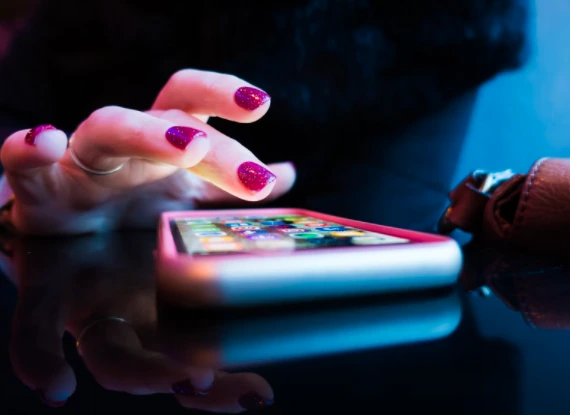
Thousands of software development companies and mobile startups have hit their target within a short period, creating appealing apps that you wouldn’t be able to resist the temptation of tapping the ‘install now’ button.
However, it isn’t the end to develop and launch your branded app to reinforce your sales and customer relations.
How does a business app stand out when, as of 26 September 2026, the app-tracking firm 42matters counted about 2.59 million apps on Google Play and about 2.67 million on Apple’s App Store?
As earlier explained, It’s not enough to just create and launch branded business apps. Even though the opportunities seem vast, a lot of entrepreneurs have fallen out of their mobile luck.
Below are some observations of what prosperous mobile apps should entail.
Firstly, Make it exciting and sincere. Look at mobility as a new landscape of communication with customers. Similar to user experience, it is about the user, not about your ambitions or personal goals.
It should help users solve a problem or simply entertain them, as game apps do. (Real-money casino apps are a separate case: they are legal only in licensed markets and only for adults.) Look for an idea to implement in a mobile app that would solve business problems your clients face.
The app should be a real extension of the brand. The idea behind your app with a clear correlation between it and your company will, first of all, satisfy your marketing and PR goals.
So, these and more are what a standard mobile app should offer. This guide looks at well-documented examples of brands that used mobile apps to reach customers, then explains how businesses in retail, banking, food service, beauty, gaming and other sectors use apps today, with dated figures.
Top Businesses That Use Mobile Apps
Party Casino
PartyCasino is an online casino brand owned by Entain plc, the London-listed betting and gaming group. Its mobile app and mobile site offer real-money slots, table games and live-dealer games to adults in the markets where the brand is licensed.
PartyCasino is included here as an example of the online gambling sector, where the phone has become the main way many customers play. Its inclusion is not an endorsement: real-money gambling carries a real risk of losing money.
The PartyCasino app offers casino games on phones, and the same account can also be used on a computer, in jurisdictions where the brand holds a licence.
PartyCasino’s mobile slot games work like all casino slots: results are random and every game carries a built-in house edge, so over time players should expect to lose more than they win.
Apart from play on the move, the mobile app largely mirrors the desktop site. In Great Britain, the Gambling Commission requires licensed operators to verify a customer’s age and identity before they can gamble and to offer safer-gambling tools such as deposit limits, time-outs and self-exclusion.
PartyCasino traces its history to 1997, when it launched as Starluck Casino. It was relaunched under the PartyCasino name in 2006 and became part of GVC Holdings, now called Entain, when GVC bought bwin.party digital entertainment in 2016.
In Great Britain, partycasino.com is run by Entain’s Gibraltar-based subsidiary LC International Limited, which holds Gambling Commission licences under account number 54743. In August 2022 Entain agreed to pay £17 million after the Commission found social-responsibility and anti-money-laundering failures, £14 million of it for failures at LC International.
According to PartyCasino’s own site, the brand is also licensed in Gibraltar and by the Malta Gaming Authority. Separate locally licensed versions operate in New Jersey, under the licence of Atlantic City’s Borgata casino, and in Ontario, where it appears on iGaming Ontario’s list of regulated sites. It is not legal everywhere, and players must meet the local minimum age: 18 in Great Britain, 19 in Ontario and 21 in New Jersey. Anyone who gambles should set a budget in advance and use deposit limits; free, confidential help is available from the National Gambling Helpline (0808 8020 133) in Great Britain and the National Problem Gambling Helpline (1-800-MY-RESET) in the United States.
Nivea
Nivea Sun Kids created a mobile app and technology-laden magazine insert that allows parents to keep track of their kids in busy spaces such as the beach and parks.
The 2014 “Protection Ad” campaign, created by the agency FCB Brasil for Nivea Sun Kids in Brazil, included a tear-out bracelet inserted in magazines that worked with a mobile app to alert parents when a child wandered too far.
The app was an extension of an ad. Intuitive and didactic, it monitored the ad’s displacement when it was on the child’s arm.
All that was needed was to download the app on Apple Store or Google Play, pair the bracelet, identify the child and choose the distance where they could go.
If the distance was exceeded, an alert was sent by the app. With radar, it was possible to see if parents were getting nearer or further from children.
The idea extended Nivea’s core “protection” message into a genuinely useful service. The campaign won the Mobile Grand Prix at the Cannes Lions festival in June 2014, and according to MediaPost’s coverage of its entry, Nivea Sun Kids became the sales leader in its segment for the first time and sales in Rio de Janeiro rose 62%. Those results were reported by the campaign’s creators and were not independently audited.
L’Oreal
Beauty in apps, L’oreal has changed the game.
The L’Oreal augmented reality Makeup Genius app uses advanced facial mapping technology to make the smartphone camera into a virtual mirror that let’s try on products in real-time.
The app scans the face and proceeds to virtually apply makeup and try on specific products and look specifically chosen by L’Oreal experts, all through the device’s viewfinder. The social networks sharing option is also on board.
Makeup Genius launched in Paris in 2014 and had about 14 million global downloads by September 2015, 4.7 million of them in China, according to the trade publication Cosmetics Design Europe. In March 2018 L’Oréal bought ModiFace, the Toronto-based augmented-reality company it had worked with on Makeup Genius, and it now uses ModiFace technology for virtual try-on across its brands and on retail partners such as Amazon.
Makeup Genius was an early, widely covered example of augmented-reality try-on, a feature that is now standard in beauty shopping apps.
McDonald’s
McDonald’s leveraged not only a mobile app but also Instagram as one of the most popular photo and video sharing apps in the world, to interact with customers in a new way and advertise their products that were a bit neglected.
Back in March of 2013, the company ran a promotion encouraging customers to take pictures of their favourite meals using the mobile application.
They then created a mobile ad asking users to “Share Your Biggest Instagram Moments.” If users expanded the ad, they could share pictures of their food and even view a gallery of other photos.
McDonald’s isn’t a stranger to mobile marketing, and they’ve done dozens of mobile marketing campaigns with different business goals.
The Instagram ad was McDonald’s sixth campaign on iAd, Apple’s in-app advertising network, and it used the iPhone’s capabilities to offer a more interactive experience. (Apple closed the iAd App Network on 30 June 2016.)
The campaign aimed to broaden McDonald’s Instagram presence and bring fresh attention to older products. More than a decade later, McDonald’s own app sits at the center of its business: the company reported nearly 210 million 90-day active loyalty users across 70 markets at the end of 2025, and nearly $37 billion in systemwide sales to loyalty members that year.
It also bolstered a ton of user-generated content, which tends to be more influential on customers.
How Do Businesses Use Mobile Apps Today?
Businesses use mobile apps to do five main jobs: sell products, take payments, run loyalty programs, deliver a service (such as banking or booking) and keep in touch with customers through notifications. The brand examples above show where this started; the figures below show how large the app economy has become.
According to Sensor Tower’s State of Mobile 2026 report, published in January 2026, consumers spent $167 billion on in-app purchases in 2025, about 10% more than in 2024. For the first time, spending in non-game apps (about $85 billion) overtook spending in games (about $82 billion). Downloads were almost flat, at nearly 150 billion, which means businesses now compete more for engagement and loyalty than for installs.
| Measure | Figure | Source and date |
|---|---|---|
| Apps on Google Play | About 2.59 million | 42matters, as of 26 September 2026 |
| Apps on Apple’s App Store | About 2.67 million | 42matters, as of 26 September 2026 |
| Global in-app purchase spending | $167 billion in 2025 | Sensor Tower, January 2026 |
| App downloads (iOS and Google Play) | Nearly 150 billion in 2025 | Sensor Tower, January 2026 |
| Time spent in apps | 5.3 trillion hours in 2025, about 3.6 hours a day per mobile user | Sensor Tower, January 2026 |
| Smartphone share of US online holiday spending | 56.4% (Nov. 1 to Dec. 31, 2025) | Adobe Digital Insights, January 2026 |
| US bank customers who bank mainly by app | 54% | ABA and Morning Consult survey, November 2025 |
App-count figures vary between trackers because each one counts and removes apps differently, so treat them as approximate.
Which Industries Use Mobile Apps the Most?
Almost every consumer-facing industry now uses mobile apps, but the reasons differ. The sections below explain what apps do in each sector.
Retail and ecommerce
Retail apps let shoppers browse, save items, pay with stored cards or digital wallets and track deliveries. Smartphones are now the main way people shop online in the US: Adobe Digital Insights reported that 56.4% of US online holiday spending between November 1 and December 31, 2025, happened on a smartphone, up from 54.5% in 2024. Adobe’s figure covers mobile browsers as well as apps, so it measures mobile shopping in general rather than apps alone.
Banking and financial services
Banking is one of the clearest cases of an industry that moved to apps. In the 2025 survey that Morning Consult ran for the American Bankers Association, 54% of US bank customers said the mobile app was the way they managed their accounts most often, ahead of online banking on a computer (22%), branch visits (9%), ATMs (6%) and phone calls (4%). In 2017, the first year of the survey, the mobile app’s share was 26%. For a closer look at the technology behind these apps, see this overview of fintech app development innovations.
Restaurants and food service
Quick-service restaurants use apps for mobile ordering, payment and rewards. McDonald’s reported nearly 210 million 90-day active loyalty users across 70 markets at the end of 2025, and nearly $37 billion in systemwide sales to loyalty members that year, up 20%. Starbucks reported 34.6 million 90-day active Starbucks Rewards members in the US in its first quarter of fiscal 2025. In both cases the app is the loyalty card, the menu and the wallet in one place.
Beauty and personal care
Beauty brands use apps and in-app camera tools for virtual try-on, shade matching and skin analysis. L’Oréal’s Makeup Genius, described above, was an early example, and L’Oréal’s 2018 purchase of ModiFace brought the underlying augmented-reality technology in-house.
Gaming and entertainment
Games remain one of the biggest app categories by spending: Sensor Tower put 2025 game in-app purchase revenue at about $82 billion. Real-money gambling apps, such as PartyCasino, are a regulated subset of this market. They are legal only where the operator holds a local licence, and only for players over the local minimum age, which is 18 in Great Britain, 19 in Ontario and 21 in New Jersey.
Travel, transport and healthcare
Airlines, hotels and ride-hailing companies use apps for booking, mobile boarding passes, digital room keys and live trip updates. Health providers and insurers use apps for appointment booking, messaging, prescription refills and access to records. In these sectors the app mainly replaces phone calls and paperwork, so reliability and data privacy matter more than flashy features.
What Makes a Business App Successful?
A successful business app does one frequent customer task faster than any other channel. The brands above share a few habits:
- Solve a repeated task. Ordering coffee, checking a balance or reordering a product gives people a reason to open the app every week, not once.
- Build loyalty into the app. McDonald’s and Starbucks tie rewards to the app, which gives customers a reason to install it and gives the business first-party data.
- Make payment effortless. Stored cards and digital wallets remove the steps where customers usually drop out.
- Be found in the stores. With millions of competing apps, the store listing matters; this guide to app store optimization explains how titles, keywords, screenshots and ratings affect visibility.
- Test before every release. Crashes and slow screens lead straight to uninstalls; see this guide to mobile app testing.
- Speak the customer’s language. Apps sold in several countries need translated text, local currencies and local payment methods; read more about mobile app localization.
- Use notifications sparingly. Relevant, permission-based alerts bring customers back; too many get the app muted or deleted. This explainer covers push notification service features.
Native App, Mobile Website or PWA: Which Should a Business Choose?
A native app is built for iOS or Android and installed from an app store. A mobile website runs in the phone’s browser. A progressive web app (PWA) is a website that can be added to the home screen and can work partly offline. The right choice depends on how often customers will use it.
| Option | Best for | Strengths | Limits |
|---|---|---|---|
| Native app | Frequent use: banking, ordering, loyalty | Fastest performance, full device features, push notifications, store presence | Highest build and maintenance cost; users must install it; store review rules apply |
| Mobile website | Occasional visits, search traffic, first-time customers | No install, found through search, one codebase | Fewer device features; weaker for repeat engagement |
| Progressive web app | Businesses that want app-like features without two native apps | Home-screen icon, some offline use, lower cost than native | Device-feature and notification support varies by platform and browser |
Many businesses start with a fast mobile website and add a native app once they have enough repeat customers to justify it.
Common Mistakes Businesses Make With Mobile Apps
- Building an app nobody needs to open twice. If the app only repeats the website, most installs will not turn into regular use.
- Asking for too much, too early. Forcing sign-up, location access and notifications on the first screen drives people away.
- Ignoring privacy rules. Both Apple and Google require apps to disclose what data they collect, and laws such as the EU’s GDPR apply to customer data.
- Launching and forgetting. Apps need regular updates for new operating-system versions, security fixes and store policy changes.
- Measuring downloads instead of use. Active users, repeat purchases and retention show whether an app is working; install counts do not.
Does Every Business Need a Mobile App?
No. A business needs its own app when customers will use it often enough to keep it on their phone, for example to order, pay, bank, book or collect rewards. For occasional purchases, a fast mobile website usually serves customers better and costs far less. Businesses that decide an app is worth it can use this guide to custom app development for businesses to plan the budget, features and team.
Frequently Asked Questions
What types of businesses use mobile apps?
Retailers, banks, restaurants, beauty brands, airlines, hotels, ride-hailing services, healthcare providers, media companies and game publishers all use mobile apps. The common thread is frequent customer tasks, such as ordering, paying, banking, booking or collecting rewards, that an app handles faster than a website or phone call.
How many apps are there on the App Store and Google Play?
As of 26 September 2026, the app-tracking firm 42matters counted about 2.67 million apps on Apple’s App Store and about 2.59 million on Google Play. Counts differ between trackers because stores regularly remove low-quality or abandoned apps.
Do mobile apps increase sales for businesses?
Mobile apps can concentrate sales among a brand’s most loyal customers, though the app is rarely the only cause. McDonald’s reported nearly $37 billion in 2025 systemwide sales to members of its app-based loyalty program, and Starbucks had 34.6 million active US Rewards members in early fiscal 2025.
Who owns PartyCasino and where is it licensed?
PartyCasino is owned by Entain plc. In Great Britain it is run by Entain’s subsidiary LC International Limited under Gambling Commission licences (account 54743); the brand is also licensed in Gibraltar and Malta, and locally licensed versions operate in New Jersey and Ontario. Players must meet the local minimum age, such as 18 in Great Britain or 21 in New Jersey.
Should a small business build an app or a mobile website first?
Most small businesses should start with a fast, mobile-friendly website, because it is cheaper and reaches customers through search. A native app makes sense once enough customers return often, for example to reorder, book or collect loyalty rewards.

Justwebworld has published guides since 2012. How we write and update articles Report an error
