

Note (September 2026): Fly.io no longer gives new customers a free allowance (it ended on October 7, 2024), and Vercel’s free Hobby plan is for personal, non-commercial use only; both points are corrected below and all prices were rechecked.
The best Heroku alternatives are Render (the closest like-for-like replacement, with a free tier and paid instances from $7 a month), Railway (usage-based, very fast Git deploys), and Fly.io (global, Docker-based apps). For frontends, Vercel and Netlify fit better. Prices below were checked in September 2026.
When Heroku ended its free tier in November 2022, it sent thousands of developers hunting for somewhere new to deploy their apps. In February 2026, Salesforce also announced that Heroku was moving into a “sustaining engineering” phase: existing customers can keep using it and will still get security and stability fixes, but no new features are planned and new Enterprise contracts are no longer offered. The good news: the platform-as-a-service (PaaS) space is healthier than ever, and several newer platforms now do what Heroku did — often faster, cheaper, or closer to your users. Here are the 12 best Heroku alternatives, organized by what you actually need, with free tiers and prices checked as of September 2026.
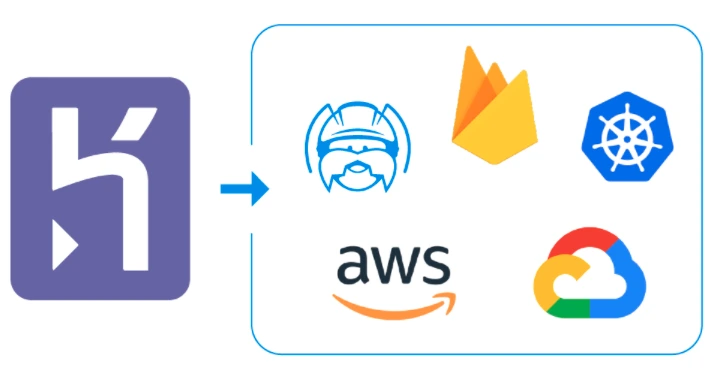
Key Takeaways
- Heroku removed its free tier in November 2022, which is what pushed most developers to look elsewhere.
- Render is the closest like-for-like Heroku replacement; Railway and Fly.io are the other two most popular modern choices.
- For frontend and JavaScript apps, Vercel and Netlify are usually a better fit than a general PaaS.
- If you want more control, AWS and Google Cloud options trade simplicity for power.
- Pricing and free tiers change often on these platforms — always confirm current limits before you commit.
Heroku Alternatives Compared
| Platform | Best For | Free Tier? |
|---|---|---|
| Render | Closest Heroku replacement | Yes (sleeps when idle) |
| Railway | Fast Git-based deploys | $5 trial credit, then $1/month Free plan or usage-based |
| Fly.io | Global, low-latency apps | Short free trial, then usage-based |
| Vercel | Next.js / React frontends | Yes (Hobby) |
| Netlify | JAMstack / static sites | Yes |
| DigitalOcean App Platform | Predictable pricing | Free static sites |
The Best Modern Heroku Replacements
Render
Render is the platform most people mean when they say “Heroku, but current.” It offers managed web services, background workers, cron jobs, managed PostgreSQL and Redis, and Git-based deploys — the same mental model Heroku popularised. It has a free tier for web services (a free web service spins down after 15 minutes without traffic, and each workspace gets 750 free instance hours a month) and predictable flat-rate paid instances starting at $7/month for the Starter instance, as of September 2026. Note that free Render Postgres databases expire 30 days after creation. If you want the smallest possible jump from Heroku, start here.
Railway
Railway is built around speed and developer experience: connect a repo and it deploys, with usage-based pricing, automatic scaling, and easy multi-service projects. Railway no longer offers the open-ended free tier it launched with. As of September 2026, new users get a one-time $5 trial credit for 30 days; after that, the Free plan includes $1 of usage a month, the Hobby plan costs $5 a month (including $5 of usage), and the Pro plan costs $20 a month per workspace (including $20 of usage). It is a favourite for hobby projects and startups that want deployment to feel effortless.
Fly.io
Fly.io takes a different angle: it runs your app as lightweight virtual machines on its own hardware in regions around the world, so your app can sit physically close to users. It is Docker-friendly and gives you more infrastructure control than Render or Railway, with usage-based pricing. Fly.io ended free allowances for new customers on October 7, 2024 (organizations on the older plans keep theirs); new sign-ups get a free trial of 2 hours of machine runtime or 7 days, whichever comes first. Choose Fly.io when global latency matters or you want container-level control.
DigitalOcean App Platform
If you like the idea of a big, stable cloud provider without the complexity of raw servers, DigitalOcean’s App Platform is a solid managed PaaS. It deploys straight from Git, hosts up to three static-site apps for free, and has clear, predictable pricing for dynamic apps (containers from $5 a month as of September 2026) — a good middle ground between simple PaaS and full cloud infrastructure.
Best for Frontend and JavaScript Apps
Vercel
Vercel is the home of Next.js and is purpose-built for modern frontend frameworks. It offers instant Git deploys, a global edge network, serverless and edge functions, and a free Hobby tier. Vercel limits the Hobby plan to personal, non-commercial use, so commercial projects need the Pro plan at $20 per user per month (as of September 2026). For a React, Next.js, or static frontend, Vercel is usually a better fit than a general-purpose PaaS.
Netlify
Netlify pioneered the JAMstack workflow and remains excellent for static sites and frontend apps, with build automation, serverless functions, form handling, and a free plan that includes 300 credits a month (paid Personal and Pro plans cost $9 and $20 a month as of September 2026). It overlaps with Vercel; the choice often comes down to which framework and workflow you prefer.
When You Want More Control (AWS & Google Cloud)
AWS Elastic Beanstalk
Elastic Beanstalk is Amazon’s PaaS layer: you push code and it provisions the underlying AWS resources for you. You pay only for those resources rather than a platform premium. It is more involved than Render or Railway, but it keeps you inside the AWS ecosystem, which is valuable if you already use other Amazon services.
Amazon EC2
EC2 is raw infrastructure-as-a-service — virtual servers you configure yourself. It is not a like-for-like Heroku replacement, but it is the right answer when you need total control over the environment and are comfortable managing the server, scaling, and deployments yourself.
Google Cloud Run
Cloud Run runs stateless containers and scales them to zero when idle, so you pay only while requests are being served. It has a monthly free allowance (2 million requests, 180,000 vCPU-seconds and 360,000 GB-seconds of memory under request-based billing, according to Google Cloud as of September 2026) and is a great fit for containerised apps and APIs that see uneven traffic.
Backend-as-a-Service Options
Firebase
Firebase is Google’s backend-as-a-service: hosting, a realtime and document database, authentication, storage, and serverless functions. The no-cost Spark plan covers many of these products, but Cloud Functions for Firebase requires the pay-as-you-go Blaze plan, which still includes a monthly free allowance (2 million invocations a month). It is less a Heroku replacement and more a way to skip building a backend at all — ideal for mobile apps and rapid prototypes.
Back4app
Back4app is an open-source-friendly backend platform built on Parse. It gives you a database, APIs, authentication, and hosting with a free tier (25,000 requests a month, 250 MB of database storage and 1 GB of file storage as of September 2026; the paid MVP plan starts at $15 a month per app when billed annually), and is a strong pick if you want BaaS convenience without being locked into a single cloud giant.
Container Orchestration
Kubernetes
Kubernetes is not a hosting service on its own — it is the orchestration layer that runs containers at scale, usually on top of a cloud provider. It is overkill for a small app, but for large teams running many services it is the industry standard. Most of the platforms above exist precisely so you do not have to manage Kubernetes yourself.
How to Choose the Right Heroku Alternative
Match the platform to the project, not the hype. For a straight Heroku swap, Render is the safest bet. For the smoothest developer experience on a small project, try Railway. For a global audience or Docker control, pick Fly.io. For a frontend, go straight to Vercel or Netlify. And if your app is part of a larger cloud footprint, the AWS or Google Cloud options keep everything in one place. If you are still weighing the broader trade-offs, our guide on why cloud hosting your apps is beneficial is a good next read, as is our overview of the leading cloud computing companies.
What Happened to Heroku?
Heroku is a platform-as-a-service owned by Salesforce. Two changes explain why developers look for Heroku alternatives. First, Heroku announced in August 2022 that it would end its free plans, citing fraud and abuse, and the free dynos and databases were removed in November 2022.
Second, on February 6, 2026, Heroku announced a move to a sustaining engineering model focused on security, reliability, support and stability rather than new features. Heroku said the platform remains fully supported and existing customers are not affected, but Enterprise Account contracts are no longer offered to new customers. A March 2026 Heroku update confirmed the transition and still shipped maintenance improvements, such as a larger 1 GB compressed slug limit.
How much does Heroku cost now?
As of September 2026, Heroku’s published prices start at $5 a month for Eco dynos (personal accounts only, sleeping after 30 minutes of inactivity), $7 a month for Basic dynos and $25 a month for Standard-1X dynos. The smallest Heroku Postgres plan, Essential-0, costs $5 a month. There is no free plan.
Should you leave Heroku?
Existing Heroku apps do not need to move urgently: Heroku still provides security and stability fixes. The case for an alternative is strongest for new projects, teams that need features Heroku is no longer adding, and anyone who wants a free or cheaper tier for small apps.
How Much Do Heroku Alternatives Cost?
The table below compares the free option and the entry-level paid price of each Heroku alternative, taken from each provider’s pricing page as of September 2026. Prices exclude taxes, bandwidth overages and add-ons such as managed databases.
| Platform | Free option | Entry paid price |
|---|---|---|
| Heroku (for reference) | None | Eco dynos $5/month; Basic $7/month |
| Render | Free web services (spin down after 15 minutes idle; 750 hours/month per workspace) | Starter instance $7/month |
| Railway | $5 one-time trial for 30 days, then Free plan with $1/month of usage | Hobby $5/month including $5 of usage |
| Fly.io | Trial: 2 hours of machine runtime or 7 days | Pay-as-you-go, billed per resource |
| DigitalOcean App Platform | Up to 3 static-site apps | Containers from $5/month |
| Vercel | Hobby (personal, non-commercial use) | Pro $20/user/month |
| Netlify | Free plan with 300 credits/month | Personal $9/month; Pro $20/month |
| AWS Elastic Beanstalk | No platform fee | Pay only for the AWS resources you create |
| Google Cloud Run | 2 million requests/month free | Usage-based |
| Firebase | Spark plan (no cost) | Blaze pay-as-you-go |
| Back4app | 25,000 requests/month | MVP plan from $15/month per app (annual billing) |
New Google Cloud customers also receive $300 in welcome credit to spend over 90 days, which covers Cloud Run and other Google Cloud products during a trial.
How Do You Migrate From Heroku to Another Platform?
Migrating from Heroku is mostly a matter of moving configuration, data and DNS in the right order. A typical Heroku migration follows these steps:
- Inventory the app. List every dyno type (web, worker, scheduler jobs), add-on and custom domain the app uses.
- Export configuration. Copy the app’s config vars (the heroku config command prints them) into the new platform’s environment variables or secrets store.
- Check the start command. Confirm whether the new platform reads a Procfile, needs a Dockerfile, or asks for build and start commands in its dashboard.
- Move the database. Take a backup of Heroku Postgres (for example with heroku pg:backups:capture and heroku pg:backups:download) and restore it into the new provider’s managed Postgres during a planned maintenance window.
- Test on a staging URL. Deploy to the platform’s default domain first and run the app end to end before touching DNS.
- Switch DNS. Lower the DNS record’s TTL a day ahead, point the domain to the new platform, and keep the Heroku app running until traffic has fully moved.
Teams moving into a larger cloud rather than a PaaS can find more detail in our guides to getting started with Amazon Web Services and performing a Google Cloud migration.
Common Mistakes When Choosing a Heroku Alternative
- Running production on a free tier. Free web services that spin down when idle (such as Render’s) add a cold-start delay to the first request, which users notice.
- Forgetting database expiry. Free Render Postgres databases expire 30 days after creation, so a free database is for testing, not for data you need to keep.
- Using Vercel Hobby for a business. Vercel’s Hobby plan is for personal, non-commercial use; a company site belongs on a paid plan.
- Underestimating usage-based bills. Railway, Fly.io and Cloud Run charge for what runs. Set spending limits or alerts before launch.
- Adopting Kubernetes too early. Kubernetes adds operational work that a small team rarely needs; our explainer on Kubernetes multi-tenancy approaches shows how much design goes into running it well.
Which Heroku Alternative Is Best for Your Project?
| If you need… | Choose |
|---|---|
| The closest Heroku-style workflow | Render |
| The fastest deploys for side projects | Railway |
| Apps close to users worldwide | Fly.io |
| A Next.js or React frontend | Vercel |
| A static or JAMstack site | Netlify |
| Predictable pricing from a large provider | DigitalOcean App Platform |
| Staying inside AWS | AWS Elastic Beanstalk or Amazon EC2 |
| Containers that scale to zero | Google Cloud Run |
| No backend code at all | Firebase or Back4app |
Whichever platform you pick, a solid release process matters as much as the host; see our roundup of software deployment tools. When you move secrets or certificates between platforms, a Base64 encoder helps with values that a platform expects in encoded form.
Frequently Asked Questions
Is Heroku still free?
No. Heroku discontinued its free plans in November 2022. It is still a capable platform, but you now need a paid plan to use it. As of September 2026, the cheapest option is the Eco dyno plan at $5 a month (personal accounts only; Eco dynos sleep after 30 minutes of inactivity), followed by Basic dynos at $7 a month.
What is the closest alternative to Heroku?
Render is widely considered the closest like-for-like replacement, offering the same Git-based, managed-service workflow that made Heroku popular.
What is the best free Heroku alternative?
Render (free web services that sleep when idle), Vercel and Netlify (for frontends), and Google Cloud Run (generous free allowance) are the strongest options if a free tier is essential. Confirm current limits before relying on them.
Is Railway or Render better?
Render offers predictable flat-rate pricing and a Heroku-like experience; Railway offers usage-based pricing and a very smooth deploy flow. Render suits steady production apps, Railway suits fast-moving small projects.
Are these Heroku alternatives good for production?
Yes. Render, Railway, Fly.io, Vercel, and the AWS and Google Cloud options are all used in production by real companies. The right choice depends on your traffic, budget, and how much infrastructure control you want.
Platform pricing and free-tier limits change frequently; always check each provider’s current pricing page. Last updated: September 2026.
Is Heroku shutting down?
No. Heroku is not shutting down. On February 6, 2026, Heroku moved to a sustaining engineering model: the platform remains fully supported with security and stability work, but new features are not the focus and Enterprise Account contracts are no longer offered to new customers.
Does Fly.io still have a free tier?
Not for new customers. Fly.io ended its free allowances for new sign-ups on October 7, 2024. New accounts get a free trial of 2 hours of machine runtime or 7 days, whichever comes first; organizations on the older plans keep their allowances.
Can I use Vercel’s free plan for a business website?
No. Vercel’s Hobby plan is for personal, non-commercial use. A business or client site needs the Pro plan, which cost $20 per user per month as of September 2026.
Is Railway free?
Partly. As of September 2026, Railway gives new users a one-time $5 trial credit for 30 days and then offers a Free plan with $1 of usage a month, which suits only very small apps. Most projects move to the $5-a-month Hobby plan.
What is the cheapest Heroku alternative for a small backend app?
For a small always-on backend, the lowest published entry prices as of September 2026 are DigitalOcean App Platform containers from $5 a month, Railway Hobby at $5 a month including $5 of usage, and Render’s Starter instance at $7 a month. Google Cloud Run can cost nothing for low-traffic apps that stay within its monthly free allowance.

Justwebworld has published guides since 2012. How we write and update articles Report an error
