

Note (October 2026): Earlier versions of this guide said a Chromecast could be set up from a computer through Google Chrome or a Chromecast website; Google states that Chromecast setup on a computer is not supported, so setup is done in the Google Home app on a phone or tablet. Google also ended production of the Chromecast line in August 2024, and the Google TV Streamer replaced it.
To set up Google Chromecast, plug it into your TV’s HDMI port and its power adapter, switch the TV to that HDMI input, then open the Google Home app on an Android phone or iPhone, tap Add Device, scan the QR code (or enter the setup code), join your Wi-Fi network and follow the in-app steps. Setup on a computer is not supported, but a computer can cast afterwards through Google Chrome.
Key Takeaways
- Chromecast setup is done in the Google Home app on a phone or tablet; Google states that setup on a computer is not supported.
- As of October 2026, Google lists Android 9.0 or later, or iOS 17.0 or later on iPhone and iPad, for setup.
- Chromecast with Google TV models can also finish setup on the TV with the Voice Remote.
- Google ended Chromecast production in August 2024; the Google TV Streamer (US$99 at launch) replaced it.
Television is one of the most preferred medium of entertainment for a majority of citizens. Thanks to satellite television, you are spoiled for choices. 24×7 availability of not just entertainment channels but also news, sports, and meditation provides something for everyone.
Despite its relative ease of functioning, it is slowly being replaced by the internet and the plethora of options available on it. For some, it may be the same old boring stuff available on television, that might be a turn-off; for others the sheer volume of unfiltered content. Whatever the reason, you cannot deny the fact that being spoilt for choice is actually fun.
With the popularity of smart TV, you can watch a lot of content from various online media. However, if there was a way if you could align the content present on your mobile, computer or other sources on your TV, it would be great!
What is Chromecast?
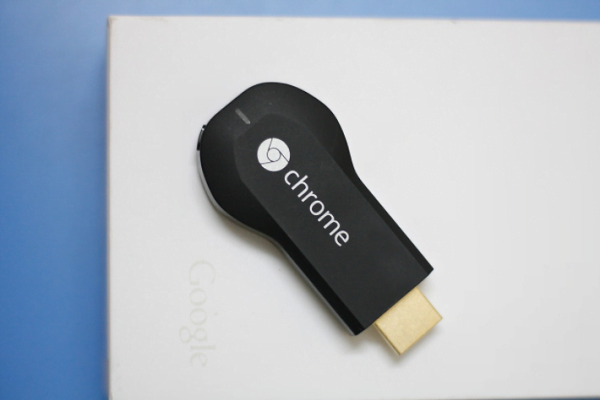
Chromecast is a device from Google that helps streamline content from your mobile or computer to your television. Google sold Chromecast models from July 2013 until August 2024, when it ended production of the line and announced the Google TV Streamer as its successor; Google said it would keep providing software and security updates for remaining devices, although the first-generation Chromecast stopped receiving updates in April 2023. This device helps in streaming the content present in a smartphone or laptop to the TV or any other connected display unit.
The streaming media adapter from Google is a dongle which needs to be plugged in the HDMI port of television. You can then use it to play online content like music or videos on a digital TV.
The device is powered through a USB cable that plugs into the dongle; Chromecast with Google TV models use a USB-C power adapter and cannot be powered from a TV’s USB port. After setup in the Google Home app on a phone or tablet, playback can be controlled from a phone, a tablet or a computer running Google Chrome, and Chromecast with Google TV models also come with a voice remote.
Once streaming starts, you no longer need to keep the app open. Chromecast competed with streaming devices such as Apple TV and Roku’s Streaming Stick, and according to NPD Group it was the best-selling streaming device in the United States in 2014.
How Does Chromecast Work?
Media streaming is not something new. People have been using YouTube, Netflix and similar services on their TV sets to stream online content. Similarly, gaming systems and Blu-ray, DVRs and Smart TVs have streaming hardware built and set-top boxes which are designed to allow streaming of online content.
One would question then, what new does Chromecast bring to the table? Chromecast puts content on the TV screen remotely: the phone, tablet or computer tells the Chromecast what to play, and the Chromecast streams it from the internet. The original Chromecast found devices with the DIAL (Discovery and Launch) protocol, co-developed by Netflix and YouTube; Chromecast devices now use multicast DNS (mDNS) to find each other on a Wi-Fi network. The underlying Google Cast technology is built into thousands of apps, and Google’s help center also lists TVs with Google Cast as devices that can receive a cast.
Because Chromecast is a Google product, it works closely with Google services such as YouTube, the Google Home app, Google Assistant and the Chrome browser. The dongle, roughly the size of a large thumb drive, plugs into an HDMI port on the TV. You can use it to play content already present in your laptop or mobile phone over your home’s Wi-Fi network.
To spice things up, you can even see web pages on your TV screen. To use Chromecast, you need a phone, tablet or computer with a supported operating system and a secure Wi-Fi network (with its password) that both the Chromecast and the sending device can join.
Operating system requirements have risen since the first Chromecast launched. As of October 2026, Google’s setup guide for Chromecast (3rd gen or older) asks for an Android phone or tablet with Android 9.0 or later that supports a 5 GHz connection, or an iPhone or iPad with iOS 17.0 or later, plus the latest Google Home app; casting from a Windows PC, Mac or Chromebook needs an updated version of Google Chrome.
How to Set Up Chromecast (Then Cast From a Computer)?
Setting up a Chromecast takes a few minutes and needs a Google Account, a TV or monitor with an HDMI input, a secure Wi-Fi network with its password, and a phone or tablet with the Google Home app. Setting the device is relatively simple. Here is what you need to do: setup itself happens on a phone or tablet, after which a Windows PC, Mac or Chromebook can cast to the Chromecast through Google Chrome.
- Plug the device into an HDMI port on your TV, then connect the USB power cable to the power adapter from the box and plug the adapter into a wall outlet (Google recommends the included cable and adapter, and Chromecast Ultra will not work from a TV’s USB port).
- Connect to a Wi-Fi network on which you would like to connect the Chromecast.
- Download the Google Home app from the Google Play Store (Android phones and tablets) or the Apple App Store (iPhone and iPad).
- If you plan to cast from a computer, you still need a phone or tablet for this step: Google states that Chromecast setup on a computer is not supported. Once setup is complete, Google Chrome on the computer can cast to the device.
- Open the Google Home app and follow the in-app steps; older guides that send you to a Chromecast setup website are out of date, because setup now runs through the app.
- In the Google Home app, tap Add Device at the top right, or tap Set up if a setup screen for your Chromecast appears.
- Scan the QR code for your device when the app asks; a check mark appears when the scan is complete. If you cannot scan it, tap Use setup code and enter the code instead.
- Wait for the app to show a “Connected” confirmation screen. If the Chromecast fails to connect, tap Try again to restart the process.
- Choose a name for your Chromecast device and connect it to the internet via the chosen Wi-Fi network.
- Sign in to your Google account, finish the remaining in-app steps, and you are ready to cast media from your phone, tablet or computer to the TV.
What Can You Do With Chromecast?
On a computer, casting is built into current versions of Google Chrome: open Chrome, select the More menu at the top right, choose Cast, save, and share, then Cast…, and pick your Chromecast to show the current tab on the TV. You can control the streaming from your mobile using the volume keys and other icons present on the screen.
However, depending on the app, other controls might also be available. The best part is that it is not necessary to keep the app open all the time. You can browse within the app, use other apps, let your device go to sleep or even shut it; none of it affects the streaming on your TV!
At launch in July 2013, Chromecast worked with four apps: YouTube, Netflix, Google Play Music and Google Play Movies & TV. By May 2015, Google reported more than 20,000 Cast-ready apps, and Amazon Prime Video added Chromecast support in July 2019. With a number of options available, there is so much you can do with your Chromecast.
Since there is a lot of media content available on a number of devices, you can watch anything and everything on your TV. Multiple devices, as long as they have appropriate apps installed and are connected with the same Wi-Fi, can be used to watch content thanks to Chromecast.
Connect your tablet, phone, computer, any other device of your family member and friend and enjoy watching hours of entertainment, infotainment content, uninterrupted.
If it stops behaving afterwards, fixing a Chromecast that is not working covers the common faults.
Which Chromecast Do You Have?
Setup differs by model: older dongles are controlled only from a phone or computer, while Chromecast with Google TV has its own interface and remote.
| Model | Released | How it is set up | Notes |
|---|---|---|---|
| Chromecast (1st gen) | July 2013 | Google Home app | Software and security updates ended in April 2023; needs 2.4 GHz Wi-Fi |
| Chromecast (2nd gen) and Chromecast Audio | September 2015 | Google Home app | Chromecast Audio was discontinued in January 2019 |
| Chromecast Ultra | November 2016 | Google Home app | 4K and HDR; needs 5 GHz Wi-Fi and its own power supply, which has an Ethernet port |
| Chromecast (3rd gen) | October 2018 | Google Home app | Adds 1080p playback at 60 frames per second |
| Chromecast with Google TV (4K) | September 2020 | Google Home app, or the TV and Voice Remote | Runs Android TV with the Google TV interface; supports Dolby Vision, HDR10 and HDR10+ |
| Chromecast with Google TV (HD) | September 2022 | Google Home app, or the TV and Voice Remote | Shipped with Android 12 |
| Google TV Streamer (successor) | Announced August 2024 | Google Home app | Wedge-shaped box with 32 GB storage, 4 GB memory and an Ethernet port; US$99 at launch |
Dates and hardware details: Wikipedia; setup methods: Google Streaming Help.
What Do You Need to Set Up Chromecast?
According to Google’s Streaming Help center (checked October 2026), setting up a Chromecast (3rd gen or older) needs the following:
- The Chromecast with the cable and power adapter from its box, a TV with an HDMI input, and a Google Account.
- The latest Google Home app on Android 9.0 or later, or iOS 17.0 or later.
- A secure Wi-Fi network and its password: 2.4 GHz 802.11 b/g/n for the 1st-gen Chromecast, 2.4 or 5 GHz for the later Chromecast dongles, and 5 GHz for Chromecast Ultra.
- Location, Bluetooth and camera permissions turned on for the Google Home app, which uses the camera to scan the setup QR code.
If the Chromecast was used before, Google advises a factory reset first. It also helps to improve the Wi-Fi signal near the TV first.
How to Set Up Chromecast With Google TV
Chromecast with Google TV (4K or HD) starts setup on the TV itself. Google’s steps are:
- Turn on the TV, plug the Chromecast into an HDMI input and switch the TV to that input.
- Connect the power adapter cable to the Chromecast and plug the adapter into an outlet. An Ethernet connection is optional.
- Wait for the Voice Remote to pair. If the TV shows “Start pairing,” press and hold the Back and Home buttons until the remote’s light pulses.
- When the TV asks you to continue in the Google Home app, open the app on your phone and tap Set up Chromecast, or tap Add Device at the top right.
- Scan the QR code shown on the TV, or enter the setup code manually.
- Follow the app until it says “Setup here is finished,” then complete the remaining steps on the TV with the remote.
If no phone is handy, Google lets you choose Set up on TV instead and finish everything with the Voice Remote. Google notes that WPA2-Enterprise Wi-Fi networks are not supported.
How to Cast From a Computer to Chromecast
A Windows PC, Mac or Chromebook on the same Wi-Fi network can cast through Google Chrome in three ways:
- Cast a tab: open Chrome, select More at the top right, then Cast, save, and share, then Cast…, and choose the Chromecast. The tab’s sound plays on the TV.
- Cast the whole screen: in the same Cast menu, select Sources, then Cast screen. Audio may keep playing on the computer; casting a tab sends the sound to the TV instead.
- Cast a local music or video file: open the file in a Chrome tab (drag it in, or press Ctrl + O on Windows or Command + O on a Mac), then cast that tab.
On a Mac with macOS 15 or later, Chrome must be given access in the system settings before it can cast. Plugins such as Silverlight, QuickTime and VLC do not work in a cast tab.
What to Do If Chromecast Setup Fails
Google’s troubleshooting steps for Chromecast setup, in order, are:
- Reboot the Chromecast.
- Unplug the Wi-Fi router, then plug it back in.
- Connect your phone manually to the Chromecast’s own network (its SSID) in the phone’s Wi-Fi settings, then try setup again in the Google Home app.
- Factory reset the Chromecast.
- Contact Google support.
A wired connection can also help: Chromecast Ultra’s power supply has an Ethernet port, and Google sold an Ethernet adapter for Chromecast with Google TV; see Wi-Fi vs Ethernet.
Chromecast vs Google TV Streamer vs a Smart TV
Because Chromecast is no longer made, buyers now choose between remaining Chromecast stock, the Google TV Streamer (more storage, an Ethernet port and Matter support, US$99 at launch) or a smart TV with streaming apps built in. See smart TV vs streaming device for the trade-offs; a capable Wi-Fi router matters for smooth streaming on any of them.
Frequently Asked Questions
Can I set up a Chromecast without a phone?
An older Chromecast (3rd gen or older) cannot be set up without a phone or tablet, because Google states that setup on a computer is not supported. Chromecast with Google TV is the exception: it can finish setup on the TV with the Voice Remote by choosing Set up on TV instead.
Which app do I need to set up Chromecast?
Chromecast is set up with the Google Home app, available on the Google Play Store and the Apple App Store. As of October 2026, Google lists Android 9.0 or later, or iOS 17.0 or later on iPhone and iPad.
Is Chromecast discontinued?
Yes. Google announced on August 6, 2024 that it was ending production of the Chromecast line and would sell remaining stock until it ran out, while continuing software and security updates for existing devices. The first-generation Chromecast is the exception: its updates ended in April 2023. The Google TV Streamer replaced the line.
Do I need a Cast extension to cast from a computer?
No separate extension is needed in current versions of Google Chrome. Casting is in Chrome’s More menu under Cast, save, and share, and it works on Windows, macOS and ChromeOS when the computer and the Chromecast are on the same Wi-Fi network.
Why can’t the Google Home app find my Chromecast?
The Google Home app often fails to find a Chromecast when location, Bluetooth or camera permissions are off, or when the device was used before and needs a factory reset. Google’s fixes are to reboot the Chromecast, restart the router, connect the phone to the Chromecast’s own Wi-Fi network, and factory reset if needed.

Justwebworld has published guides since 2012. How we write and update articles Report an error
